The holidays arrive with indulgent dinners, dessert tables, family dynamics, and packed calendars. For professional women over 45, this season doesn’t just challenge weight; it challenges emotional regulation, stress tolerance, and long-standing coping patterns around food.
Many women who already “know what to eat” still find themselves asking how to lose weight during the holidays, quietly fearing that all progress will unravel. Not because they lack discipline, but because the holidays activate deeper subconscious habits tied to comfort, pressure, and self-expectation.
Here’s the truth: holiday weight gain isn’t caused by food alone. It’s driven by how the nervous system responds under stress. When stress rises, self-protective behaviors (like overeating or grazing) kick in automatically. This is also why mindless eating shows up so easily during emotionally charged seasons, and why the solution is rarely another food rule.
This article shares 7 simple, realistic ways to lose weight during the holidays, without dieting, skipping traditions, or relying on willpower that’s already stretched thin. The goal isn’t perfection. It’s stable.
Why Holiday Weight Creeps Up and Why It’s So Hard to Avoid
Holiday weight problems rarely come from physical hunger. They come from emotional load. Social pressure, family dynamics, unspoken expectations, disrupted routines, and alcohol all activate subconscious coping patterns, not true appetite. Plates heavy in sugar and refined fats aren’t the root cause; they’re simply the most available comfort when stress is high.
Research shows calorie intake increases when people eat in groups. But for high-functioning women, the deeper issue isn’t the food itself; it’s how the nervous system responds under pressure. Add travel, poor sleep, end-of-year demands, and cold weather that limits movement, and weight gain can feel automatic rather than chosen.
Holiday eating does not sabotage long-term weight loss unless it triggers self-criticism and mindless self-protection. The most effective way to maintain or lose weight during this season isn’t by cutting out favorite foods, it’s by reducing unconscious behaviors driven by stress, emotional overwhelm, and self-sabotage. When those patterns are addressed, food naturally loses its grip. That’s the foundation of a real holistic approach to weight loss.
7 Simple Ways to Lose Weight During the Holidays
The following are the 7 simple ways to lose weight during the holidays.
1. Eat Before Events to Calm the Nervous System (Not to “Control” Yourself)
One of the most common holiday patterns isn’t overeating, it’s arriving depleted. Skipping meals to “save calories” before a party often backfires, triggering urgency, loss of awareness, and the familiar “I’ll start again tomorrow” spiral.
Eating a protein-rich, grounding meal before an event supports blood sugar, reduces stress hormones, and signals safety to the body. Research shows dietary protein increases satiety and thermogenesis, helping regulate appetite, but the deeper benefit is nervous-system stability, not restraint.
Instead of showing up hungry and reactive, eat real food beforehand: lean chicken or fish, eggs, beans, and vegetables. This isn’t about deprivation, it’s about arriving regulated and present.
Pre-Event Choices That Reduce Reactive Eating
| Pre-Event Support | Why It Helps |
| Protein + vegetables at home | Prevents urgency and impulsive choices |
| Water before food | Slows eating and improves awareness |
| Fiber before sweets | Stabilizes glucose and reduces cravings |
Slowing down once you arrive matters more than what you eat. Satiety signals take 15–20 minutes to register, and eating at a calmer pace keeps the brain engaged rather than hijacked by stress.
For women who recognize emotional eating as a stress response, not a hunger issue. By focusing on regulation and safety rather than rules, the body no longer needs food as a coping mechanism. That’s where lasting change begins.
2. Load Your Plate With Food That Keeps You Full First
Many women over 45 already know what to eat. The real challenge during December isn’t information; it’s staying regulated when stress, social pressure, and old habits are activated. Vegetables, high-quality protein, and whole foods help steady appetite, but their real value is that they calm blood sugar and reduce the urgency that drives emotional eating.
This isn’t about being good. It’s about sequencing food in a way that keeps your nervous system out of survival mode. At a buffet or holiday table, start by filling half your plate with foods that ground you, protein, vegetables, and fiber-rich options. When your body feels nourished first, treats stop feeling urgent or rebellious. You can still enjoy dessert, but it no longer carries emotional charge.
One of the fastest ways women sabotage themselves is through “cheat-day thinking.” That mindset turns food into a test of willpower and often triggers an “I already blew it” spiral. When food isn’t labeled as forbidden, the body relaxes, and moderation becomes natural rather than forced.
Weight stability comes from safety, not restriction. When meals are built on nourishment instead of control, the subconscious doesn’t need to push back. That’s why this approach supports lasting change rather than another cycle of discipline and regret.
3. Put Movement Into Your Day; It Does Not Need a Gym
Many women over 45 search for ways to lose weight fast because they assume exercise has to be intense, exhausting, or corrective. That belief alone increases stress, and stress is one of the fastest ways to stall weight loss in midlife.
Movement works best when it supports the nervous system, not when it tries to overpower it. According to the American Heart Association, about 150 minutes of moderate movement per week supports cardiovascular and metabolic health, but this does not require a gym, long workouts, or pushing past exhaustion.
For women navigating hormonal shifts, busy schedules, and high responsibility, the goal of movement during the holidays is stability, not calorie burn.
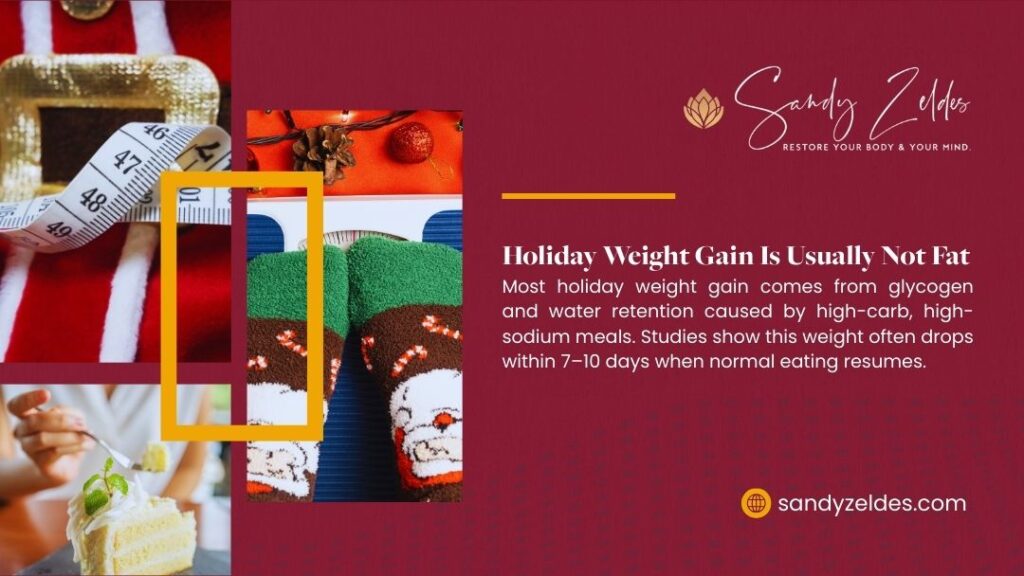
Simple, Nervous-System–Supportive Movement
| Movement Style | Why It Helps |
| 20–30 minutes of walking | Lowers stress hormones, supports blood sugar balance, and improves insulin sensitivity |
| Brief strength sessions 2x per week | Preserves lean muscle, which protects metabolism and supports healthy aging |
| Short stair walks or light intervals | Adds gentle cardiovascular stimulus without overwhelming the body |
Strength training becomes especially important after 40. Loss of lean muscle mass slows metabolism and makes weight fluctuations harder to correct after the holidays. Short, consistent sessions, using body weight, resistance bands, or light weights, are enough to maintain metabolic resilience.
Most importantly, movement should leave you feeling more grounded, not depleted. When exercise reduces stress instead of adding to it, weight regulation becomes far more natural and sustainable.
4. Watch Alcohol and Sugary Drinks; They Hijack Weight Control
Liquid calories aren’t the problem because of numbers. They matter because alcohol and sugary drinks temporarily lower emotional awareness and nervous-system regulation. When that happens, food choices become automatic rather than intentional.
For many professional women over 45, alcohol doesn’t cause weight gain on its own; it removes the pause between stress and eating. A single holiday cocktail can quietly open the door to grazing, seconds, or late-night snacking that wouldn’t happen otherwise.
This isn’t about giving up wine. It’s about staying present. Alternating alcohol with water or sparkling mineral water helps maintain awareness, supports hydration, and reduces the likelihood of unconscious eating.
Sip slowly. Notice how your body feels. And avoid stacking alcohol and dessert in the same window when possible. That combination amplifies cravings and lowers satiety signals, especially during high-stress social gatherings. When awareness stays online, choice stays available, and weight stabilizes without restriction.
5. Use Portion Awareness Instead of Holiday Restriction
Traditional holiday weight advice often pushes restraint and self-control. For women over 45, that strategy usually backfires. Restriction increases stress, and stress is one of the fastest ways to activate subconscious eating patterns.
Research on eating behavior suggests that visual cues like plate size can influence how much people serve themselves, and smaller serving dishes may help some individuals take smaller portions, though the effect on total calorie intake is mixed in the literature.
Many women notice in January that they “weren’t even aware” of how much they ate in December. Portion awareness works because it keeps the nervous system calm. When the body doesn’t feel restricted, it doesn’t push back with cravings or urgency.
Practical Holiday Swaps That Reduce Overeating Without Deprivation
| Traditional Pattern | Supportive Alternative |
| Large dinner plates | Smaller dish sizes to create natural boundaries |
| Chips and dip while waiting | Vegetables or protein before starches |
| All-day grazing | Structured meals that reduce impulsive eating |
This approach supports sustainable weight management because it removes internal friction. A woman who allows herself a small portion of a favorite holiday dessert, without judgment, stays emotionally regulated. Anxiety and self-criticism are far more likely to drive overeating than the dessert itself.
This is why we work emphasizes self-trust and emotional safety over food rules. When restriction is replaced with awareness, eating becomes intentional instead of reactive, and weight stabilizes naturally.
6. Track Patterns, Not Food (This Is About Awareness, Not Control)
Holiday weight gain rarely happens because someone “forgets” how to eat. It happens when stress quietly activates old self-protective habits. Awareness, not discipline, is what interrupts that cycle.
While research shows that self-monitoring food can support weight loss by increasing awareness, what matters most is noticing patterns, not policing meals. Briefly observing when alcohol, sweets, or grazing show up often reveals emotional and situational triggers, fatigue, social pressure, or the need to self-soothe, rather than hunger.
This kind of tracking removes shame. It turns behavior into neutral data instead of self-criticism. When eating is observed without judgment, the nervous system stays calm, and impulsive choices lose their grip.
If weight doesn’t shift even with awareness, the issue usually isn’t food at all. Subconscious beliefs, emotional conditioning, and long-standing protective responses can override logical plans. This is why so many disciplined, intelligent women feel stuck; their body is responding to stress, not calories. Addressing those deeper patterns is where real, lasting change begins. If you want a direct tool for this, explore EFT tapping for weight loss.
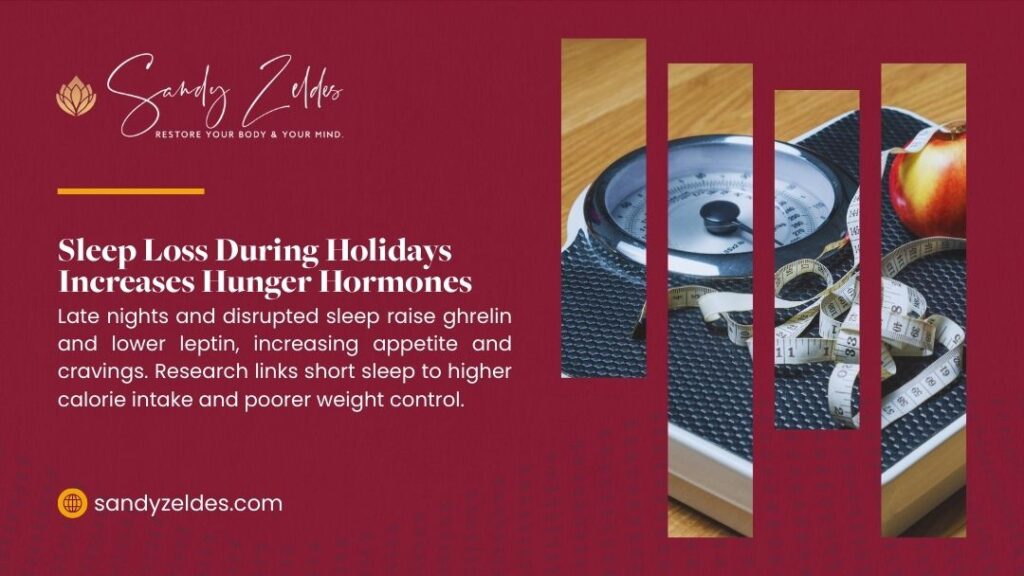
7. Allow Space for Holiday Treats Without Emotional Punishment
One of the most powerful ways to support natural weight loss during the holidays is releasing the all-or-nothing mindset that keeps women stuck in cycles of restriction and rebound.
Rigid restraint increases stress in the nervous system, which research consistently links to higher binge risk and weight gain. When food is framed as “bad” or indulgence is treated as failure, the body interprets that judgment as a threat. Threat activates self-protective behaviors, including emotional eating.
When women allow themselves to enjoy holiday foods without guilt, justification, or self-criticism, appetite hormones stabilize and cravings lose intensity. Calm creates regulation. Regulation creates choice.
Anyone who wants to lose weight and keep it off must understand that pleasure has a biological role. Feeling deprived elevates stress hormones, increases cravings, and reinforces subconscious sabotage patterns. This is why Sandy Zeldes focuses on emotional repair, nervous-system safety, and self-worth, not food rules or restriction. When the body no longer needs food as protection, weight loss stops feeling like a fight.
A Holiday Rhythm That Supports Weight Stability (Not Burnout)
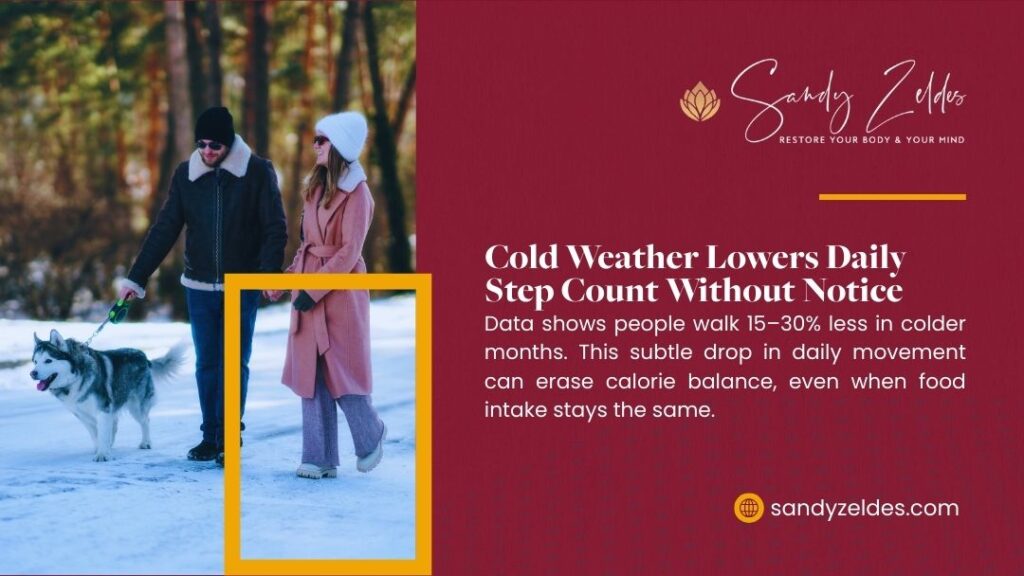
During the holidays, structure, not intensity, is what keeps weight stable. For professional women over 45, packed schedules, emotional labor, and disrupted routines matter more than weather or workout access.
Movement works best when it regulates stress, not when it’s treated like a calorie-burning obligation. Short, consistent movement lowers cortisol, supports glucose balance, and helps prevent the reactive eating patterns that show up under pressure.
A realistic rhythm might look like this:
| Time | Focus |
| Morning | Hydration, light protein, and brief movement to settle the nervous system |
| Midday | Balanced meals that prevent blood sugar crashes |
| Afternoon | Short strength or walking break to reduce stress load |
| Evening | Slower eating, moderate portions, and emotional presence |
None of this is about the fastest way to lose weight. That approach often backfires, especially in midlife, by increasing stress hormones and metabolic resistance. The most sustainable weight shifts come from consistency, safety, and nervous-system calm, not urgency.
Carry Holiday Stability Into January Without Reinventing Yourself
Many women fear January because they expect damage control. That fear alone drives extreme dieting and rebound weight gain.
Instead of resetting:
- Maintain what worked during the holidays
- Continue daily walks or light movement
- Add vegetables earlier in the day
- Stay hydrated
- Keep alcohol intentional, not reactive
Midlife weight loss doesn’t require doing more; it requires removing internal resistance.
Final Thoughts: The Holidays Don’t Ruin Progress—They Reveal What Needs Support
Weight management is a long-term relationship between physiology, emotional history, stress, and self-trust. The holidays don’t create the struggle; they amplify what’s already there.
If emotional roadblocks, self-criticism, or subconscious patterns keep derailing progress, support exists. You can speak with Sandy and review how her work integrates emotional tools and nutritional clarity. Building peace with food takes time, but this season is a strong place to begin.