EFT tapping has shown measurable benefits for stress and anxiety, with emerging evidence for trauma-related symptoms, depression, pain, and cravings. It isn’t a cure-all, but research suggests it can help regulate emotionally driven patterns when used appropriately.
This article looks at what research actually shows about EFT tapping, where evidence is strongest, where it’s limited, and how this method fits into real-world health and behavior change, especially for people who feel stuck despite “doing everything right.”
Does EFT Tapping Work? What Research Shows
Here is the thing about the short answer supported by research: it is cautious, but it’s meaningful. EFT tapping has demonstrated some pretty measurable benefits for anxiety and stress.
We are also seeing a growing pile of evidence for things like PTSD symptoms, depression, chronic pain, and even those nagging food cravings. Of course, the longer answer depends entirely on how you measure outcomes and what researchers think is actually driving the change behind the scenes.
If you look across randomized controlled trials, meta-analyses, and physiological studies, people using EFT frequently show a real drop in emotional distress. But it isn’t just about how they feel; we are also seeing objective changes.
We’re talking about lower cortisol levels and improved stress markers. These results suggest that EFT does quite a bit more than just feel “soothing” in the moment, even though scientists are still arguing over why it works.
One specific pattern shows up over and over in these studies: the strongest results usually appear in stress-driven and emotionally regulated conditions. It doesn’t perform as well for problems that are primarily medical, structural, or degenerative.
That distinction really matters. It’s especially huge for people who have tried every intervention under the sun but only ever focused on the physical symptoms.
What Emotional Freedom Techniques (EFT) Is
Emotional Freedom Techniques, or just “EFT tapping” to most people, is a structured self-help method. It basically combines focused emotional attention with a rhythmic tapping on specific parts of your body.
These tapping points are actually adapted from old-school acupressure traditions. However, the mental side of it draws from exposure-based and cognitive approaches. Instead of trying to shove thoughts away or forcing yourself to “think positive,” EFT asks you to be honest. You acknowledge a specific distressing emotion, belief, or sensation. While you do that, you engage the body through touch.
This specific combo is why EFT is often called a mind–body approach. It involves physical stimulation, emotional awareness, and repetition, all without needing medication, fancy devices, or a diagnostic label. While you can practice EFT totally on your own, more complex or deep-seated patterns usually move faster with some practitioner guidance.
The Science Behind EFT: Cortisol, Biomarkers, and Brain Function
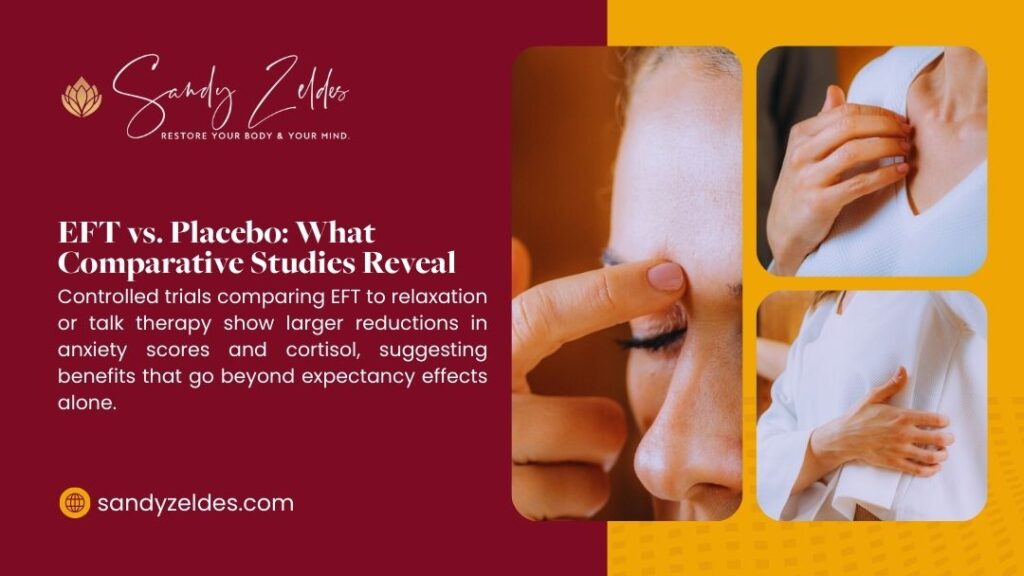
The strongest proof that EFT is doing something real comes from physiological data, not just people saying they feel better. Several studies have pointed to significant drops in cortisol, which is the hormone most of us associate with the “fight or flight” stress response. In a few randomized trials, cortisol levels actually dropped more in groups doing EFT than in groups doing traditional talk therapy or just resting.
But it’s not just cortisol. Researchers have also tracked reduced heart rates, lower perceived stress scores, and better markers for emotional regulation. These shifts look a lot more like nervous system calming than just simple cognitive reframing.
While we don’t have a ton of brain imaging research on EFT yet, the running theory is that pairing emotional activation with rhythmic tapping might actually reduce threat responses in the amygdala.
This proposed mechanism has a lot of overlap with models used in exposure-based and somatic therapies. And here is the important part: you don’t even have to believe in “energy meridians” for this to make sense. It can be explained through well-known psychophysiological pathways involving attention, touch, and repetition.
Conditions Where Tapping Shows Clinical Support
The evidence for EFT isn’t spread out evenly across every condition. Research tends to be way stronger where emotional arousal plays a big role in keeping symptoms alive.
Anxiety has the most consistent support. We have multiple randomized controlled trials reporting moderate to large drops in anxiety scores. Stress outcomes are also pretty strong, with repeated findings showing decreases in perceived stress. Studies on PTSD symptoms show meaningful improvements in some groups, though the results can vary depending on the type of trauma or the study quality.
Depression outcomes are a bit of a mixed bag. People report improvements, but they are typically smaller and not as consistent as what we see with anxiety. Emerging research also suggests EFT might dial down the intensity of cravings and pain, especially when those experiences are being reinforced by emotions rather than just being purely physical.
Limitations and Scientific Skepticism
We have to be honest here; this is where the conversation gets a little more nuanced. Critics of EFT have some very legitimate concerns. A lot of the studies out there rely on small sample sizes, which makes it hard to say the results apply to everyone. Most outcomes also rely on self-reported measures, which can sometimes reflect what a person expects to happen rather than an actual change. Plus, it’s hard to “blind” people in a tapping study, so the placebo effect is always a question.
Another big hurdle is figuring out which part of the process is doing the heavy lifting. EFT is a cocktail of several things: attention, emotional exposure, touch, rhythm, and repetition. Pulling those apart to see which one drives the benefit is tricky.
Some researchers argue that EFT works mostly through standard psychological processes like relaxation or self-soothing. Supporters say that even if the mechanism is purely psychological rather than energetic, the outcomes are what really matter, especially when you can see physiological changes. Right now, science supports the effects of EFT a lot more confidently than it explains the why.
How EFT Tapping Is Used for Mental Health, Weight, and Cravings
In the real world, people rarely use EFT for abstract symptom reduction. They use it for those messy, emotionally charged patterns that keep repeating when life gets stressful. Common uses include managing total overwhelm, reducing eft for food cravings, and breaking stress-driven habits.
In these cases, EFT works best when it’s combined with awareness work. When you apply it to eating patterns, the focus isn’t actually on the food. It’s on the emotions and beliefs that are driving you to the kitchen in the first place. That distinction is the key to lasting change. For many women, eft for emotional eating is the missing bridge between knowing what to do and actually being able to do it.
What Happens in a Session: The Process
A standard EFT session follows a very predictable flow. First, you have to find a specific issue. You don’t want a vague problem; you want a focused emotional experience, a specific feeling, a memory, or a sensation in your body. This specificity is vital. Next, you use a setup statement that acknowledges the problem while affirming that you’re okay anyway.
Then, you tap through a sequence of points while staying mentally tuned in to the issue. As you go, the emotional intensity usually starts to shift. Sometimes it drops fast. Other times, new emotions bubble up before things finally settle down. Most sessions end by checking how you feel and deciding if you need a few more rounds. It’s simple by design, but simple doesn’t mean it isn’t hitting something deep.
Comparing EFT to Established Therapies
To be clear: EFT isn’t a replacement for established treatments, and the research doesn’t suggest it should be. Cognitive behavioral therapy, exposure therapy, and medication all have much larger mountains of evidence, especially for diagnosed mental health disorders.
Comparison of Wellness Approaches
| Approach | Core Strength | Typical Role |
| EFT tapping | Emotional regulation, ease of use | Complementary |
| CBT | Cognitive restructuring | Primary |
| Exposure therapy | Fear extinction | Primary |
| Medication | Symptom stabilization | Primary or adjunct |
Frequently Asked Questions About EFT Tapping
Is EFT tapping scientifically proven?
Not in the same way that 50-year-old therapies or FDA-approved medications are. However, research shows very consistent benefits for stress and anxiety. The debate now is more about how it works, not whether it does.

Does EFT tapping really work, or is it just a placebo?
Expectation definitely plays a role, just like it does in almost any mind–body technique. But the physiological shifts, like the big drops in cortisol, suggest something is happening that goes way beyond just “thinking” yourself better.
How quickly does EFT tapping work?
Some people feel a shift in minutes, especially with stress or immediate anxiety. For deeper patterns, you usually need a few consistent sessions before the changes feel like they are stuck for good.
What does EFT work best for?
It really shines when emotional stress is at the center of the problem. That includes anxiety, emotional eating, cravings, and habits that flare up when you are under pressure.
Can I do EFT on my own?
Absolutely. Most people use it as a self-help tool. But if you are dealing with deep trauma or very stubborn patterns, having a practitioner guide you is a much safer and faster way to go.
A Balanced View of the Evidence
So, after all that, does EFT tapping work? The most honest answer is this: it’s a powerful tool for stress and anxiety, it likely helps with other emotionally driven habits, but it’s not a cure-all for everything. The research gives us a reason for cautious optimism, not hype. The real value of EFT is in how it helps you regulate your emotions and address the patterns driven by chronic stress and subconscious protection.
For the person who feels totally stuck despite trying every plan out there, this matters. When stress and self-sabotage are the real roots, another diet or exercise strategy is just going to miss the point. If you are exploring EFT because of long-standing patterns with food or weight, learning how to do EFT tapping could be the first step in a very different direction.
If you feel like you have tried everything, from the simple ways to lose weight to the latest fad diet, it might be time to stop fighting your body and start talking to your nervous system. Looking into an EFT practitioner for weight loss might finally give you the why you’ve been looking for.