EFT for emotional eating addresses the emotional and physiological drivers behind food cravings, compulsive overeating, and repeated dieting failure. Rather than focusing on food control, this approach works at the level of stress response, emotional memory, and subconscious habit formation.
For many women, emotional eating is not a lack of discipline but a learned protective response that once served a purpose. This article explains how emotional eating develops, why traditional weight-loss strategies fail to resolve it, how EFT tapping interacts with the nervous system, what research reveals about its effectiveness, and when this method produces lasting results.
EFT for Emotional Eating That Targets the Cause, Not the Symptom
EFT for emotional eating focuses on the mechanism that drives compulsive food behavior rather than the behavior itself. Emotional eating does not stem from hunger or lack of knowledge. It arises when stress, emotional pressure, or unresolved memory pushes the nervous system into a state that seeks rapid relief. Food becomes the most accessible regulator.
The Emotional Freedom Techniques uses physical stimulation of acupressure points alongside focused attention on emotional triggers. This combination sends regulatory signals through the nervous system, which reduces emotional intensity and impulsive drive. When emotional pressure drops, food loses its role as a coping tool. This shift often feels like neutrality around food rather than constant effort or restraint.
For women over 40, this distinction carries weight. Hormonal change, cumulative stress, and long-standing self-protective patterns often amplify cravings and weight resistance. What looks like self-sabotage is frequently the nervous system attempting to maintain safety. EFT for emotional eating addresses these influences without force or deprivation.
Emotional Eating and the Stress Response
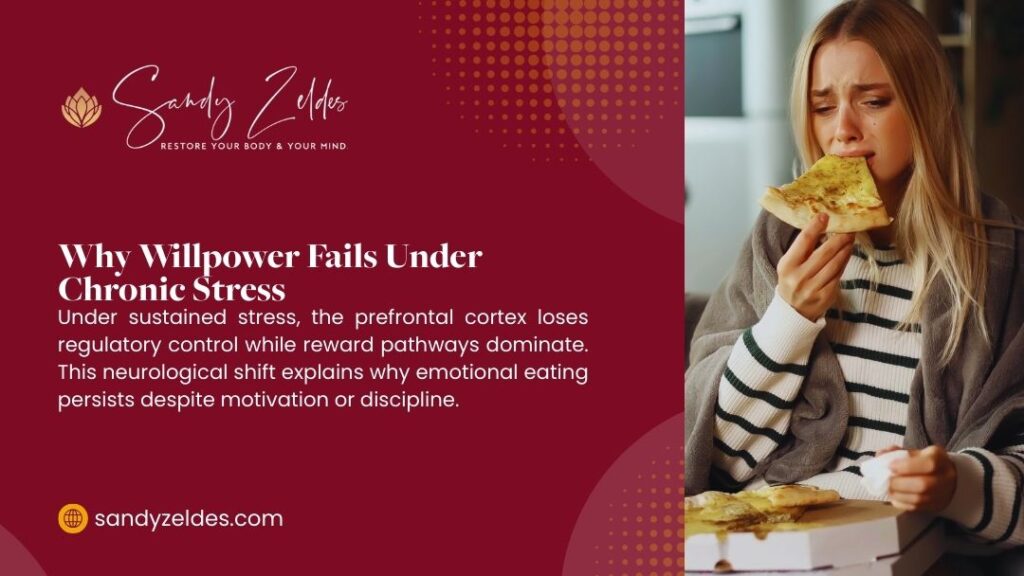
Emotional eating develops as a physiological response to stress rather than a conscious decision. Chronic stress alters cortisol rhythms, disrupts insulin sensitivity, and changes reward processing in the brain. Over time, the body learns to associate food with relief.
Research shows sustained stress interferes with appetite regulation and impulse control. Cortisol elevation increases preference for high-sugar and high-fat foods while reducing sensitivity to satiety signals. This process explains why emotional eating persists even when motivation remains high.
Early life stress, unresolved emotional experiences, and long-term pressure reinforce this pattern. The nervous system does not distinguish between emotional threat and physical danger. Food offers temporary safety. Until that sense of safety is restored, lasting behavior change remains unlikely.
Emotional Freedom Techniques and Its Role in Food Cravings
The Emotional Freedom Techniques works by combining emotional focus with somatic input. This pairing allows emotional memory to surface without overwhelming the nervous system. As arousal decreases, cravings weaken.
Before reviewing specific techniques, it helps to understand that EFT does not attempt to suppress cravings. It works by reducing the emotional charge that gives cravings their intensity.
| EFT Technique | Role in Emotional Eating |
| Standard tapping sequence | Lowers emotional intensity tied to food triggers |
| Cognitive reframing statements | Reduces threat perception linked to cravings |
| Targeted memory recall | Neutralizes emotional memory that drives food use |
| Self-acceptance phrasing | Weakens shame-based eating patterns |
| Body-focused tapping | Improves interoceptive awareness and satiety recognition |
One point remains essential: EFT for emotional eating works best when emotional triggers receive precise attention rather than generalized affirmations.
Nervous System Regulation Through EFT Tapping
EFT tapping influences the autonomic nervous system, which governs stress response, digestion, and impulse control. Emotional eating correlates strongly with sympathetic dominance, where the body remains in a constant state of alert.
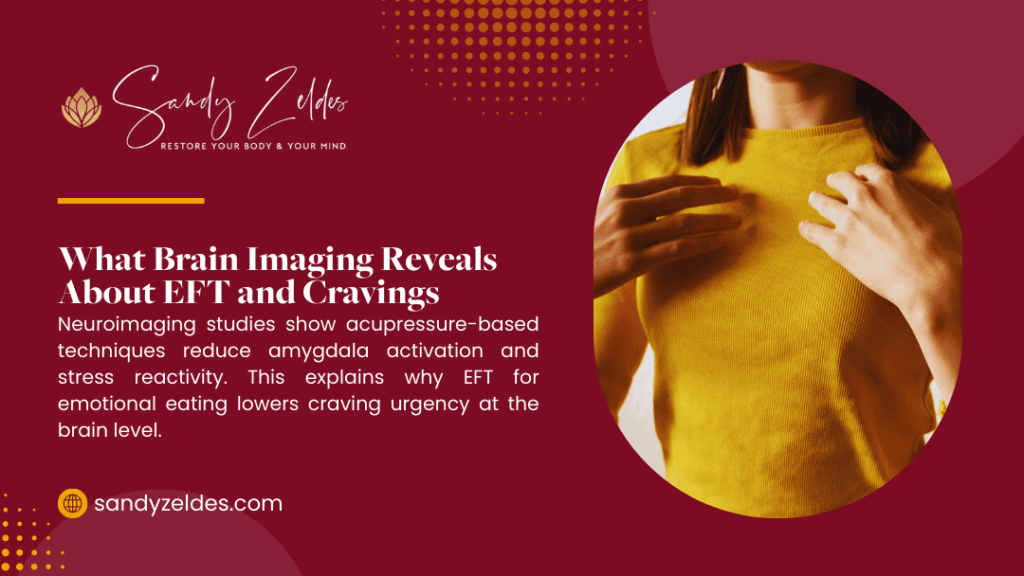
Studies show acupressure stimulation reduces amygdala activity, the brain region tied to fear and urgency. This neurological shift explains why many people ask, does EFT tapping work beyond placebo or belief. When emotional urgency drops at the nervous system level, food-driven impulses lose their regulatory function rather than requiring conscious suppression. When this region calms, the prefrontal cortex regains regulatory capacity. Decision-making improves. Cravings lose urgency.
| Nervous System State | Effect of EFT Tapping |
| Elevated cortisol | Reduction in stress hormone output |
| Sympathetic dominance | Shift toward parasympathetic balance |
| Emotional hyperarousal | Improved emotional regulation |
| Impulse-driven behavior | Restoration of cognitive control |
| Stress-based hunger signals | Improved differentiation between hunger and emotion |
It becomes clear why EFT for emotional eating succeeds without strict dietary control. Regulation replaces willpower.
Addiction Patterns and Emotional Eating
Emotional eating often follows the same neurological pathway as addiction. Dopamine release reinforces the behavior. Repetition builds tolerance. Relief shortens. Intake increases.
EFT for addiction applies directly to emotional eating because it targets emotional memory rather than substance or behavior. When emotional load resolves, the drive toward food weakens.
This perspective reflects Sandy Zeldes’ two decades of clinical work resolving emotional eating as a stress-based addiction pattern, particularly in women over forty who have exhausted traditional approaches. Her work reframes overeating not as a failure of discipline, but as a protective mechanism that can be safely dismantled.
Echo Tapping and Its Use for Weight Control
Echo tapping involves verbal guidance from a practitioner while tapping occurs. This method supports individuals who experience resistance during self-directed EFT.
Echo tapping reduces cognitive interference and allows emotional material to surface with less internal pushback. It is especially useful for those who distrust affirmations, feel skeptical of mindset work, or struggle to articulate emotional content.
| Use Case | Benefit |
| Emotional resistance | Lowers internal opposition |
| High skepticism | Improves receptivity |
| Trauma-related eating | Increases emotional safety |
| Habitual self-judgment | Reduces internal criticism |
| Weight-related shame | Supports emotional neutrality |
Echo tapping for weight loss often appears in professional EFT settings rather than self-guided formats.
Emotional Eating Vs Binge Eating
Emotional eating and binge eating share emotional roots but differ in severity and pattern. A clear distinction helps guide intervention.
| Aspect | Emotional Eating | Binge Eating |
| Trigger | Stress or emotion | Loss-of-control episodes |
| Food quantity | Moderate to excessive | Excessive and rapid |
| Awareness | Partial awareness | Dissociative states common |
| Emotional aftermath | Guilt or regret | Shame and distress |
| EFT response | Gradual regulation | Requires deeper trauma focus |
It becomes clear why professional guidance matters when binge patterns exist.
Why EFT Succeeds Where Diets Fail
Diets rely on compliance. EFT relies on regulation. This difference determines durability.
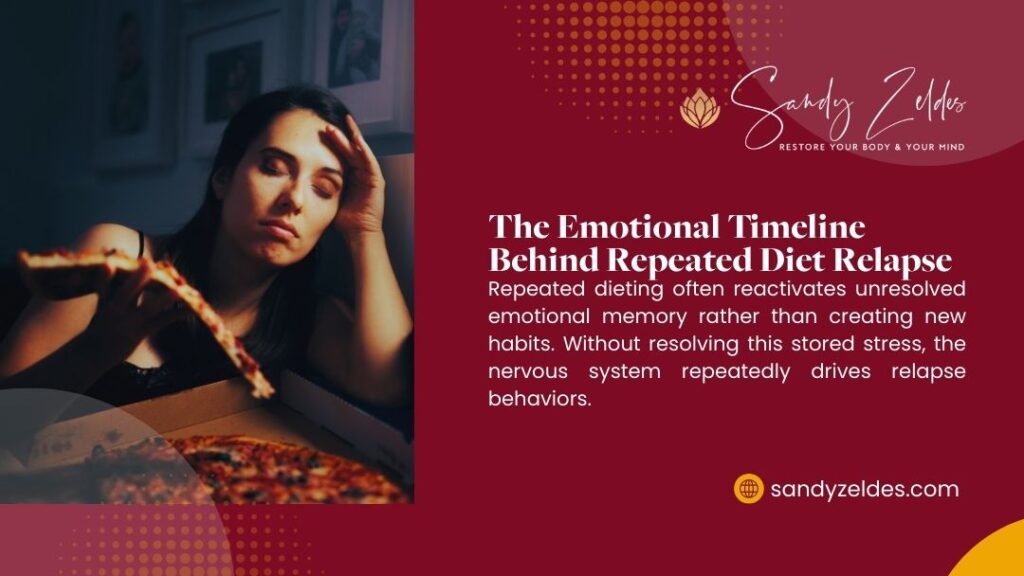
Restriction increases stress. Stress intensifies cravings. The cycle repeats. EFT for emotional eating interrupts this loop by reducing emotional arousal before behavior change occurs.
Many women believe they are the exception, that their history, biology, or lack of past success means nothing will work. In practice, emotional eating follows consistent patterns, regardless of how long it has been present. When the protective role of food is addressed directly, cravings resolve without force.
Clients often report neutrality around food rather than constant effort. This outcome reflects nervous system stability rather than willpower.
When EFT for Emotional Eating Shows Best Results
EFT produces the strongest results when emotional triggers receive honest exploration and when support matches the depth of the issue. Individuals who seek control without emotional engagement often remain stuck.
Those open to addressing subconscious patterns experience sustained relief. Professional screening plays a critical role in outcomes, ensuring the work matches readiness and complexity rather than applying a one-size-fits-all approach.
Programs such as Sandy Zeldes one-on-one work emphasize this alignment rather than mass application.
Conclusion
EFT for emotional eating offers a path that respects physiology, psychology, and lived experience. It does not promise quick fixes. It provides resolution at the level where habits begin.
For women who feel exhausted by dieting, frustrated by relapse, or confused by cravings that defy logic, working directly with Sandy Zeldes offers a clinically grounded and deeply targeted approach. Her work focuses on correct fit, root-cause resolution, and long-term stability rather than temporary compliance.
Those ready to move beyond surface solutions can explore working with Sandy or reach out directly to discuss whether this work aligns with their needs. Peace with food rarely comes from more effort. It comes from resolving what has been driving the struggle all along.