Think of EFT tapping as a manual override for your body’s “red alert” system. It’s a strikingly simple way to de-escalate tension in your nervous system by layering mental focus on rhythmic physical touch.
When you hit the rhythm right, that heavy, jagged emotional intensity, whether it’s a looming work deadline or a resentment you’ve carried for a decade, just starts to drain away. For many of us, especially as we hit midlife, these emotional burdens aren’t new guests; they’ve basically moved in and started paying rent over the last few decades.
This guide walks you through the nuts and bolts of how to do EFT tapping, the biological “why” behind the relief it brings, and how to weave it into your daily life without it feeling like another chore.
How to Do EFT Tapping: Step-by-Step Process
The acronym stands for Emotional Freedom Techniques. You can visualize it as a form of “somatic” (body-centered) release that bridges the gap between modern talk therapy and the pressure-point logic of acupuncture, just without the needles.
This specific framework was polished in the 1990s by Gary Craig, who took a complex web of energy theories and boiled them down into a sequence that a regular person could actually use in their living room.
EFT tapping is a grounded, clinical, and intensely practical sequence. It isn’t some mystical secret; it’s a systematic process that pairs deep emotional honesty with physical stimulation of specific meridian points on your skin.
Step 1: Identify One Specific Issue
The cardinal rule of EFT is precision. You can’t tap on my life is a mess and expect a breakthrough. You have to hunt for the specific flavor of your stress. Maybe it’s a spike of panic before a presentation, a sudden chocolate craving, or a sharp memory of an argument you had three years ago. EFT thrives when your brain is zoomed in on a target.
Instead of a broad “I’m anxious,” try focusing on “that cold, hollow feeling in my gut when I look at my inbox.” That level of detail is the secret sauce. For women over 40, our stressors are often so deeply baked into our daily routine that they feel like “just the way it is.” Being specific is how you start to pry those old habits loose.
Step 2: Rate the Intensity on a Scale From 0 to 10
Now, do a quick internal audit. Rate the intensity of that specific feeling on a scale of zero to ten. 0 is a total “whatever” feeling; 10 is “I’m about to crawl out of my skin.” This number is your baseline. Without this measurement, you won’t actually know if the needle is moving or if you’re just going through the motions.
Medical pros use these subjective scales because, frankly, how you feel is the only metric that matters here. You’re not trying to win a prize; you’re just monitoring how your nervous system reacts as we start the work.
Step 3: Create the Setup Statement
This is the part that usually makes beginners feel a bit self-conscious, but stay with it. The “setup” is about acknowledging the mess without fighting it. It’s a cocktail of radical honesty and self-acceptance that usually goes like this:
The Formula: “Even though I have this [specific problem], I deeply and completely accept myself.”
You’ll say this out loud while tapping the “karate chop” point (the fleshy outer edge of your hand). This isn’t about being a “positive” person. It’s about stopping the war you’re having with your own feelings. Psychology tells us that when we stop resisting a feeling, it loses its power to control us.
Step 4: Follow the EFT Tapping Sequence
Now you dive into the actual circuit. Use your index and middle fingers to tap each point about five to seven times. As you tap, keep a “reminder phrase” (like “this tight chest” or “this money stress”) looping in your head or coming out of your mouth. This keeps your brain from wandering off.
The sequence generally flows from the face downward: the inner eyebrow, the side of the eye bone, right under the eye, under the nose, the chin crease, just below the collarbone, under the arm (along the ribcage), and the very crown of the head. These points are basically “on-ramps” to the body’s meridian system.
The order isn’t a life-or-death thing, but sticking to the standard routine helps you build the kind of muscle memory that makes tapping second nature.
Step 5: Re-rate the Intensity
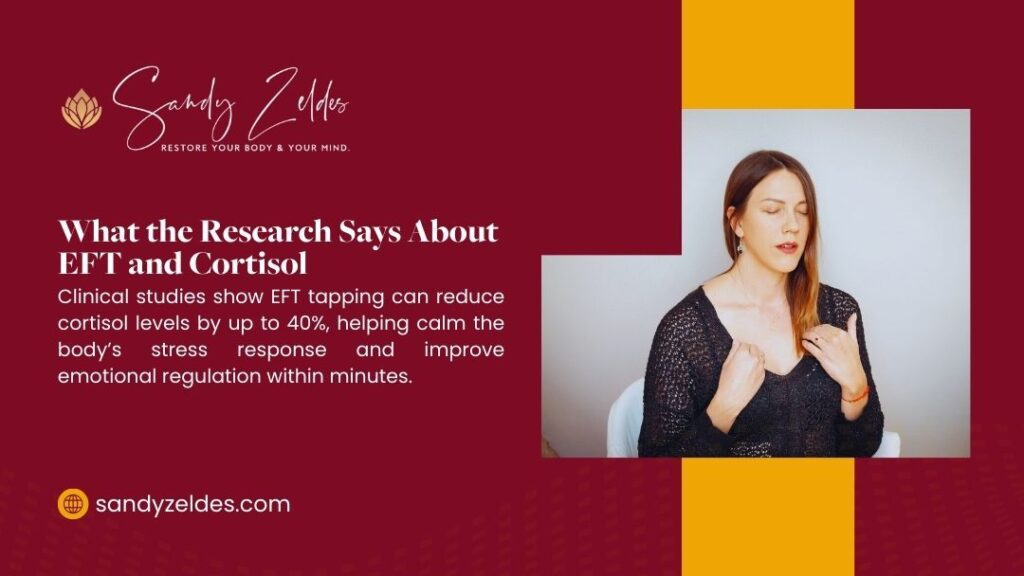
After one full lap, take a massive breath and let it out. Re-evaluate your 0–10 score. If that 8 dropped to a 5, you’re winning. If it didn’t budge, it usually means you need to get even more specific with your words or try another round.
Sometimes, weirdly, the number might climb. Don’t panic. That usually means you’ve stopped numbing yourself and you’re finally actually feeling what’s going on. That’s progress, not a failure.
Step 6: Adjust and Repeat as Needed
You’re rarely going to be “cured” in one round. Most shifts happen over three to five passes. You can also pivot your language as the feelings shift. If you start with “anger” but realize halfway through that you’re actually just “embarrassed,” change your reminder phrase to match.
This is why EFT is often more effective than standard meditation; it doesn’t ask you to clear your mind, it asks you to engage with it.
Understanding EFT Tapping Points: Meridians and Their Purpose
These points aren’t just random spots on your body; they are strategic intersections where the body tends to bottle up physical and emotional tension.
| Tapping Point | Physical Spot | Why We Use It |
| Karate Chop | Outer edge of the hand | Breaks through subconscious “blocks” or resistance |
| Eyebrow | Inner corner of the brow | Helps discharge “stuck” frustration and impatience |
| Under Eye | On the bone under the pupil | Directly speaks to the brain’s fear and anxiety centers |
| Under Nose | Above the top lip | Great for shifting feelings of shame or social stress |
| Chin | The dip below the lip | Helps untangle “should-have” regrets and self-doubt |
| Collarbone | Just below the knobby point | The master “reset” for the fight-or-flight response |
| Under Arm | On the ribs, 4 inches down | Releases general tension and “emotional heaviness.” |
| Top of Head | The crown | Seals the round and grounds the nervous system |
Understanding these anchors helps you stay present during the process rather than just tapping aimlessly.
Why EFT Tapping Works: Behind the Method
To get why this works, we have to talk about the amygdala, the brain’s high-strung smoke detector. When you’re triggered, the amygdala floods your system with cortisol, shuts down your logical brain, and prepares you for a fight. In that state, “thinking positive” is about as useful as a screen door on a submarine.
For many of us, especially as we age into midlife, our nervous systems have been “practicing” these stress responses for decades. We have very deep ruts in our mental roads.
EFT tapping essentially “short-circuits” that stress loop. By physically tapping while mentally focusing on the trigger, you are sending a dual signal: the mind says “I’m in danger,” but the body’s sensory feedback says “I’m safe.” This contradiction forces the brain to re-evaluate the threat.The science bears this out: studies have shown tapping can significantly slash cortisol levels. By lowering the chemical markers of stress, you open the door to clearer thinking and better emotional resilience. It’s basically “re-wiring” your brain’s response to old ghosts.
How Often Should You Tap and When to Use It
There is no “tapping police” to tell you how often to do this. It’s a tool, not a prescription. Some people use a three-minute session in the morning to set their baseline. Others pull it out of their pocket only when they feel their heart start to race during a tough conversation.
Short, sharp, and focused sessions are almost always better than long, rambling ones. If you’re trying to move a mountain, like a 20-year-old habit, consistency is your best friend. You’re trying to build a new neurological pathway, and that takes a bit of repetition.
EFT is perfect for those moments when your reaction to something feels way bigger than the event itself. It’s a great “emotional palate cleanser.” If you ever find that tapping is digging up stuff that feels too heavy to handle alone, that’s a good sign to slow down or find an experienced practitioner who can hold the space for you.
Common Misconceptions and What to Avoid
People often overcomplicate this, which leads to them giving up right before the breakthrough. Let’s debunk the big ones.
| Misconception | The Reality | The Better Approach |
| “I have to believe it works.” | It’s biological, not theological. | Just do the physical steps; belief is optional. |
| “I’m doing it wrong.” | It’s hard to mess up a somatic signal. | Focus on the feeling, not your tapping technique. |
| “It should be an instant fix.” | Some issues have many layers. | Look for a 10% improvement, not a 100% cure. |
| “I need to stay positive.” | Positivity can be a form of denial. | Be as “negative” as you actually feel; it’s more honest. |
| “It replaces my therapist.” | It’s a tool, not a total healthcare system. | Use it to support your existing medical care. |
The biggest hurdle for most people is feeling “distracted.” If you’re distracted, tap on that. “Even though I’m thinking about my grocery list, I accept myself.” It brings you right back to the moment.
Applying EFT Tapping for Specific Goals
Once you master the basic rhythm, you can point it at almost anything. A lot of people find huge success using it for food-related struggles, cravings, late-night snacking, or emotional eating. By tapping on the urge to eat rather than the food itself, you address the stress driving the behavior. There are incredible resources out there for using EFT for weight loss or food cravings that don’t rely on the “white-knuckle” willpower that usually fails us.
In midlife, this tool becomes even more valuable for handling the emotional rollercoaster of menopause or career shifts. It’s about building a toolkit that actually works in the real world, not just in a yoga studio.
FAQs About EFT Tapping
Can I do EFT tapping on myself?
Yes, you can absolutely do EFT tapping on yourself. In fact, it was designed to be a self-help tool you can use anytime you feel stressed, overwhelmed, or triggered. Once you learn the basic tapping points and setup statement, you can apply it in real-life situations like cravings, anxiety, or emotional overwhelm. Many people start on their own and later work with a practitioner for deeper issues.
How many times a day should you do EFT tapping?
There’s no strict rule, but most people benefit from tapping 1 to 3 times a day. Short sessions of 3–10 minutes can be enough to calm your nervous system. You can also use EFT tapping in the moment—like before a stressful conversation, during cravings, or when anxiety spikes. Consistency matters more than duration.
Does EFT tapping reduce cortisol?
Yes, research suggests EFT tapping can help lower cortisol, the body’s main stress hormone. One study published that participants who used EFT experienced a significant reduction in cortisol levels compared to other stress management methods. Lower cortisol can support better emotional regulation, reduced cravings, and improved overall well-being.
Why should tapping be avoided in some situations?
EFT tapping is generally safe, but it should be used carefully when dealing with deep trauma or intense emotional distress. In those cases, tapping may bring up strong feelings that feel overwhelming. If that happens, it’s best to work with a trained practitioner who can guide the process safely. It is not a replacement for medical or psychological treatment when those are needed.
How long does it take for EFT tapping to work?
Some people feel relief within minutes, especially for stress or cravings. Others may need several sessions, particularly for long-standing patterns like emotional eating or anxiety. EFT works in layers, so even small shifts, like a drop from 8 to 5 in intensity, are meaningful progress.
What should I say during EFT tapping?
You don’t need perfect wording. The key is honesty. Start with a setup phrase like:
“Even though I feel this anxiety in my chest, I accept myself.”
Then use simple reminder phrases while tapping, such as:
“this stress,” “this craving,” or “this tight feeling.” The more specific and real your words are, the more effective the process tends to be.
Can EFT tapping help with food cravings and emotional eating?
Yes, EFT tapping is especially effective for food cravings and emotional eating because it targets the emotional trigger behind the behavior. Instead of fighting the urge with willpower, tapping helps calm the underlying stress or emotional tension driving it. This makes it easier to respond differently without feeling deprived.
What is the fastest way to learn how to do EFT tapping?
The fastest way is to learn the basic tapping points and one simple setup phrase, then practice on a real issue like stress or cravings. Most people can learn the fundamentals in under 10 minutes and start using EFT tapping immediately.
Moving Forward With EFT Tapping
The real power of EFT tapping isn’t in the “magic” of the points; it’s in the habit of paying attention to yourself. It rewards you for being honest about your mess. When you stop trying to “fix” yourself and start just “tapping” with yourself, the calm usually finds its own way in.
If the basic self-help version isn’t moving the needle on your biggest life hurdles, don’t be afraid to seek out a professional. Sometimes you need a guide to help you find the right words or the right target.
For more on how to weave this into a life of genuine emotional and physical health, including success stories and deep-dive podcasts, contact Sandy Zeldes. It’s a great place to turn your initial curiosity into a long-term shift.