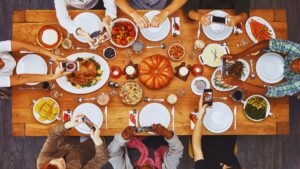
Holiday meals pile up quickly, work gatherings, family traditions, celebratory desserts, and the unspoken expectation to “just enjoy yourself.” For many professional women over 45, the problem isn’t enjoyment; it’s the familiar cycle of eating past comfort, followed by frustration, self-blame, and another promise to “do better next time.”
Smart eating tips are not about controlling yourself harder. They’re about understanding why overeating happens in the first place, especially during emotionally loaded seasons, and responding in a way that supports your body instead of fighting it.
This guide explains Smart Eating Tips: How Not to Overeat This Holiday Season through physiology, nervous system science, and a compassionate mind-body lens, including what to do after overeating at night without triggering guilt, restriction, or another diet spiral.
Why does overeating accelerate during the holidays?
The holiday season compresses multiple stressors into a short window: disrupted routines, emotional family dynamics, less daylight, more social pressure, and higher cognitive load. For women already juggling leadership roles, caregiving, and responsibility, food often becomes the fastest form of relief.
Social eating amplifies intake. Research on social facilitation shows people consistently eat more when dining in groups, especially during longer meals with shared plates. Add emotional cues, nostalgia, obligation, reward, and the nervous system interprets food as safety rather than fuel.
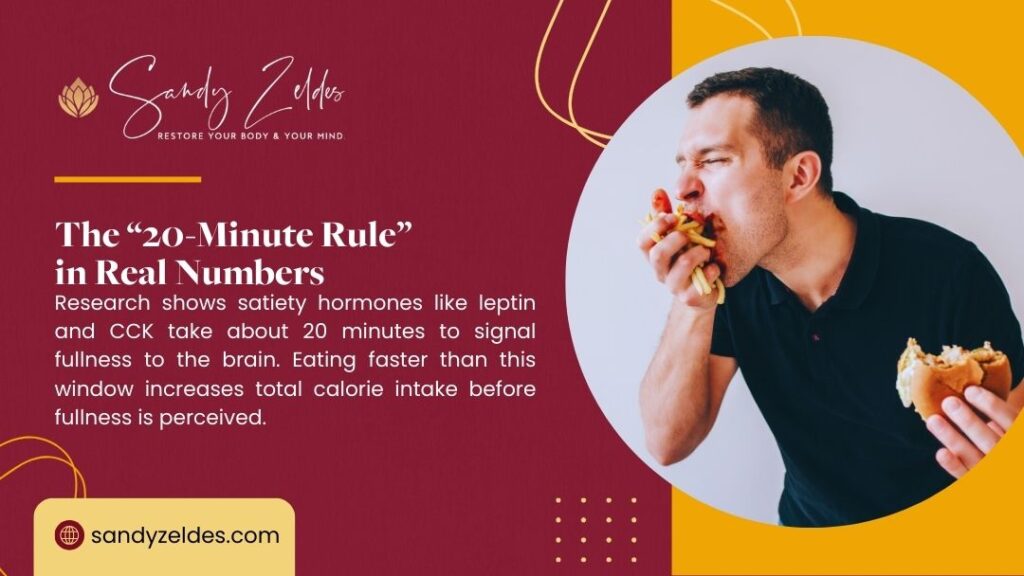
Satiety signals also lag behind behavior. Hormones and stretch receptors take roughly 20 minutes to register fullness. When stress accelerates eating speed, the body doesn’t get a chance to speak before the plate is refilled.
Physical hunger vs. stress-driven appetite
One of the most powerful shifts for long-term change is learning to separate biological hunger from protective eating behaviors.
| Driver | Indicator | Effect on intake |
| Physical hunger | Gradual onset, stomach sensation, clear need | Predictable portions, satisfaction |
| Stress or emotional appetite | Sudden urgency, craving specificity, eating “past enough.” | Loss of regulation, overeating, post-meal regret |
Overeating during the holidays is often a stress-regulation strategy, not a failure of willpower. Recognizing that distinction removes shame and creates choice.
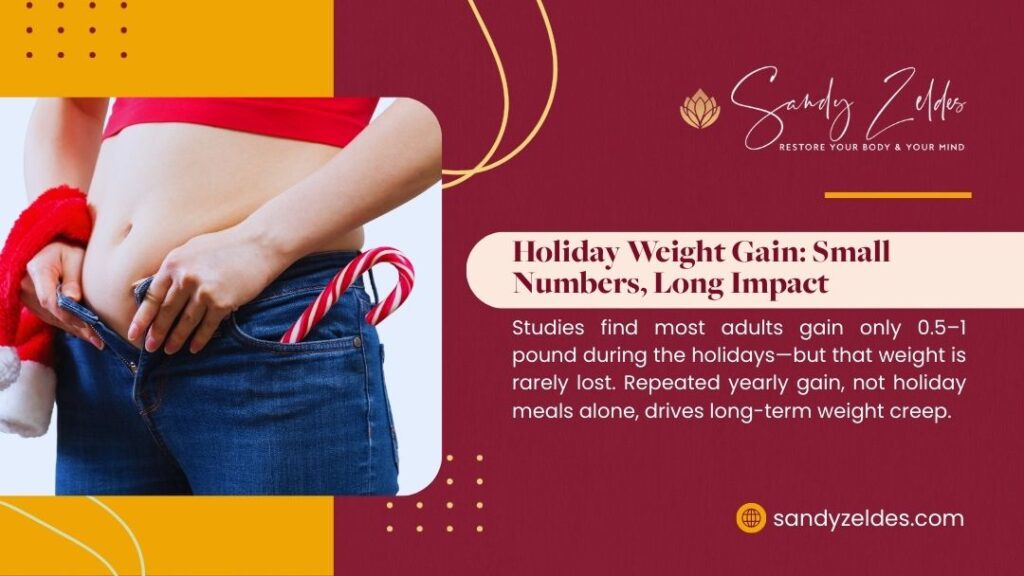
Smart Eating Tips: How Not to Overeat This Holiday Season
Rather than relying on rules, these strategies support the body’s natural regulation systems, digestion, blood sugar, and nervous system stability.
Vegetables and protein increase stomach volume and satiety signals. Filling half the plate with non-starchy vegetables reduces urgency without removing pleasure or tradition.
Pacing matters more than perfection. The 20-minute satiety window means slowing down, pausing for seconds, and letting the body catch up works better than restriction ever could.
Skipping meals backfires. Research consistently shows that missing meals, especially earlier in the day, increases impulsive eating later. Arriving at holiday gatherings under-fueled removes the body’s braking system entirely.
Hydration supports signal clarity. Thirst can mimic hunger, and mild dehydration increases cravings. A glass of water before and during meals helps the body differentiate need from habit.
Constructing a supportive holiday plate
| Plate area | What to fill it with at holiday meals | Why does it help during the holiday season |
| Half the plate | Colorful fruits and vegetables: roasted Brussels sprouts, green beans, salads, citrus segments, roasted squash | High fiber adds volume with fewer calories, supports digestion and blood sugar, and helps you feel less full later than a plate of pure starch and fat |
| One quarter | Protein such as turkey, grilled fish, chicken, beans, or lentil dishes | Protein slows the blood sugar spike from holiday food and keeps you satisfied for longer, so you are less likely to keep grazing |
| One quarter | Favorite food: stuffing, mac and cheese, tamales, mashed potatoes, pie, or other cultural dishes | You keep room for tradition and pleasure without letting “too much food” crowd out nutrients or your ability to listen to fullness cues |
These strategies anticipate overeating before impulses strike. They do not moralize taste. They simply preserve physical comfort, so no one asks how to feel less full after eating a lot.
When the plate wins anyway: what to do after overeating
After overeating, the body isn’t broken; it’s responding to a predictable stress-and-load response. Scientific studies show that walking after a meal, even for just 10–15 minutes, can accelerate gastric emptying and improve digestive movement compared with sitting still. More importantly for women in midlife, gentle movement helps regulate blood sugar and calm the nervous system, which reduces bloating and the urge to “fix” what just happened.
Movement redirects blood flow and supports peristaltic activity, while lying flat can aggravate reflux and discomfort. This is why forcing rest or “sleeping it off” often makes people feel worse rather than better.
Hydration again plays a role, especially after salt-heavy or carbohydrate-dense meals. Peppermint or ginger tea can soften nausea signals and abdominal pressure. What tends to backfire are extreme reactions, fasting, skipping meals, or mentally punishing yourself the next day. Those responses recreate the same instability that led to overeating in the first place.
That is why the question of what to do after binge eating has a counterintuitive answer: return to regular meals, stabilize blood sugar, and remove guilt from the equation. Regulation restores safety. Restriction escalates rebellion.
Some people chase a “detox” after overeating, but this language feeds the belief that the body has failed. Health agencies consistently note that the liver and kidneys already perform detoxification functions naturally, and there is little credible evidence that detox diets or products improve this process. The most supportive response after overeating is not cleansing, it’s consistency, nourishment, and mild movement.
For those still asking how to feel better after eating too much, diaphragmatic breathing can be more effective than supplements or rules. Slow nasal breathing relaxes the abdominal wall and signals safety to the nervous system. A gentle twist or seated stretch can relieve pressure without stimulating further stress.
Mindful patterns rather than moral battles
The urge to label food as “bad,” “sinful,” or “out of control” intensifies emotional eating rather than resolving it. Many women turn holiday overeating into evidence of personal failure, when in reality it follows a predictable neurological and emotional pattern. That’s also the point made in Tapping for Weight Loss, which shows how emotional root causes can be addressed rather than punished.
Professionals working from a holistic perspective emphasize addressing emotional triggers and subconscious patterns instead of blaming a cookie or a holiday meal. This reframes overeating as information, not a character flaw.
Your body doesn’t betray you, it communicates with you. When you learn to listen rather than override, you begin to discover what Sandy explains in Your Body is Your Guru: that cravings are not character flaws, but messages from your system asking for safety, regulation, or relief.
A deeper discussion of subconscious eating patterns explains why there is no one-size-fits-all diet. Different nervous systems respond differently to the same food, especially under stress. This perspective rejects shame and encourages working with physiology rather than punishing it.
Emotional eating is linked to memory, trauma, identity, and reward circuitry. For many women, food becomes a learned coping mechanism long before it becomes a nutritional issue. Some practitioners describe this as subconscious self-sabotage, not as something to eliminate, but as a protective pattern that once served a purpose.
When the nervous system associates celebration, relief, or connection with certain foods, it reacts automatically to familiar cues. That response doesn’t require stricter rules. It requires awareness, compassion, and strategies that restore a sense of safety rather than control.
Blood sugar and energy stability through the holidays
Eating patterns that keep glucose steady reduce urgency around food rather than “fixing cravings.” Research shows that eating vegetables and protein before starchy carbohydrates can slow digestion and blunt post-meal blood-sugar spikes. For women over 45, this matters even more as hormonal shifts reduce tolerance for glucose swings. The same research emphasizes small, balanced snacks before evening events to prevent arriving physiologically dysregulated and overly hungry.
Endocrine stability reduces cravings because the nervous system interprets blood-sugar crashes as a threat. When glucose drops sharply, cortisol rises to compensate, and the body seeks fast energy as a form of protection, not indulgence. That feedback loop is why people often ask how to recover from overeating when the real issue is hormonal and nervous-system whiplash, not lack of control.
Mistakes that push plates past the limit
Most holiday overeating isn’t caused by the food on the table, it’s caused by what happens before and around the meal, when the nervous system is already overloaded.
| Common mistake | What’s actually happening | Why it leads to overeating |
| Skipping meals to “save calories” | Blood sugar drops and stress hormones rise before the event even begins | The body enters survival mode, removing internal braking signals and increasing impulsive eating |
| Arriving overly hungry | Hunger hormones are elevated and satiety hormones are suppressed | Food is consumed too quickly for fullness cues to register |
| Standing near buffet tables | Eating becomes an unconscious motor pattern rather than a choice | Small bites accumulate without satisfaction or awareness |
| Eating while distracted | Sensory input is reduced or shut down | The brain doesn’t register taste, volume, or fullness until discomfort appears |
| Using food to regulate stress or emotion | Food temporarily calms the nervous system | Overeating becomes a protective response rather than a nutritional decision |
When these conditions stack together, overeating becomes predictable, not personal failure. Recognizing the pattern creates choice without shame.
A Practical frame
Seasonal produce remains widely available through winter, including greens, citrus, squash, and berries. That access means supportive holiday eating doesn’t require extreme planning, food rules, or willpower-based strategies, it requires consistency and awareness.
Gentle daily movement, such as walking or light activity, supports digestion and blood sugar regulation without turning exercise into punishment. Rather than treating holiday eating as a nutritional ambush, the goal is to maintain steady nourishment so the body doesn’t swing between deprivation and urgency.
Preventing the question of what to do if you overeat starts with normalizing pleasure. Favorite food can stand beside vegetables without emotional tension. When food is stripped of its moral weight, the nervous system remains regulated, and overeating loses its urgency. Treating the table as a moral test invites collapse, panic, and rebound meals.
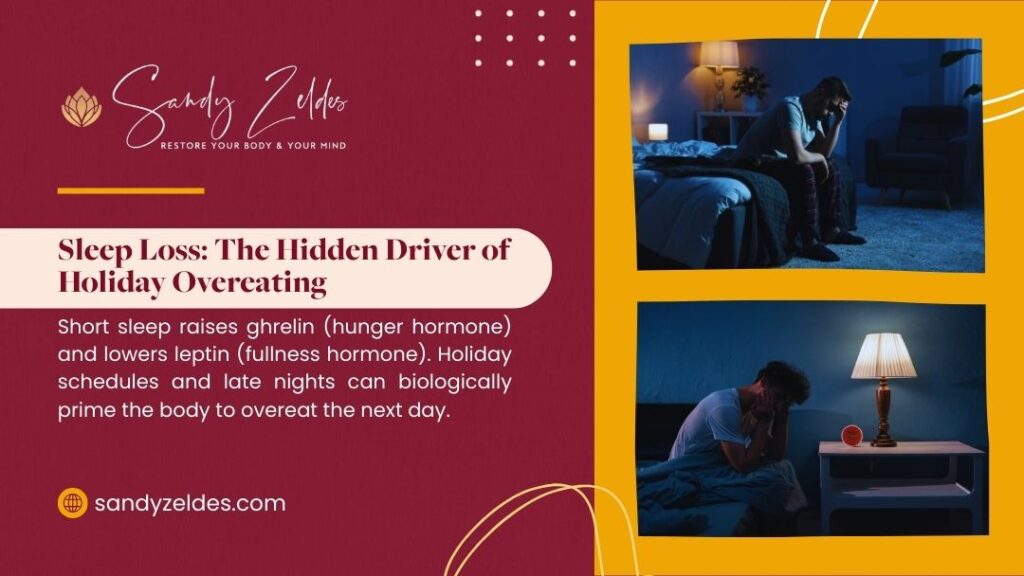
A closing reminder that comfort matters more than control
Holiday gatherings are supposed to feel celebratory. The most effective Smart Eating Tips: How Not to Overeat This Holiday Season do not involve fear, tracking, or restriction. They revolve around regular meals, hydration, vegetables, pacing that respects a 20-minute satiety window, and responding to the body with curiosity rather than criticism after eating.
It’s possible to keep physiology steady without giving up meaningful cultural dishes. And when overeating isn’t driven by hunger at all, when it’s emotional, habitual, or tied to long-standing subconscious patterns, more rules won’t create change.
That’s where a compassionate, mind-body framework becomes essential. A Holistic Approach to Weight Loss focuses on resolving self-sabotage and nervous-system stress rather than controlling food. Support that addresses emotional eating at this deeper level is available through Sandy Zeldes, whose work helps women heal their relationship with food instead of cycling through guilt and restraint.
Eat with confidence. Enjoy what matters. Let food be nourishment and pleasure, not panic.