A tapping script for weight loss uses the Emotional Freedom Techniques to reduce cravings by calming stress and emotional triggers rather than controlling food. It works differently from dieting because it targets the root cause of overeating, not the symptom. This approach tends to help emotional eaters, stress eaters, and women who feel stuck despite doing everything right.
This article aims to explain how tapping works, why it supports lasting change, and how to use it in a realistic, sustainable way.
Tapping Script for Weight Loss, and Why It Works Differently
Emotional Freedom Techniques, often called EFT tapping, is a mind-body method that combines focused language with gentle tapping on specific points of the body. Unlike traditional weight loss approaches that emphasize food rules, tracking, or discipline, EFT works on the emotional drivers behind eating behavior.
A tapping script is simply the language used during the tapping process. In practice, it’s a structured way of acknowledging stress, cravings, or self-sabotage while signaling safety to the nervous system. The script guides attention, while the tapping helps the body settle.
This matters because most struggles with weight are not caused by a lack of knowledge. People generally know what to eat. The issue shows up when stress is high, emotions go unprocessed, or the body stays in a protective state. Late-night snacking, constant grazing, or feeling out of control around food are often responses to pressure rather than hunger.
A tapping script for weight loss works differently because it starts where the behavior begins, inside the stress response, instead of trying to override it with willpower.
How Emotional Freedom Techniques Affects Cravings and Food Behavior
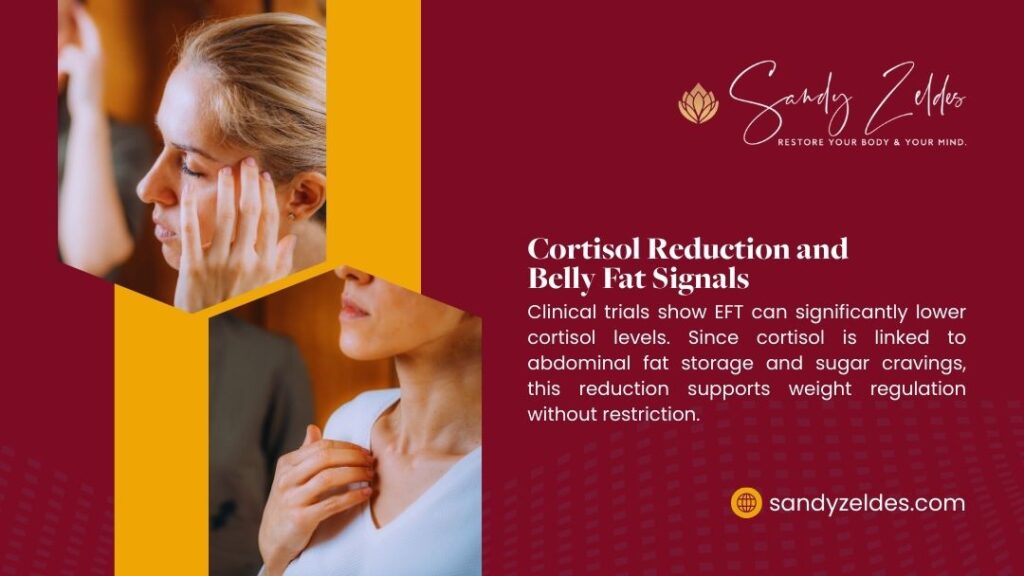
Cravings are not random. They are closely tied to stress, emotional memory, and hormonal signaling. When the body perceives threat, whether from deadlines, unresolved experiences, or chronic self-criticism, cortisol levels rise. Elevated cortisol has been linked to increased appetite, preference for high-calorie foods, and abdominal fat storage.
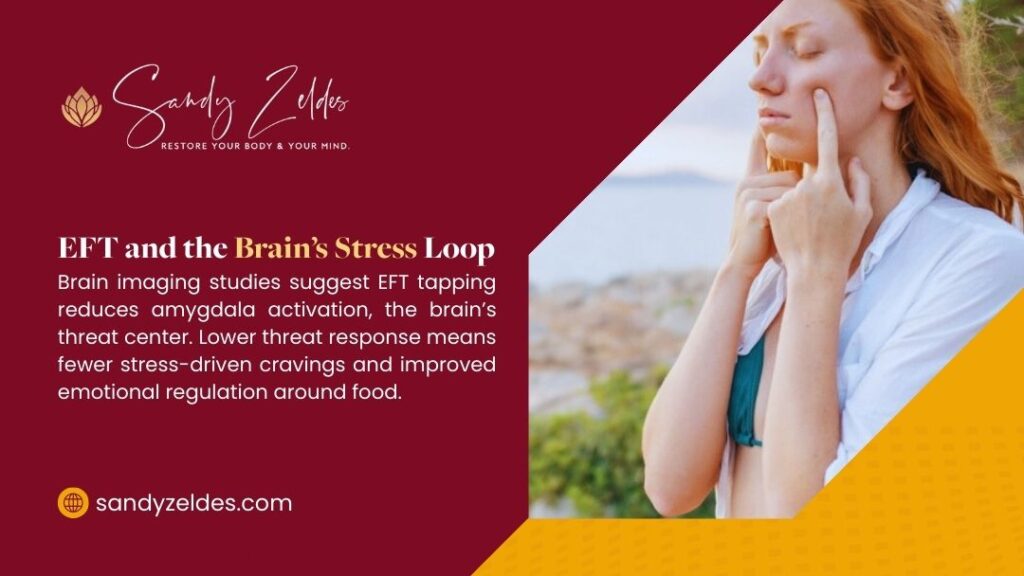
Emotional Freedom Techniques influences this process by calming the nervous system while the mind stays engaged with the emotional trigger. Research show that EFT significantly reduced food cravings and emotional eating, with improvements maintained months after treatment. Participants reported feeling calmer around food and less reactive to triggers, rather than simply eating less.
Additional research shows EFT reduces stress, anxiety, and emotional intensity, all factors strongly associated with impulsive eating. These outcomes matter more than calorie reduction because emotional regulation predicts long-term behavior change.
The technique itself is simple. EFT combines acknowledgment of what is happening with rhythmic tapping that sends calming signals to the brain. When the stress response quiets, the urge to self-soothe with food often fades on its own.
Key Components of EFT Tapping Scripts for Weight Loss
Effective tapping scripts follow a clear structure. They are not random affirmations or positive thinking exercises. Each component plays a role in reducing internal resistance and supporting emotional regulation.
| Component | Purpose | Why It Matters for Weight Loss |
| Setup Statement | Acknowledges the issue while allowing self-acceptance | Reduces inner conflict that fuels overeating |
| Tapping Sequence | Activates acupressure points | Calms stress-driven cravings |
| Emotional Language | Name guilt, pressure, or urge | Lowers emotional intensity |
| Positive Reframes | Introduces safer beliefs | Supports behavior change |
| Visualization | Reinforces emotional safety | Strengthens follow-through |
When these elements work together, the body no longer feels the need to protect itself through food.
A Structured EFT Tapping Script to Support Weight Loss
A structured EFT tapping script is most effective when used at moments of vulnerability. Many people find it helpful before meals, during cravings, or after emotionally charged days. A full round usually takes five to seven minutes.
The goal is not immediate weight loss. The goal is an emotional shift. When stress softens, choices become easier. Over time, repeated emotional regulation supports natural changes in weight, habits, and body trust.
EFT Tapping Script for Weight Loss
| Phase | Tapping Statement |
| Setup | Even though I feel pulled toward food when I’m stressed, I accept myself right now. |
| Awareness | This pressure is in my body. |
| Acknowledgment | This urge to eat even when I’m not hungry. |
| Compassion | This pattern is trying to protect me. |
| Regulation | I allow my body to feel calmer. |
| Integration | I can choose peace instead of pressure. |
This script addresses the emotional experience behind eating rather than the food itself.
Where to Tap: EFT Tapping Points
Tapping does not require precision, but understanding the points helps beginners feel more confident. Each point corresponds to an acupressure endpoint associated with emotional regulation.
| Point | Location | Why It’s Used |
| Karate Chop | Side of the hand | Reduces resistance |
| Eyebrow | Start of eyebrow | Emotional awareness |
| Side of Eye | Temple | Stress release |
| Under Eye | Below eye | Calms anxiety |
| Under Nose | Between the nose and the lip | Interrupts cravings |
| Chin | Chin crease | Self-acceptance |
| Collarbone | Below collarbone | Emotional balance |
| Under Arm | Side of torso | Grounding |
| Top of Head | Crown | Integration |
If you miss a point or tap out of order, it still works. Intention and presence matter more than technique.
Tapping Scripts & Emotion Diary
Using a tapping script for weight loss becomes far more effective when paired with simple tracking. Not calorie tracking. Not food journaling. Emotional tracking.
Most people don’t overeat randomly. They eat in patterns. The same time of day. The same emotional state. The same trigger. An emotion diary helps make those patterns visible without judgment.
When you write down what triggered the urge, how intense it felt, and how you felt after tapping, something subtle but powerful happens. The behavior slows down. Awareness steps in. The body begins to recognize that food is no longer the only option for relief.
This process also prevents the common frustration of thinking, “This isn’t working,” when in reality progress is happening internally before it shows externally.
Below is a simple format that works well alongside EFT tapping scripts.
| Date | Trigger | Emotion Intensity (0–10) | Script Used | After Tapping |
Entries do not need to be detailed. A few words are enough. The purpose is pattern recognition, not perfection. Over time, many people notice cravings losing urgency, emotional eating episodes shortening, or simply pausing long enough to choose differently. That pause matters more than control.
Why Emotional Eating Responds Better to Tapping Than Restriction
Restriction increases stress. Stress increases cravings. This cycle explains why emotional eating often worsens during dieting. Emotional eating is not a hunger problem. It is a coping response.
Research from the American Psychological Association shows stress alters eating behavior and food choice, increasing reliance on high-calorie comfort foods. Approaches that calm emotional reactivity, such as EFT and mindfulness-based interventions, consistently show better outcomes for long-term regulation.
Tapping works because it removes the need for coping rather than taking the coping mechanism away.
Integrating a Tapping Script into Daily Life
Consistency matters more than length. Short, regular tapping sessions help retrain emotional responses without disrupting routines.
| Timing | Purpose | Long-Term Effect |
| Before meals | Reduce urgency | More mindful eating |
| During cravings | Interrupt stress | Fewer impulsive choices |
| Evening | Release buildup | Improved regulation |
Over time, this rhythm supports natural habit change.
Tapping Scripts and Body Confidence
Body confidence plays a major role in eating behavior. Shame and self-criticism increase stress, which reinforces overeating. EFT supports body acceptance by reducing emotional reactivity rather than forcing positivity.
Studies published in Energy Psychology show EFT improves self-esteem and emotional regulation, both closely linked to body image and eating behavior. As emotional safety increases, the body no longer needs protection through weight.
Common Reasons Tapping Scripts Fall Short
When tapping feels ineffective, the issue is rarely the technique itself. It is usually how the script is used.
| Issue | Why It Happens | How to Fix It |
| Inconsistency | Used only during crises | Make it routine |
| Vague language | Emotional avoidance | Personalize wording |
| Expecting instant results | Unrealistic expectations | Focus on emotional shifts |
| Ignoring deeper triggers | Surface-level tapping | Track patterns |
Setbacks are part of the process. Progress builds through repetition, not perfection.
When Personalized Guidance Makes a Difference
While a tapping script for weight loss can be powerful on its own, some patterns run deeper than surface-level habits. This is especially true when emotional eating has been present for decades, weight feels resistant no matter what is tried, or food has become the primary coping tool for stress, grief, or unresolved experiences.
In these cases, personalized guidance helps identify what the body is actually responding to. Sometimes it’s not the craving itself but the fear beneath it. Sometimes it’s an old belief that weight equals safety. Sometimes it’s chronic stress that never fully turns off.
Working with an experienced EFT practitioner allows scripts to be tailored to specific emotional drivers rather than using generalized language. It also provides accountability and pacing. Many people tap too lightly or rush the process when they work alone, especially if uncomfortable emotions arise.
Personalized support is not about dependency. It’s about learning how to work with your nervous system instead of against it. Once that skill is internalized, many people continue using EFT independently with more confidence and consistency.
FAQs
How long does EFT tapping take to work for weight loss?
Many people notice emotional relief within minutes. Changes in eating behavior often follow as stress and reactivity decrease over time rather than instantly.
Can EFT tapping help emotional eating?
Yes. EFT tapping is commonly used to reduce emotional eating by calming the nervous system and addressing the emotional reasons food is used for comfort.
How often should I use a tapping script for weight loss?
Most people benefit from tapping once or twice daily or during moments of craving. Consistency matters more than session length.
Do I need to tap perfectly for it to work?
No. Tapping does not require precision. Being present and emotionally honest matters more than exact technique.
What This Means for Lasting Change
Lasting weight change does not come from control. It comes from self-trust. A tapping script for weight loss teaches the body that it no longer needs to protect itself through food. Over time, peace replaces pressure, and behavior follows naturally.
If you want guided support rooted in emotional regulation rather than dieting, explore working with Sandy through personalized EFT-based coaching. When the emotional load lifts, change stops feeling like a fight, and that’s when it lasts.