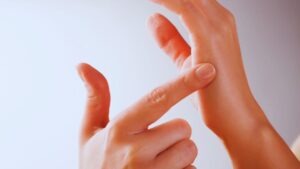
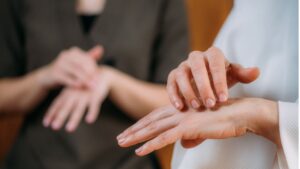
The EFT tapping points chart basically acts as a visual manual for turning down your body’s internal alarm system. By physically engaging with specific parts of your nervous system, you can lower emotional heat and disrupt those deep-seated stress habits that usually run on autopilot.
This guide walks you through the “how” and “why” of the EFT tapping points chart. We’ll look at what each spot actually does, how to get the sequence right for things like anxiety or habit-breaking, and we’ll clear up the common myths so you can use this tool safely and effectively.
Understanding the EFT Tapping Points Chart
The EFT tapping points chart maps out specific spots on the body used during the emotional freedom techniques. These locations aren’t random; they align with traditional meridian lines found in acupressure, but modern EFT focuses on how hitting these spots helps quiet the “fight or flight” response in our nervous system.
Usually, when someone is searching for an EFT tapping points chart, they want three things: a diagram they can trust, a sequence that’s easy to follow, and an explanation that actually makes sense. While the chart provides the framework, its real power is in helping the body shift from a state of survival back into a state of calm.
The chart’s biggest job is to make the process predictable. That matters because when things are consistent, your brain doesn’t have to work as hard. For a beginner, knowing exactly where to tap takes the “am I doing this right?” stress out of the equation, so you can focus entirely on the emotional pattern you’re trying to shift.
Standard EFT Tapping Points and Their Meaning
A standard EFT tapping points chart features 9 core locations. These are the “must-haves” in almost any printable EFT chart because they hit the most accessible and effective meridian endpoints on the body.
| EFT Point | Location | Meridian Association | Practical Meaning |
| Karate Chop Point/Side of Hand (SOH) | The fleshy outer edge of the hand | Small intestine | Helps clear resistance and set your goal |
| Eyebrow Point (EB) | Right where the eyebrow starts near the nose | Bladder | Good for letting go of old emotional weight |
| Side of Eye (SE) | On the bone at the outer corner | Gallbladder | Great for working through annoyance or anger |
| Under Eye (UE) | On the bone directly under the pupil | Stomach | Deeply connected to fear and worry |
| Under Nose (UN) | Between the nose and the top lip | Governing vessel | Helps with general emotional stability |
| Chin Point (CH) | In the little crease below the bottom lip | Central vessel | Tackles self-doubt and that “inner critic.” |
| Collarbone Point (CB) | Just under the bone near the breastbone | Kidney | Acts as a safety signal to ground you |
| Under Arm (UA) | On the side, about 4 inches below the pit | Spleen | The go-to spot for feeling totally overwhelmed |
| Top of Head (TOH) | Right at the crown of the skull | Central integration | Ties the whole calming process together |
The eyebrow, karate chop, and crown of the head are usually the “anchors” of the routine. Some specialized charts might add in finger points or the “gamut” point on the back of the hand for deeper work, but these nine are the essentials.

How EFT Tapping Works Scientifically
The EFT tapping points chart didn’t just get popular because it’s a nice idea. Over the last couple of decades, researchers have been digging into how tapping on these points while focusing on a problem actually changes the body.
Studies have shown that tapping can lead to measurable drops in cortisol (your main stress hormone) and help people feel significantly less anxious. It’s not just a placebo; it’s a physiological shift.
Brain scans show us even more. When you tap while thinking about something stressful, the amygdala, your brain’s “smoke detector,” tends to quiet down. This allows the logical parts of your brain to come back online. Research suggests this combo of physical tapping and mental focus actually helps delete old fear responses.
Essentially, the rhythmic tapping sends a “you are safe” message to your brain. That’s why tapping meditation can feel so grounding and why a high-stress moment can feel much smaller after just a few rounds of the sequence.
Step-by-Step Tapping Sequence Using the Chart
Sticking to a consistent order on the EFT tapping points chart helps your nervous system recognize the routine and relax faster. It’s all about creating that sense of safety through predictability.
Before you start, check in with yourself and rate your stress from zero to ten. This makes it easier to see how much progress you’re actually making.
| Step | Tapping Point | What to Do | Why It Matters |
| Step 1 | Karate Chop Point | Tap while saying your “setup phrase.” | Breaks through internal “stuckness.” |
| Step 2 | Eyebrow Point | Tap gently while naming the problem | Keeps you focused on the present |
| Step 3 | Side of Eye | Keep tapping and use a reminder phrase | Shuts down the immediate stress reflex |
| Step 4 | Under Eye | Tap steadily and notice how you feel | Directly targets feelings of fear |
| Step 5 | Under Nose | Tap while taking easy, natural breaths | Supports better emotional balance |
| Step 6 | Chin Point | Tap and acknowledge any self-judgment | Calms the voice that says “I can’t.” |
| Step 7 | Collarbone | Tap firmly, but don’t hurt yourself | Re-anchors your sense of safety |
| Step 8 | Under Arm | Tap while keeping your focus steady | Addresses that “too much” feeling |
| Step 9 | Top of the Head | Tap lightly to finish the round | Brings the whole session into focus |
After a full round, take a breath and re-rate your stress. If it’s still high, go again. Sometimes, being more specific with your words in the second round can lead to a faster breakthrough.
Advanced Tapping Points Beyond the Basic Chart
Sometimes a standard chart isn’t enough for really complex issues, so practitioners use extra points. Finger points are located right near the nail beds, while the “gamut point” on the back of the hand is often used to help the left and right sides of the brain work together better.
These extra spots are great for fine-tuning. If a certain stress pattern feels like it has multiple layers, adding these points can help. But for most daily stress, the nine-point chart works perfectly well on its own.
| Extended Point | Location | Use Case |
| Finger Points | Sides of the fingers near the nails | For deep-cleaning emotional triggers |
| Gamut Point | Back of the hand between the knuckles | For better focus and mental integration |
| Wrist Points | Tapping both inner wrists together | A quick way to ground yourself anywhere |
Conditions Where EFT Tapping Helps Most
Research and real-world results show that EFT is fantastic for managing your emotions. While it’s famous for anxiety, it’s also used for things like food cravings, old trauma responses, and breaking bad habits.
For example, a study in the journal Explore found that EFT helped people significantly reduce their food cravings. This is why so many people are turning to tapping for things like emotional eating or binge habits.
It’s also very helpful for stress related to hormones. By focusing on the nervous system instead of just trying to “willpower” your way through it, tapping creates a foundation for real change. This is a big part of Sandy Zeldes’ approach; you have to regulate the system before you can expect lasting weight loss or behavior shifts.
Printable EFT Tapping Chart and Diagram
A lot of people like to have a printable EFT tapping chart PDF they can keep nearby. Having a visual reference means you don’t have to keep a screen open and can stay in the “flow” of your practice. A clear diagram of the face tapping points helps you learn the spots quickly.
If you’re interested in using these points for weight loss specifically, Sandy Zeldes has some great resources on how to find the subconscious blocks that might be holding you back. Her work really highlights why “just trying harder” doesn’t work when your body is stuck in a stress loop.
Why This Chart Matters in Real Life
The EFT tapping points chart turns an abstract idea like “managing stress” into a physical tool you can actually use. It’s like a roadmap for your nervous system. Over time, this helps you stop just reacting to things and gives you the calm you need to make better choices.
People who once felt like they were at the mercy of their emotions often find a sense of peace after using the chart. This shows up all the time in Sandy Zeldes’ client success stories, where tapping helps fix the root emotional issues rather than just covering up the symptoms.For those who want a bit more structure, her program shows how to bring all these pieces together for long-term results.
Final Thoughts: Where to Go From Here
Learning the EFT tapping points chart is a great first step, but it’s really just the beginning. The biggest shifts happen when you use it regularly and start to listen to what your body is trying to tell you underneath the stress.
If you find that tapping helps for a bit but your old habits keep coming back, a bit of expert guidance can go a long way. If you’re ready to move past just “coping” and want to get to the bottom of why you feel the way you do, working with an experienced practitioner is a smart move.
Check out Sandy Zeldes’ approach to see how these tools can lead to real, clinical-grade results. If you’re ready to stop managing symptoms and start actually resolving things, this is where you start.