


EFT for binge eating focuses on the real reason food feels out of control, not lack of discipline, not failure, and not food itself. This approach supports women over 45 who are exhausted from decades of dieting, stress eating, and trying to fix themselves, only to feel stuck in the same cycle.
Instead of managing food, EFT works with the subconscious stress patterns that drive binge urges in the first place. When those patterns are resolved, many women experience something they’ve never had before: peace with food and peace in their own body, without force or constant effort.
EFT for Binge Eating and Why This Approach Exists
EFT for binge eating exists because so many capable, intelligent women are quietly asking the same question: Why does food feel so powerful when I’m successful everywhere else in my life?
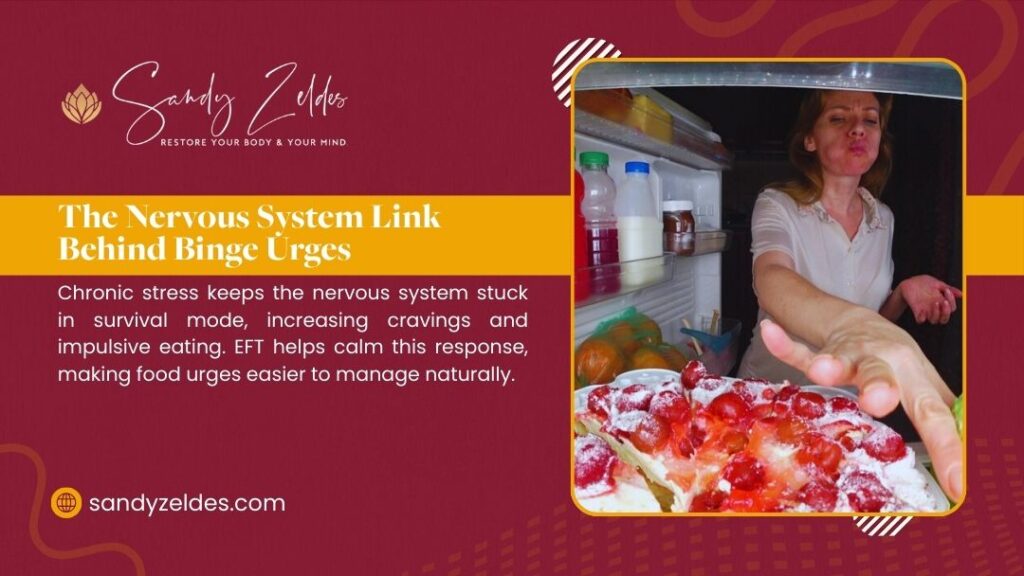
Binge eating does not begin with food. It begins with long-standing emotional pressure, chronic stress, and coping responses that once helped a woman get through difficult moments. Over time, those coping responses become automatic.
For many women in midlife, years of dieting actually intensify this pressure. The body interprets restriction as danger, not discipline. When stress builds, binge urges are not rebellion; they are self-protection.
EFT for binge eating takes a different path by addressing the emotional signals before food enters the picture. When the internal pressure drops, eating behavior often changes naturally, without rules or control.
Why Binge Eating Has Nothing to Do With Willpower
Binge eating is often misunderstood as a willpower problem. In reality, it’s a stress response.
When the nervous system feels overwhelmed or unsafe, it looks for relief. Food becomes familiar, reliable, and soothing. Over time, this turns into a pattern that feels impossible to stop with logic alone.
This is why women often say: Why am I gaining weight so fast when I’m barely eating? I know what to do… why can’t I just do it?
Because the body does not respond to discipline when it feels threatened. It responds to safety.
| Common Belief | What’s Really Happening |
| Binge eating means loss of control | Binge eating is learned self-protection |
| Food is the problem | Emotional stress drives the behavior |
| More discipline is needed | Calming the nervous system creates change |
| Diet failure means personal failure | Diet pressure often worsens binge urges |
EFT for binge eating works because it removes the pressure instead of adding more.
What Emotional Freedom Techniques Actually Do
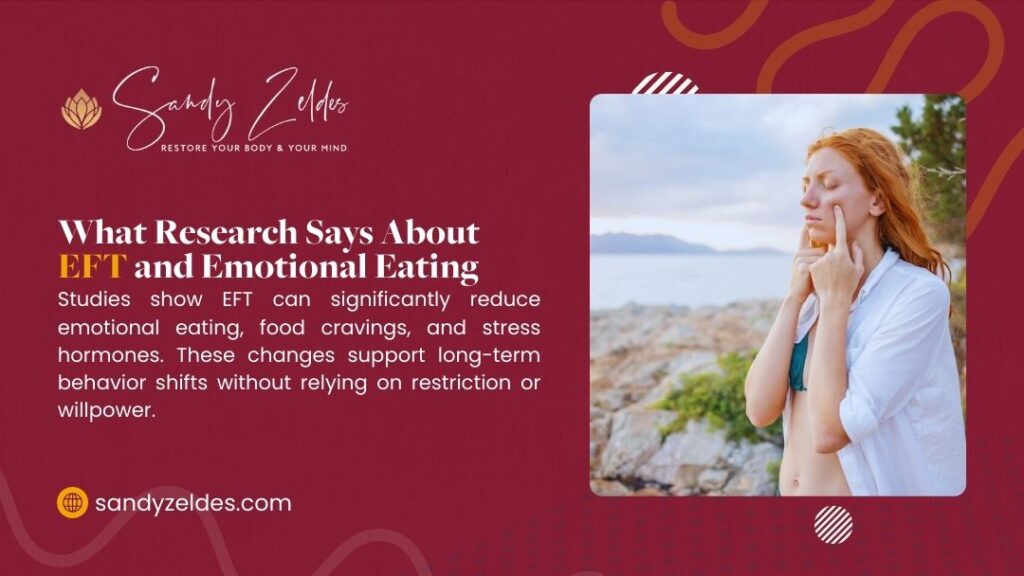
Emotional Freedom Techniques (EFT) use gentle tapping on specific points on the body while focusing on emotional distress. This sends a signal of safety to the brain, like turning down an internal alarm.
You don’t have to believe anything or think positively for EFT to work. The body responds first. Thoughts and behaviors often shift afterward.
For binge eating, EFT focuses on moments that trigger urges, such as:
- Loneliness
- Shame
- Exhaustion
- Body image distress
- Feeling overwhelmed or “too much.”
Instead of fighting cravings, EFT allows the emotional charge underneath them to dissolve, so food no longer has the same pull.
Why This Is Different From Other Eating Disorder Approaches
Many women have already tried:
- Therapy
- Mindset work
- Intuitive eating
- Behavior-based tools
Some of these help temporarily. But when emotional stress remains unresolved, the cycle often returns.
| Approach | Focus | Why It Often Falls Short |
| CBT | Changing thoughts | Stress responses live deeper than thoughts |
| Behavioral tools | Managing urges | Requires constant effort |
| Intuitive eating | Hunger cues | Hard to access during stress |
| Medication | Symptom control | Doesn’t resolve the root cause |
| EFT for binge eating | Emotional resolution | Addresses the source of the cycle |
EFT is not about controlling food. It’s about removing the reason food is needed for comfort.
How EFT Supports Lasting Change (Without Chasing Weight Loss)
Many women ask if EFT leads to weight loss. Sometimes it does, but that’s not the goal.
The real goal is:
- Peace with food
- Peace with the body
- Relief from constant mental noise
When stress decreases, the body often regulates naturally. Cravings soften. Hormones stabilize. Motivation returns without force.
Women frequently notice changes not only with food, but also with:
- Sugar cravings
- Emotional eating
- Alcohol use
- Compulsive thinking
Food was never the real issue. It was just the loudest signal.
When EFT for Binge Eating Makes the Most Sense
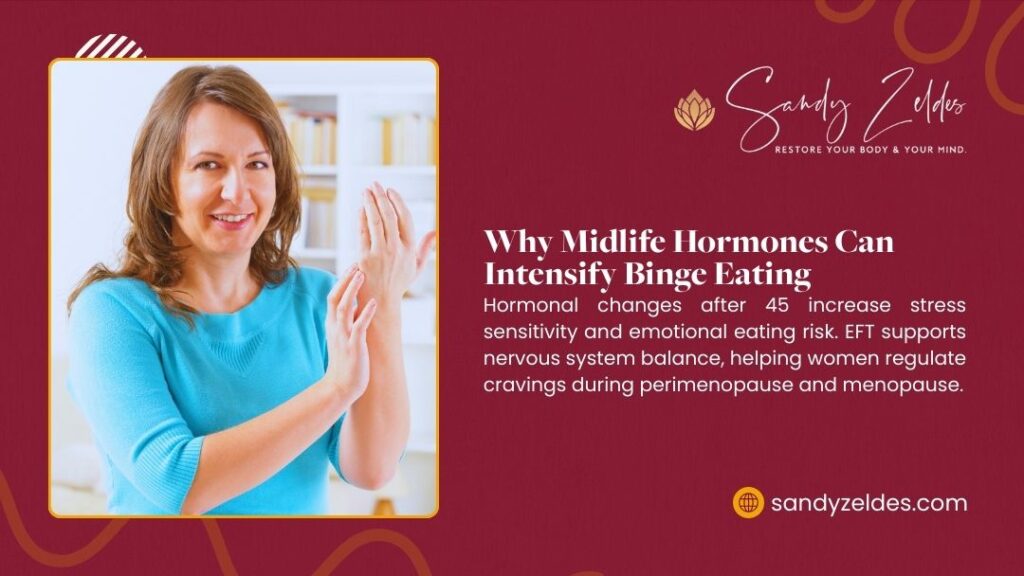
This work is especially powerful for women over 45 who have dieted most of their adult life, feel weight-loss resistant, experience strong guilt or shame around food, and sense that food isn’t the real problem.
| Common Experience | What EFT Addresses |
| Repeated binge cycles | Emotional triggers |
| Body image distress | Protective stress patterns |
| Weight loss resistance | Chronic stress response |
| Guilt or shame | Emotional memory |
| Loss of motivation | Nervous system fatigue |
If you feel like you’ve tried everything, this approach was designed for you.
Safety, Ethics, and Responsible Care
EFT works best for women who are not in an acute medical crisis. It does not replace medical or emergency care. When appropriate, it can complement other forms of support. For women seeking a natural, non-invasive approach that avoids medication and rigid control, EFT offers a different path, one that works with the body instead of against it.
Why Would This Work for Me?
This is one of the most common reactions, and it makes sense. When you’ve struggled for decades, hope feels risky. Many women believe they are the exception, the one person it won’t work for.
That belief isn’t true. It’s protection. The part of you that turns to food isn’t broken. It learned how to keep you safe during stressful times. When that part finally feels safe, it no longer needs food to cope. This is why past failures do not predict future success.
FAQs About EFT for Binge Eating
What is the best therapy for binge eating?
The best therapy for binge eating depends on the root cause. For a side-by-side look at how the two methods differ in practice, see our comparison of tapping and cognitive behavioral therapy. Traditional approaches like cognitive behavioral therapy (CBT) focus on changing thoughts and behaviors, while Emotional Freedom Techniques (EFT) focus on calming the emotional stress driving the behavior.
For many women over 45, binge eating is not just about food habits but about unresolved emotional pressure, chronic stress, or past experiences. EFT can be especially effective because it works directly with the nervous system, helping reduce the intensity of urges rather than trying to control them.
How does tapping therapy help with compulsive eating?
Tapping therapy, also known as EFT, helps with compulsive eating by calming the body’s stress response. When emotional triggers like anxiety, loneliness, or overwhelm activate binge urges, tapping sends signals of safety to the brain.
As the emotional intensity decreases, the urge to use food for comfort often weakens naturally. Over time, this can reduce compulsive eating patterns without relying on willpower or strict control.
Are there online EFT coaching programs for binge eating recovery?
Yes, there are online EFT coaching programs designed to help women overcome binge eating by addressing subconscious emotional patterns.
Programs like Sandy Zeldes’ private coaching focus on identifying and resolving the root causes behind binge urges rather than managing food behaviors alone. These programs are typically delivered remotely, making them accessible to women.
Can EFT stop binge eating permanently?
EFT can help reduce or eliminate binge eating patterns when the underlying emotional drivers are fully addressed. Instead of suppressing urges, EFT works to resolve the stress and emotional charge that create them.
For many women, this leads to long-term change because the need to use food as a coping mechanism decreases. However, results depend on consistency, depth of work, and whether the approach matches the individual’s needs.
Why do I binge eat even when I’m not hungry?
Binge eating without physical hunger is usually linked to emotional or nervous system triggers rather than a lack of discipline.
When the body feels stressed, overwhelmed, or unsafe, it seeks relief. Food provides a quick and familiar way to soothe those feelings. This is why many women feel strong urges to eat even when they know they are not physically hungry. Before you start tapping, it can help to learn where binge eating disorder begins and how a clinician would assess it.
EFT helps by calming the body’s stress response, making it easier to respond to real hunger cues rather than emotional triggers.
What are the best EFT apps for managing binge eating?
There are several EFT apps available that guide users through tapping sessions for stress, cravings, and emotional regulation.
While apps can help learn the basics, binge eating often involves deeper emotional patterns that may require personalized guidance. Working with a trained EFT practitioner can provide more targeted support, especially for long-standing eating behaviors.
Final Thoughts
EFT for binge eating offers a path beyond endless diets and self-blame. It supports women who are ready to stop fighting food and start resolving what drives the struggle underneath.
This work is offered through a private, 3-month coaching program designed for women over 45 who are a strong fit for this approach. It is personalized, guided, and focused on lasting change, not quick fixes.
If you’re ready to explore whether this work fits your history and goals, you can learn more about working directly with Sandy.