


How many EFT sessions do you need for emotional eating? There is no established session count that can predict your results. Agree on a goal, a manageable commitment, and a review point with your practitioner, then decide what to do next based on your experience.
You run a team at work and, most likely, the calendar at home too. You plan everything. So when you hear about EFT tapping for emotional eating, your first question is practical: how long am I signing up for?
You deserve a straight answer.
The Short Answer: It Depends on What’s Driving the Eating
There is no fixed number of EFT sessions that works for everyone. A practitioner can discuss a plan with you, but an estimate is not a promise of when emotional eating will stop.
Feeling calmer during one appointment and changing a recurring eating pattern are different goals. Neither tells you exactly how many appointments you will need. My coaching explores the feelings, beliefs, and habits around eating, drawing on more than 20 years of work with women on their relationship with food.
Research offers context rather than a personal deadline. A 2016 food-cravings trial compared EFT with cognitive behavioral therapy in 83 adults with overweight or obesity during an eight-week intervention. Both groups reported improvements in food cravings, but BMI did not decrease. Eight weeks describes that study, not a required course or a promise that either approach will resolve your eating concerns.
Here, EFT means Emotional Freedom Techniques, also called tapping. It is different from Emotionally Focused Therapy, a psychotherapy approach that also uses the abbreviation EFT. Session estimates for that method do not answer the question about tapping.
Session vs. Round vs. Daily Practice: Clearing Up the Terms
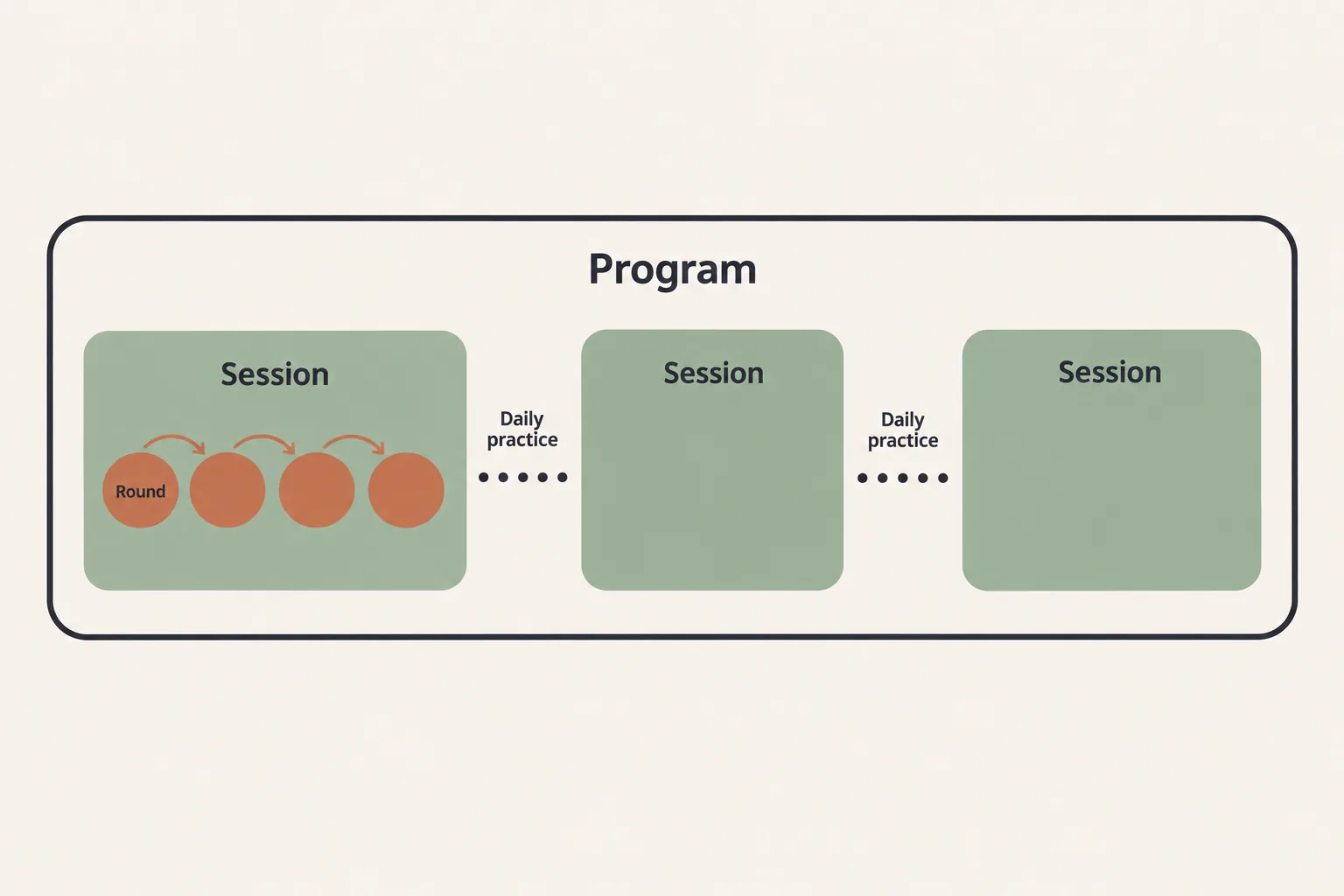
Much of the confusion about timelines comes from mixing up three different things:
-
A round is one pass through the tapping points while you focus on a feeling or craving. Its length can vary.
-
A session is a block of time set aside for tapping, alone or with a practitioner. Ask about appointment length and what it includes before booking.
-
Daily practice means self-tapping between appointments. It is an option to discuss, rather than a requirement for everyone.
A round, an appointment, and a program are different units of time. For the technique itself, my step-by-step EFT guide explains the tapping points and wording.
What to Notice in Your First 1–3 Sessions
Treat the first one to three sessions as a possible review window, not a deadline for relief. If you try EFT, look for changes that matter in daily life, such as:
-
Noticing a trigger before an eating urge becomes overwhelming
-
A particular craving feeling less intense
-
Having another way to respond to a difficult moment
These are possible goals, not changes every client should expect. You might also notice no benefit, or find that the approach feels uncomfortable. Bring that information to the practitioner rather than assuming you have failed.
In my coaching, we can explore whether a familiar eating habit has become a way to find comfort or feel protected. That is one way to understand a pattern, not a diagnosis that every craving comes from hidden trauma. The aim is curiosity about your needs, with less blame.
Old patterns can resurface when new stress hits: a big deadline, a family crisis, the holidays. That isn’t failure. It’s information about what still needs attention.
Curious what goes on inside a session? Read what a session involves before deciding whether to book.
What Changes Over a Longer Program
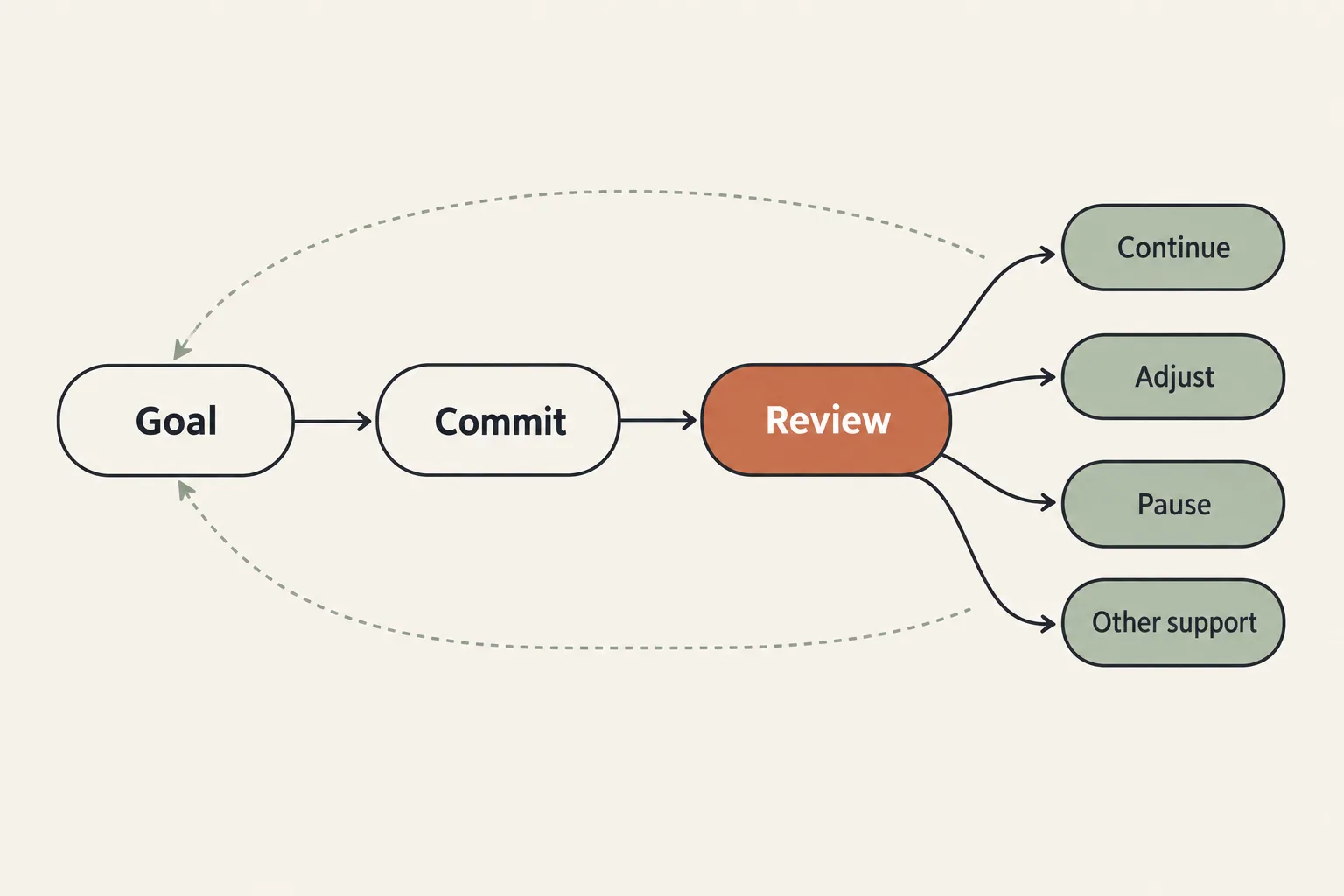
A longer program creates time to explore recurring situations and review your responses. It does not establish how much change will happen or guarantee that cravings will disappear.
Useful goals might include:
-
Less distress around familiar triggers
-
Less food noise, meaning persistent thoughts about food
-
Eating decisions that feel calmer and less pressured
-
Responses you can use during busy or stressful periods
Time between sessions matters. You need real-life chances to practice new responses: the tense meeting, the hard conversation with your mother, the vacation buffet. Each one shows both of us what has shifted and what hasn’t.
At a review, ask what is changing outside the appointment. You could note one recurring situation, how distressed you feel, and whether your response is becoming more flexible. Skip tracking if it increases anxiety or turns into another food rule. If there is no useful change, discuss adjusting the approach, pausing or seeking different support.
My website describes a one-to-one coaching program and also lists individual EFT sessions. Ask about current availability, session frequency, and the total commitment before choosing support.
Quick Guide: Typical Timelines by Goal
Your goal helps shape the conversation about sessions. The table below is a planning guide, not a set of tested treatment timelines.
| Your goal | What to discuss before committing |
| Easing one craving or stressful moment | Whether a brief exercise feels helpful; one calmer moment does not establish lasting change. |
| Changing a specific habit, such as evening snacking | The situation you want to address, realistic support, and when to review progress. |
| Long-standing emotional eating or chronic dieting | How coaching fits your needs and whether nutritional or clinical assessment is also appropriate. |
| Eating concerns linked to trauma | Care with an appropriately licensed mental health professional; coaching is not trauma treatment. |
If sugar cravings are your main concern, explore EFT and sugar cravings for related context. That article does not establish a reliable personal session count.
For complex trauma, seek a licensed mental health professional with relevant trauma training. An EFT certificate alone does not establish a license to provide mental health treatment.
What Can Affect Your Progress?
Several practical questions are worth discussing, without assuming that one routine will make EFT work faster:
-
Your focus: Can you name a specific situation, such as the email from your boss at 4:45 on a Friday?
-
Your comfort: Can you ask questions, change the topic, or stop without pressure?
-
Your circumstances: Does the proposed schedule fit your work, family responsibilities and budget?
-
Your wider needs: Are there eating, sleep, or health concerns that need attention alongside stress?
Between-session practice can be something to try if you find it useful. It should not become another test of discipline. Missing an appointment or finding practice difficult is a reason to discuss the plan, rather than blame yourself.
If you’re over 45, a demanding career, caring responsibilities, or concerns about perimenopause may be part of your situation. None of these gives a practitioner a reliable formula for your session count. Medical concerns deserve assessment by a healthcare professional.
I spent years as a professional chef before becoming a nutrition consultant and holistic health coach. My coaching makes room for the emotional side of eating as well as my background in food. That does not mean food, nutrition, or medical care are irrelevant, or that tapping guarantees weight loss.
How Often Should You Tap Between Sessions?
There is no established daily tapping schedule for emotional eating that fits everyone. Ask your practitioner whether self-practice is suitable for you and what to do if you feel worse.
How many times a day? If you choose to practice, start with something brief and manageable. You might try a check-in before a stressful event or when a familiar trigger appears. These are options, not a required daily dose.
How many rounds? Check how you feel after a round and decide whether continuing would be useful. An optional 0–10 intensity rating can help you describe a feeling, but it is not a diagnosis. You do not need to reach zero or keep tapping until discomfort disappears.
Choose a routine that leaves room for rest, meals, and other care. You can start when it suits your life; you do not need a new season or another diet resolution.
Can You Overdo EFT Tapping?
Yes, a practice can become unhelpful if you keep going when you feel distressed, uncomfortable, or exhausted. Pause rather than pushing through difficult feelings to meet a target number of rounds.
Signs it’s time to pause:
-
Feeling drained after a session
-
Feeling more overwhelmed or stirred up than when you started
-
Old memories surfacing faster than you can process them
Stop if tapping hurts or focusing on memories feels overwhelming. If distress persists or affects daily life, seek appropriate professional support. You do not have to explore traumatic memories on your own.
Repeated loss of control around eating, severe restriction, or purging calls for clinical assessment. The National Institute of Mental Health’s eating-disorder guidance explains why these concerns need care. Emotional eating alone does not establish an eating-disorder diagnosis. My role is coaching, not medical care or psychotherapy.
FAQs About EFT Sessions
How long does it take to see results from EFT tapping?
There is no reliable deadline for an individual’s results. A change in how you feel during tapping does not establish lasting improvement in emotional eating. Review what is happening in your daily life as well as during appointments, and discuss a different plan if the work is not helping.
What is the success rate of EFT?
There’s no single success rate that can tell you what will happen for you. Results vary from person to person, and nobody can honestly guarantee an outcome. A useful research result must specify the population, outcome, and follow-up period. A testimonial or a company’s success claim cannot supply your personal odds.
Does EFT tapping lower cortisol?
Some research has measured short-term changes, but it cannot predict your hormone levels. A 2020 cortisol study randomized 53 participants to three conditions: a 60-minute EFT group, educational support (psychoeducation), or no treatment. EFT’s cortisol reduction was greater than psychoeducation’s; its post-treatment level was not significantly different from no treatment. This small, short-term study does not establish lasting hormone changes or eating outcomes. Discuss medical concerns with your doctor.
How many EFT sessions do you need for anxiety or depression?
Do not use an emotional-eating article to plan treatment for anxiety or depression. NCCIH’s EFT overview notes some evidence of reduced anxiety but says more research is needed. It does not provide a personal session count or establish a depression treatment plan. Discuss diagnosed or persistent symptoms with a licensed mental health professional.
Choosing Your Next Step With EFT
How many EFT sessions do you need? Start with a clear goal and a plan you can review, rather than a promised finishing date. Ask about the time and cost involved, what progress would look like, and when you will reconsider the approach. You deserve clear information before committing.
If you would like help exploring the feelings, beliefs, and habits around eating, explore one-to-one coaching with me and see whether the approach fits your needs. The goal is a calmer relationship with food and your body, with room to decide what support is right for you.


