

The Guilt Starts Before the Plate Is Empty
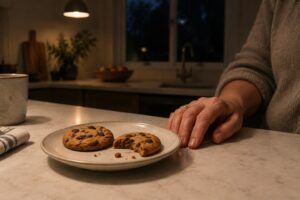
You run a team, a household, a budget, and a calendar full of other people’s needs. Then you eat two cookies standing at the kitchen counter at 9 pm and spend the next three hours prosecuting yourself for it.
The feeling may get louder in January, when everyone is announcing what they are giving up, or in summer, when someone suggests a pool day. The guilt was already there. The season only turns up the volume.
In more than 20 years of working with women, I have met many who blamed a lack of discipline for food guilt. Often, that was not the whole story.
What to Do When Food Guilt Hits Right After Eating
If the guilt is loud right now, pause before making a rule about tomorrow. Name what happened without a verdict: “I ate two cookies, and I feel upset.” Notice whether you feel physically uncomfortable, emotionally distressed, or both. Give yourself a few minutes to settle before deciding what you need next.
Why Do I Feel Guilty After Eating?
Food guilt is the distress or self-judgment that can follow eating. It often grows around food rules, although body-image pressure, health worries, and past experiences can play a part. When guilt follows an ordinary meal, ask which rule you believe you broke and where that rule came from.
Diet culture gave food a moral score
Decades of good-food and bad-food language turned an ordinary meal into a verdict on your character. Points, macros, tracking apps, earning dessert with a workout: these can install a scoreboard in your head. Sometimes it keeps running long after you quit the program that installed it.
How Body-Image Pressure Can Intensify Food Guilt in Midlife
If you are over 45, you may have lived through changing messages about what a woman’s body should look like and what she should eat. Changes around perimenopause and menopause can bring fresh attention to your body, making old food rules feel especially loud.
Old food rules you never actually chose
Clean your plate. A comment from a relative at a family dinner. A first diet at fourteen. Some of these messages can become automatic beliefs that are hard to shake, even when you question them. You can know one food choice doesn’t define your worth and still feel uneasy after eating.
Try the Food-Rule Check With a Real Example
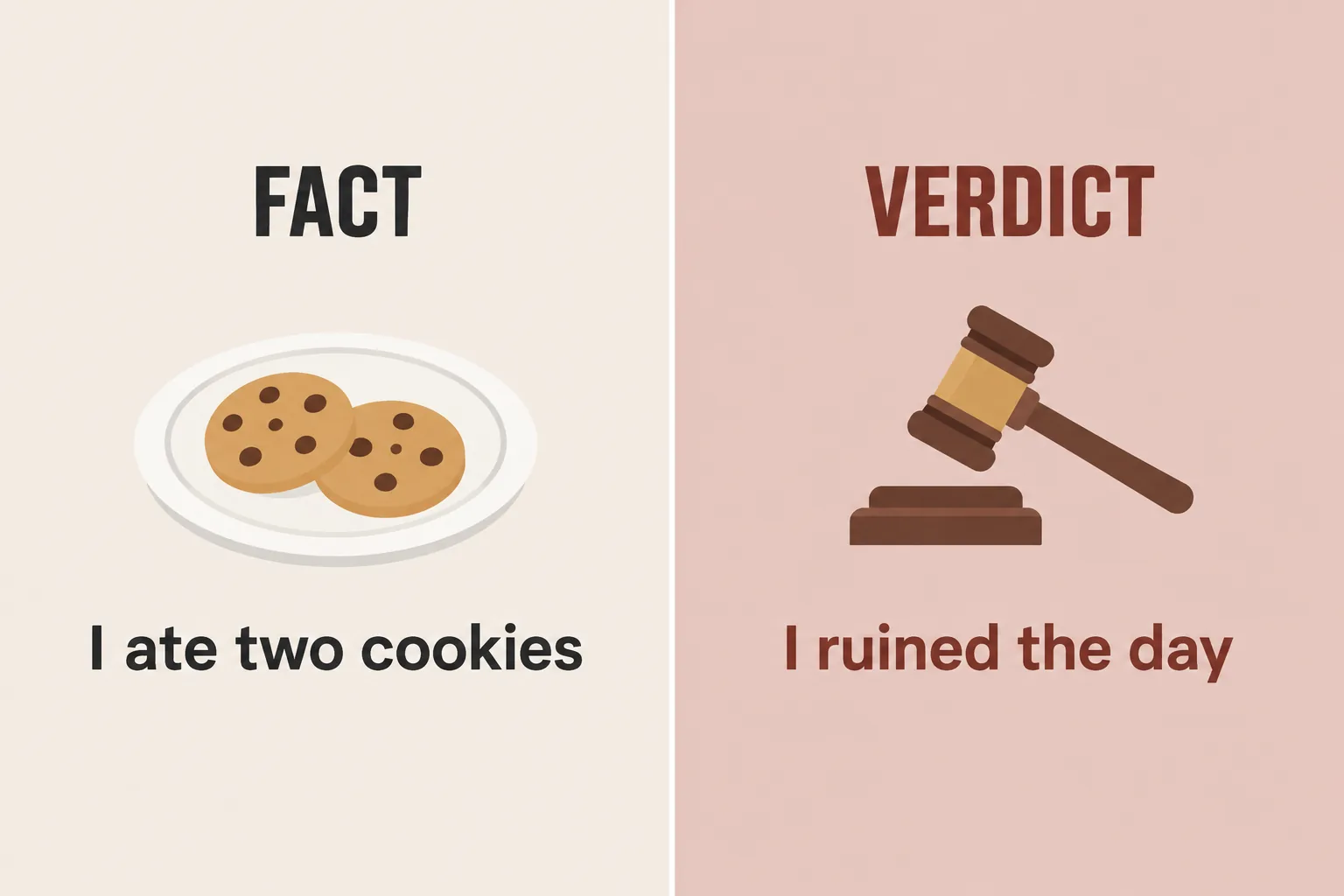
Start with the fact: “I ate two cookies.” Then name the rule: “I ruined the day.” The first sentence describes what happened; the second is a judgment. Ask whose rule that is and what you need now. You do not have to settle the whole question tonight to stop treating one snack as a verdict on yourself.
Is It Normal to Feel Guilty After Eating?
Common, yes. If the guilt leads you to punish yourself or avoid meals and plans, it deserves attention. A passing regret, “I ate that faster than I wanted to”, can prompt reflection. Food guilt that shapes your whole day, makes you cancel plans, or changes how you see yourself may call for more support.
How Food Guilt Can Keep the Restrict-and-Restart Cycle Going
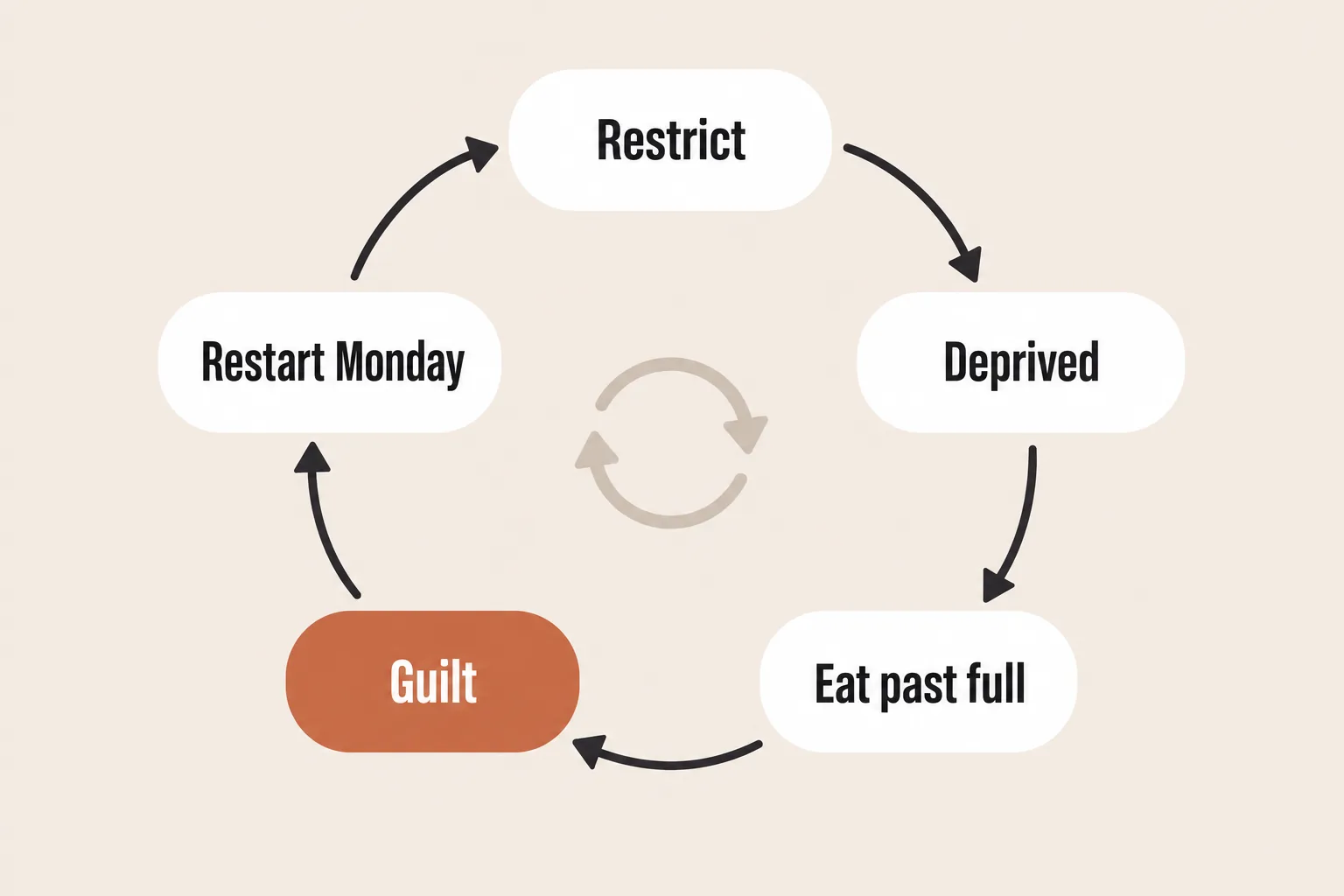
For some people, guilt becomes part of a cycle: restrict food, feel deprived, eat past comfort, feel guilty, then decide to restrict again. Others respond to guilt differently, including by avoiding meals or social situations.
When you tell yourself, “I already blew it, so I’ll start Monday,” one meal can become the reason to give up on caring for yourself for the rest of the week. Many women recognize that moment.
Willpower alone may not resolve an entrenched pattern. If you are disciplined in every area of your life except food, the problem was never your character.
You can make your next eating decision without turning the last one into a punishment.
Is It Physical Discomfort, Food Guilt, or Both?
Physical discomfort and self-criticism can arrive together. Notice whether you need physical care, emotional support, or both.
Physical discomfort may feel like bloating, heaviness, or pain. Eating quickly or well past fullness can be one reason, but persistent or concerning symptoms deserve a medical assessment.
Food guilt may sound like “I was bad for eating that.” You can have that thought even when you feel physically fine, or you may feel it at the same time as discomfort. Notice what is happening before deciding how to respond.
How to Stop Feeling Guilty After Eating: 7 Shifts to Try
1. Retire the good and bad labels. Describe food by what it does for you instead: this fills me up, this gives me energy, this is delicious, and I wanted it.
2. Drop the fantasy of perfect eating. There is no clean streak to protect, which means there is nothing to ruin.
3. Feed yourself properly earlier in the day. If skipping meals leaves you very hungry in the evening, eating more regularly can help you understand the evening urge without blaming yourself for it.
4. Swap self-criticism for curiosity. Ask what happened and how you felt before you ate. You may notice hunger, stress, fatigue, an old food rule, or several things at once. My podcast episode on the true roots of emotional eating goes deeper here.
5. Practice the neutral next meal. No compensating, no skipping, no punishment workout. Just the next normal meal at the normal time.
6. Speak to yourself the way you would speak to your daughter. Try a kinder response even if it feels unfamiliar. In a small pilot trial involving 22 outpatients with eating disorders, adding group compassion-focused therapy to usual treatment improved shame and symptoms compared with usual treatment alone. That trial did not test whether one kind sentence treats everyday food guilt.
7. Notice the belief, not just the behavior. Ask what the rule says about you when you eat. Identifying a belief may not make it disappear on command, but it gives you a place to begin.
Can EFT Tapping Help When Food Guilt Feels Stressful?
EFT tapping, in plain terms, means gently tapping a set sequence of points on your face and upper body while naming aloud or silently what you are actually feeling. No equipment, nothing invasive, nothing you need a prescription for.
If food guilt comes with a rush of stress, tapping may offer a structured pause while you name that feeling. A small pilot study involving 15 adults with food cravings examined EFT and responses to food cues; it did not study guilt after eating. In my work combining holistic nutrition, functional medicine, and EFT, tapping is one option I may use alongside a conversation about food rules and stress. Your response to it may differ from someone else’s.
The basic tapping points, in order
A simple EFT tapping points chart you can follow from memory:
- Side of the hand
- Eyebrow (inner edge)
- Side of the eye
- Under the eye
- Under the nose
- Chin crease
- Collarbone
- Under the arm
- Top of the head
If you want to try it, begin at the side of the hand with a sentence such as “I feel guilty about what I ate.” Rate how strong the feeling is from 0 to 10, tap gently through the points while repeating a short reminder phrase, then check in with yourself again. If the exercise brings up more distress, stop and seek support.
Tapping is optional. If it does not help, that does not mean you are doing something wrong.
When Food Guilt Needs More Than Self-Help
Some signs deserve real support: hiding food or eating in secret, purging or compensating after meals, and food rules strict enough to decide whether you see your friends.
If any of that is familiar, talk with your doctor or an eating-disorder specialist. In the US, NEDA’s screening tool and support resources can help you consider next steps; screening is not a diagnosis. In Canada, NEDIC’s helpline and live chat can help you find information and support. Coaching is not diagnosis or treatment, and it is not a substitute for clinical care.
When Food Guilt Keeps Coming Back
If food guilt keeps returning, it may help to explore the food rules, stress, and experiences that give it force.
In my work, I sometimes find that a pattern around eating began as a way to cope with stress or feel safe. That is a possibility to explore, not a judgment about everyone who feels guilty after a meal. The goal is to understand what is happening so you have more room to choose your response.
If you recognized yourself in this article and want support with a recurring pattern, explore my private one-on-one coaching and apply if it feels like a fit. We can start by talking about what has been going on for you.