


What Are You Hoping EFT or Hypnosis Will Change?
You have counted, tracked, fasted, and restarted every January. So when you finally land on two options that work on the mind instead of the plate, it feels like a fork in the road: tapping or hypnosis?
Both share something that matters more than the label. Neither is a diet. Both can help you pay attention to eating patterns that do not seem to change with another set of food rules. If stress or emotional eating plays a part for you, the useful questions are how each approach feels in practice and what its research actually measures. Neither can promise weight loss.
What EFT Tapping Is and How It Works for Weight Loss
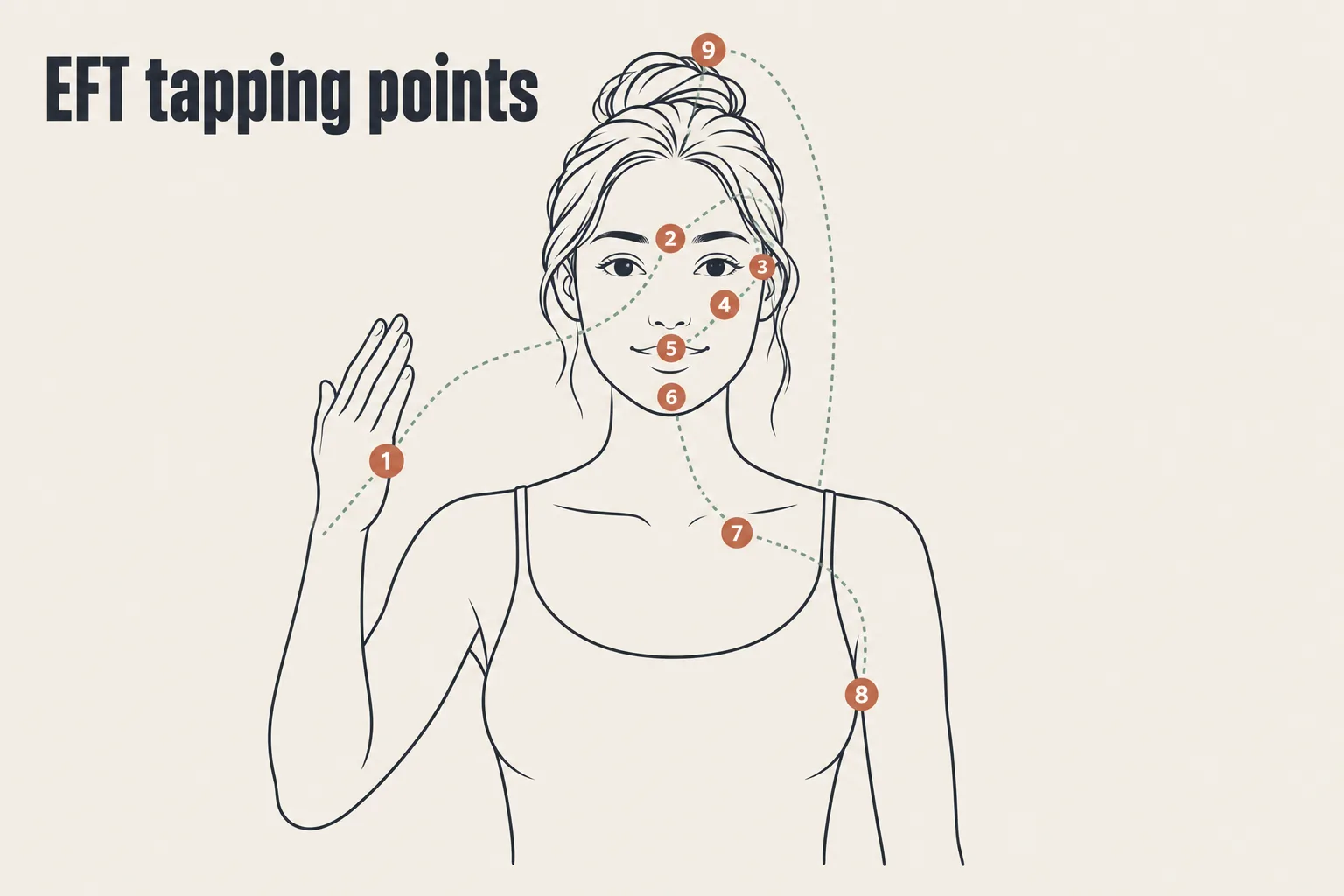
EFT, or Emotional Freedom Techniques, means tapping with your fingertips on specific points on your face and upper body while you say out loud what is actually going on: the craving, the frustration, the belief sitting underneath it. You stay awake, alert, and in charge the entire time. EFT does not involve hypnosis.
You can use a tapping round to focus on a craving and what you feel around it. That may be useful during the 3 pm slump, after a hard conversation, or when you catch yourself thinking, “I’ve already blown it, may as well finish the bag.” I walk through how that plays out day to day in my guide to tapping for weight loss.
There is no single tapping point or script that causes weight loss. The practical skill is noticing an urge, naming what is happening, and seeing whether the feeling changes.
What an EFT Session or Self-Tapping Round Involves
The standard sequence, in order: side of the hand (the “karate chop” point), eyebrow, side of the eye, under the eye, under the nose, chin, collarbone, under the arm, and the top of the head.
You open with a setup statement, which in plain language means naming the problem out loud while you tap the side of your hand. No pretending you feel fine while you try to feel better.
Before you start, rate the craving 0 to 10. Rate it again at the end. That number helps you notice whether this particular urge changed during the round; it cannot predict weight loss. If you want words to follow the first time, use a tapping script for weight loss.
What Hypnosis for Weight Loss Is and How It Works
Hypnosis involves focused attention and suggestions intended to support a change in thoughts or habits. A practitioner may guide a session, and self-hypnosis can also be learned and practiced between sessions. You are not unconscious, and you are not controlled; Cleveland Clinic explains that you remain aware and in control. It can feel a little like being absorbed in a film, although experiences vary.
For weight-related goals, suggestions may focus on habits such as snacking on autopilot, using food as a reward, or how you respond to hunger and fullness. Their aim is to support a change in behavior; they do not guarantee one.
There is no single “best” hypnosis style for everyone. Ask about a practitioner’s healthcare qualifications, hypnosis training, what sessions involve, and whether you will learn a practice you can use yourself.
EFT Tapping vs Hypnosis for Weight Loss: Side-by-Side
| Question | EFT tapping | Hypnosis |
|---|---|---|
| What do you do? | Tap a sequence of points while naming a feeling, thought, or craving. | Focus your attention while working with suggestions, imagery, or a guided exercise. |
| Who leads? | You can practice alone after learning the steps or work with a practitioner. | You can work with a trained practitioner or learn self-hypnosis. |
| Can you use it between sessions? | Yes. A short tapping round can be used when an urge shows up. | Yes. Self-hypnosis or an appropriate recording can be practiced between sessions. |
| What can you track? | How a craving feels before and after a round, alongside longer-term eating patterns. | Changes in eating patterns or habits over time; progress is not measured by a single session alone. |
| What does the research settle? | Some studies report less craving; findings on weight are less certain. | Some studies report changes in eating behavior; findings on extra weight loss vary. |
You remain able to choose and stop with either approach. Your comfort with the method matters, especially if past experiences make a particular exercise feel difficult.
What Studies Show About Cravings, Eating Behavior, and Weight
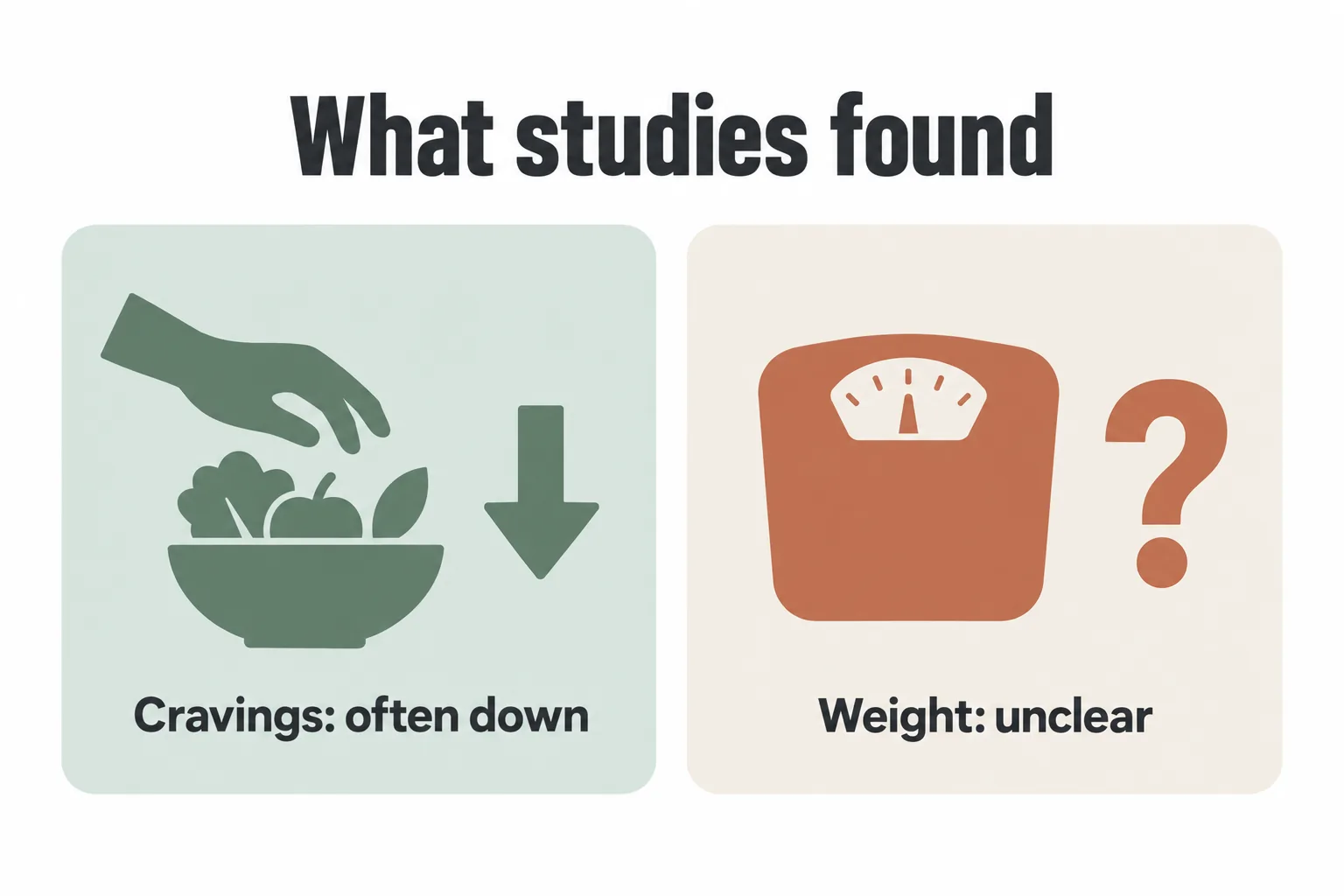
In a study of 83 adults with overweight or obesity, EFT and cognitive behavioral therapy both reduced food cravings, but neither group showed a reduction in BMI.
That makes craving relief a different claim from weight loss.
A small 2026 EFT trial reported weight changes, but its participants were women aged 18–25, and follow-up lasted only two weeks. It cannot tell us whether the same results would last for women over 45.
A hypnosis and self-hypnosis trial found improvements in a measure of impulsive eating when added to nutrition education; its weight result did not conclusively establish an extra benefit. Another 12-month trial of self-hypnosis found no significant weight difference between the treatment groups.
These findings leave room for an individual to find either method helpful, but they do not support a promise that one will produce lasting weight loss for you.
What the Research Cannot Tell Us Yet
I did not find a trial that directly compared EFT tapping with hypnosis for weight loss. Studies also measure different things: a craving during a session, eating habits over time, or weight on a scale. A change in one does not automatically produce a change in the others. There is not enough evidence here to name a winner or recommend combining the methods as a proven weight-loss strategy.
How Many Sessions Might You Need?
There is no set number of sessions that works for everyone. Cleveland Clinic’s guidance describes hypnosis sessions of around an hour and says people may need several sessions to notice a change, but that is general guidance, not a weight-loss schedule. Some people learn self-hypnosis to practice between visits.
A tapping round may help you notice a shift in one craving. Exploring an eating pattern that has lasted years can take longer, and a single round cannot tell you how long that work will take.
Ask what you hope to change, how progress will be reviewed, and what support is available between sessions. I offer a three-month private coaching program for women seeking support with deeper patterns around food.
Safety, Side Effects, and Who Should Be Careful
Neither method involves medication or surgery, but “natural” does not mean the experience is right for everyone. Hypnosis may occasionally be followed by dizziness, headache, anxiety, or trouble sleeping. Working with difficult feelings during either approach can also be uncomfortable. Tell a practitioner when an exercise does not feel right and stop if you need to.
If you have an eating disorder, significant trauma symptoms, or a medical concern affecting eating or weight, seek guidance from a qualified healthcare professional. Coaching and self-tapping should not replace diagnosis or treatment.
How to Choose Between EFT Tapping and Hypnosis
Consider EFT if you want a hands-on exercise for naming what you feel when a craving appears. Consider hypnosis if focused attention or guided suggestions appeal to you; self-hypnosis may also be an option if you want to practice independently. Neither preference predicts how much weight you will lose.
Some practitioners offer the methods together, but I have not found evidence that their combination works better for weight loss. If you are considering both, ask a practitioner what they offer. My own work focuses on EFT-informed coaching for women dealing with food-related patterns.
Why Weight and Eating Patterns Can Change After 45
Stress and learned coping patterns can affect how you respond to food. Weight can also be affected by sleep, medicines, health conditions, and changes with age. The National Institute of Diabetes and Digestive and Kidney Diseases explains these different influences. If your weight or appetite has changed, it is worth looking at the whole picture rather than assuming one old belief explains everything.
A part of you may have learned to reach for food when life feels hard. Understanding that pattern with care may help you find another response when it shows up. This is the kind of work I bring to my holistic approach to weight loss.
For more than 20 years, I have worked with women on these struggles as a Functional Medicine Nutritionist and Advanced EFT Practitioner. I want the conversation to include how you feel with food and your body, not only what the scale says.
Frequently asked questions
Has EFT tapping been compared directly with hypnosis for weight loss?
Can I practice hypnosis without a practitioner in the room?
Does less craving mean I will lose weight?
How do I choose a practitioner?
Where to Start
If it feels comfortable, pick an everyday craving this week. Rate it from 0 to 10, tap through the points while naming what is going on, and check in again. Whether the number changes or not, you have noticed something about this moment; it is not a test you can fail.
If you want individual help exploring a recurring pattern, learn about my private coaching and apply to see whether it is a fit. The goal is a more peaceful relationship with food and your body, with support that takes your whole situation into account.