

If you’ve ever caught yourself reaching for food when you’re clearly not hungry, you’re not alone. The question, why do I eat when I’m stressed even when I’m not hungry, has very little to do with food and everything to do with how your brain and body respond to stress. Once you understand what’s really driving the urge, it becomes much easier to stop. In this guide, we’ll unpack what’s actually going on underneath the behavior, and why fixing the root changes everything.
Why Do I Eat When I’m Stressed Even When I’m Not Hungry?
Let’s slow this down for a second. You’re not hungry. You know you’re not. And yet, there’s still that pull toward food. It doesn’t feel logical. It doesn’t even feel like a decision most of the time. It just sort of happens. This is usually the point where people assume something is wrong with them. That they lack discipline. They are dealing with stress. That they need more control.
But here’s the thing most people miss. The urge isn’t about food. It’s about what’s happening inside your body in that moment. Stress creates a kind of internal pressure. Not always obvious, not always dramatic, but it’s there. And your brain wants a fast way to feel safe again.
Food just happens to be one of the fastest ways your brain knows how to get there. It shifts your emotional state, even if only for a short time. That’s why stress eating shows up even when your body doesn’t need fuel.
That’s why the question why do I eat when I’m stressed even when I’m not hungry keeps coming up. Because the behavior doesn’t match the situation on the surface, but it makes perfect sense underneath.
What Is Stress Eating and Emotional Eating?
Stress eating and emotional eating are often used interchangeably, but they both point to the same thing: eating in response to emotions rather than physical hunger.
Emotional eating happens when food becomes a coping tool. Stress eating is a specific type that is triggered by anxiety, pressure, or overwhelm. In both cases, the urge to eat comes from a need to feel better, not a need for energy.
This is why you might feel not hungry but want to eat or find yourself constantly thinking about food even after a meal. Your brain is chasing a feeling, not calories. It’s not always dramatic. Sometimes it’s quiet.
- A handful of snacks while working.
- Something sweet after a long day.
- Eating without really tasting it.
Over time, this turns into a familiar pattern.
| What You Notice | What’s Actually Happening |
| Eating without hunger | Responding to internal discomfort |
| Wanting specific foods | Brain looking for quick relief |
| Thinking about food often | The mind is trying to change state(Also known as food noise) |
| Eating past fullness | Relief taking priority |
This is why phrases like not hungry but want to eat or why do I always want to eat feel so relatable. It’s not random. It’s learned.
The Real Reason You Eat When You’re Not Hungry
Most people assume overeating is about habits or willpower. But here’s what’s actually going on beneath the surface.
Your Brain Is Trying to Protect You
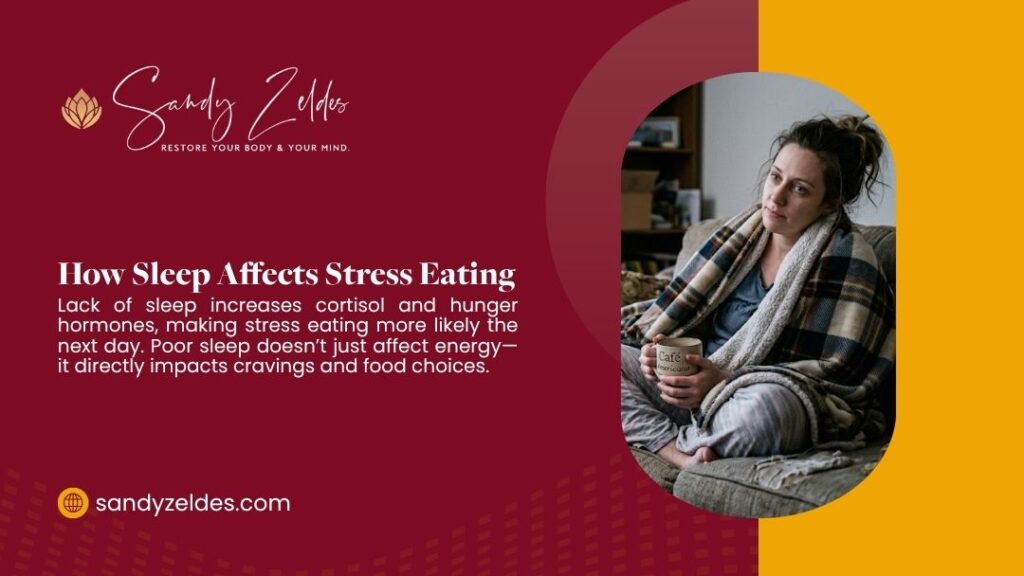
When stress rises, your brain shifts into survival mode. It doesn’t care about long-term goals like weight loss. It cares about immediate comfort. That urge to eat is your brain’s way of trying to calm you down. Eating changes your internal state quickly. That’s what makes it so effective, and so easy to repeat.
| Internal State | Response | Short-Term Effect |
| Stress/tension | Reach for food | Temporary calm |
| Calm fades | Discomfort returns | Cycle restarts |
Nothing about this is random. It’s patterned.
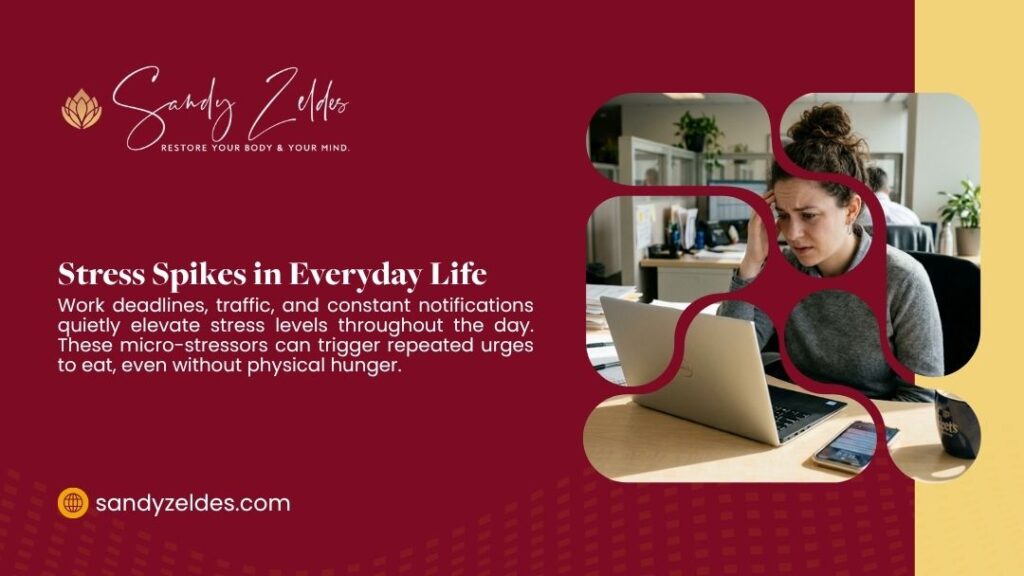
Stress Hormones Increase Cravings
Cortisol is the primary stress hormone and plays a major role. When stress levels rise, cortisol follows. And cortisol doesn’t just sit quietly in the background; it influences appetite, cravings, and even food preferences. You might notice stronger cravings for sugar, wanting heavier, comfort-style foods, and feeling less satisfied after eating.
Studies show that elevated cortisol levels can increase appetite and cravings for foods high in sugar and fat. That’s one reason people ask, can stress cause weight gain? The answer is yes, and this is part of why.
| Stress Response | Effect on Appetite |
| Elevated cortisol | Increased hunger signals |
| Energy dips | Craving quick fuel |
| Mental fatigue | Lower impulse resistance |
This is why people start asking does stress make you gain weight or Why am I eating so much lately. It’s not imagined. It’s physiological.
Emotional Hunger vs Physical Hunger
There’s a clear difference once you start paying attention.
| Emotional Hunger | Physical Hunger |
| Shows up fast | Builds slowly |
| Wants something specific | Open to options |
| Feels urgent | Can wait |
| Linked to mood shifts | Linked to body needs |
That small awareness, just noticing which one you’re dealing with, can change how you respond.
Why Can’t I Stop Eating? The Hidden Pattern
This is where frustration usually peaks. Because it doesn’t feel like a choice anymore.
| Stage | What Happens |
| Stress builds | Body feels unsettled |
| Eating happens | Relief kicks in |
| The brain registers it | Pattern strengthens |
| Next trigger | Same loop repeats |
After a while, it feels automatic. This is also why people feel stuck, even after trying different approaches. The surface behavior changes briefly, but the underlying pattern stays intact. This connects closely to why weight loss patterns repeat, particularly when subconscious responses continue to drive behavior beneath the surface.
Why You Feel Hungry Even When You’re Not
What many people call hunger isn’t always hunger. Sometimes it’s just food noise. Mental noise. Food thoughts that keep coming back. Cravings that don’t go away after eating. That sense of wanting something, even when you’re full. This is often described as mental hunger. Mental hunger is driven by thoughts, stress, and emotional triggers.
And it explains why people say things like why do I think about food all the time or I’m not hungry, but I still want to eat. The body isn’t asking for fuel. It’s asking for a shift.
Signs You’re Dealing With Stress Eating
Certain patterns show up again and again.
| Pattern | What It Points To |
| Eating without hunger | Emotional trigger |
| Fast, distracted eating | Stress response active |
| Strong cravings | Brain seeking comfort |
| Regret after eating | Cycle still running |
Seeing the pattern clearly is often the first real shift.
Does Stress Make You Gain Weight?
Yes, it can. But not in a simple way. Stress changes how you eat, what you crave, and how your body processes food. Over time, that combination can lead to weight changes.
According to the American Psychological Association, stress often leads to increased food intake and a preference for high-calorie foods. It’s not just about eating more. It’s about how stress changes your entire relationship with food.
Why Diets Don’t Fix This Problem
Here’s where things usually go sideways. Diets focus on food rules. But this pattern isn’t built on food; it’s built on response. When you try to control eating without addressing stress, the pressure builds. And eventually, something gives. That’s why cycles repeat.
This is why many women notice that diets become less effective over time, particularly when it comes to weight loss for women over 40. Changes in metabolism, hormones, and lifestyle can make rigid diet plans harder to sustain, highlighting that the issue often lies with the approach rather than the body itself.
How to Stop Emotional Eating in a Way That Lasts
Stopping stress eating requires a different approach. It’s not about forcing yourself to eat less. It’s about changing what drives the urge to eat.
First, you need to recognize your triggers. Stress, boredom, anxiety, and even fatigue can all play a role. Once you identify the pattern, you can begin to interrupt it.
Second, focus on reducing stress rather than controlling food. When your nervous system calms down, the urge to eat naturally decreases.
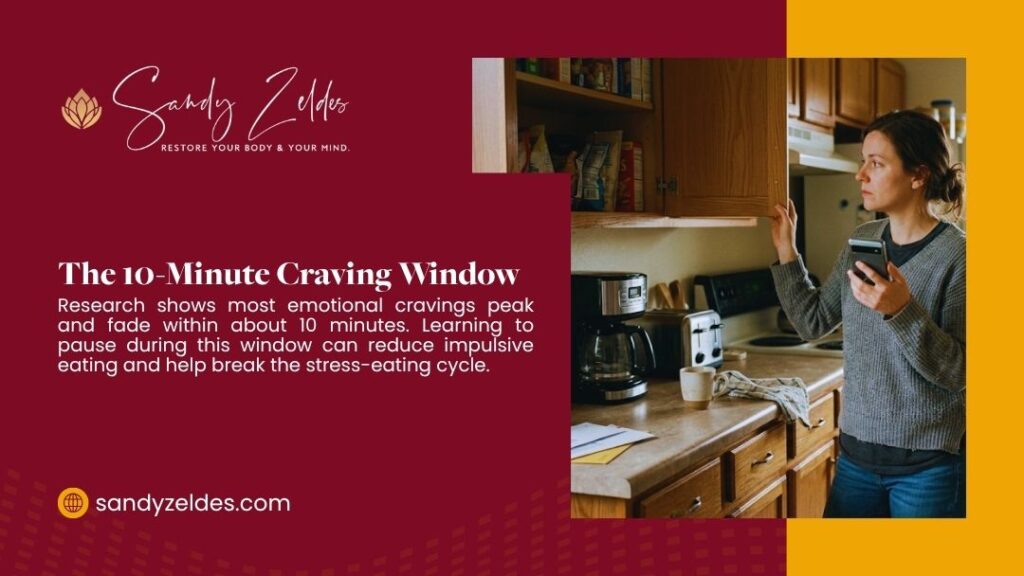
Third, create a pause before acting on cravings. Even a short pause can help you decide whether you’re truly hungry or responding to emotion.
How EFT Supports Real Change
Some methods focus on what you do. EFT works with what’s underneath. It helps reduce the emotional intensity tied to stress and cravings, which means the urge itself starts to lose strength.
For those interested in how it works, EFT for binge eating focuses on tapping specific points to help reduce emotional triggers, manage cravings, and support lasting habit change. It also connects with broader approaches like EFT for food cravings, which target the underlying patterns that drive repetitive eating behaviors.
How Long Does It Take to Break the Pattern?
It depends on how you approach it.
| Approach | What Usually Happens |
| Strict control | Short-term results |
| Willpower | Inconsistent effort |
| Root-level work | More stable change |
When you address the underlying cause, the change tends to last longer because the behavior is no longer needed.
What Helps Instead of Eating When You’re Stressed
When the urge shows up, you don’t need to fight it; you just need to respond differently.
| Alternative | Effect |
| Brief pause (Also known as micro-break or 3-second brain reset) | Creates awareness |
| Movement | Releases tension |
| Slower breathing | Calms system |
| Stepping away | Breaks the automatic loop |
Small shifts like this add up over time.
FAQs
Why do I eat when I’m bored, even when I’m not hungry?
Because boredom creates a low-level discomfort, food becomes a quick way to fill that gap.
Is stress eating real?
Yes. It’s a well-documented behavioral response tied to emotional regulation.
How do I stop eating when I’m not hungry?
Start by identifying what you’re actually feeling before reacting to the urge.
Can stress increase cravings?
Yes. Hormonal changes during stress can amplify appetite and cravings.
Why do I constantly think about food?
Often due to emotional or mental triggers rather than physical need.
Should I eat if I’m not hungry?
It depends. Understanding the type of hunger helps guide that decision.
How do I reduce cravings naturally?
Addressing stress and emotional triggers tends to reduce cravings more effectively than restriction.
A Better Way to Stop Stress Eating for Good
If you’ve been asking yourself, why do I eat when I’m stressed even when I’m not hungry, the answer isn’t another diet or stricter routine. It’s understanding what’s driving the behavior and addressing it at the source.
That’s where a more holistic, root-cause approach can make a difference. Instead of focusing only on food, it looks at stress, emotions, and subconscious patterns.
If you want to explore how this works in real life, you can see how others have done it through these client success stories or learn more about the approach of Sandy Zeldes. Because once the root is addressed, the struggle with food doesn’t just improve, it often disappears.