


If you’ve been asking, why do I binge eat at night after eating well all day, you’re probably not looking for another lecture about willpower. You already know how to eat well. That’s what makes the night binge feel so confusing. All day, you hold it together. Then evening comes, the house gets quiet, and food starts to feel louder than logic.
In this article, we’ll look at why this pattern happens, what it may reveal about restriction, stress, hormones, sleep, night eating syndrome, and emotional hunger, and how to start breaking the cycle without another punishing diet.
Sandy’s work is especially relevant here because she does not treat night binges as a food problem alone. She looks at the stress, protection, trauma, and subconscious beliefs that can drive the urge. Sometimes the fastest way to understand the pattern is to name what it feels like first.
Why Do I Binge Eat at Night After Eating Well All Day?
You may binge eat at night after eating well all day because your body, brain, and nervous system are trying to catch up with something that was missed earlier. Sometimes that something is enough food. Sometimes it is rest. Sometimes it is comfort. Sometimes it is permission. Sometimes it is the feeling of being safe after a day spent holding everything together.
A day that looks healthy from the outside may still feel restrictive to your body. Coffee for breakfast, a light lunch, a low-carb dinner, and a promise to be good might seem disciplined. By night, though, hunger hormones, blood sugar, stress, and emotional bandwidth may tell a different story.
The urge to eat can get louder because the body does not always know the difference between intentional restriction and scarcity.
This is one reason restrictive diets often backfire. They can create a pattern where you feel proud in the morning, controlled in the afternoon, restless after dinner, and defeated at night. The problem is not that you’re weak. The rules may be too tight. The stress may be too high. The real emotional trigger may still be untouched.
Instead of treating food as the enemy, Sandy helps women look at the deeper roots behind cravings, self-sabotage, and weight-loss resistance. Her core message is that lasting peace with food and the body comes from resolving the root cause, not from chasing another diet plan.
The “Good All Day, Out of Control at Night” Pattern Is Usually Not Random
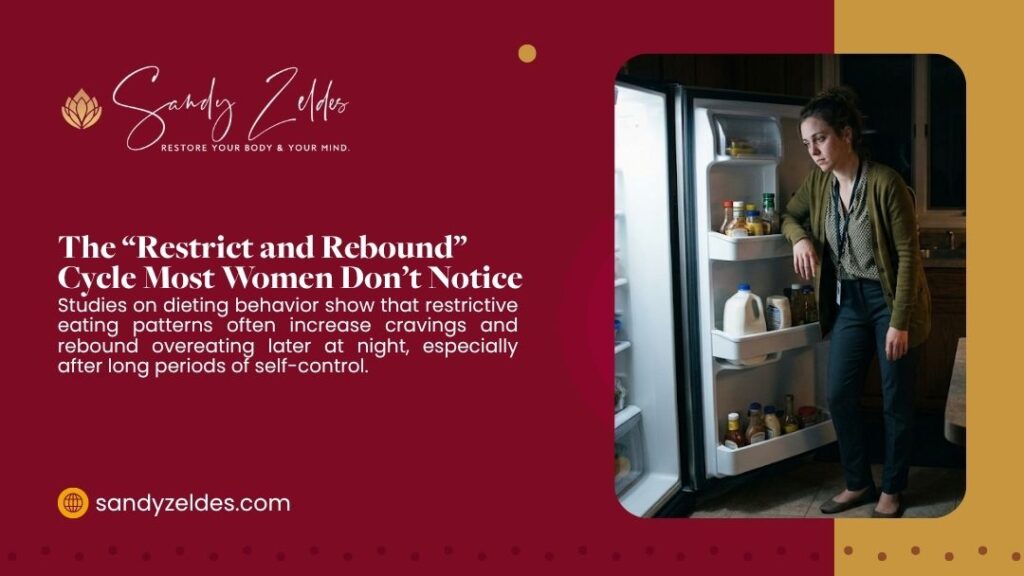
Many women describe the same loop. They wake up after a night of bingeing and feel guilty. They promise themselves that today will be different. Breakfast gets smaller. Lunch gets cleaner. Snacks become off limits. By dinner, they are still trying to stay in control. Then the house gets quiet, the day’s pressure drops, and the urge to eat takes over.
That is not random. It is a pattern. It can happen when the body is underfed. It can happen when the mind feels deprived. It can happen when food becomes the only reliable way to soften stress. It can also happen when the nervous system has spent all day in push-through mode and finally wants relief.
Binge eating is different from ordinary overeating. Columbia Psychiatry explains that occasional overeating may happen and pass, but binge eating becomes more concerning when it is frequent, distressing, and hard to stop. According to Lisa Ranzenhofer, PhD, a clinical psychologist and researcher at the Columbia University Center for Eating Disorders, “People with a binge eating problem may continue eating long after feeling full.
That distinction matters because a night binge is not just having dessert. A binge eating episode often includes a sense of loss of control, eating quickly, eating when not physically hungry, or eating alone because of shame.
Still, one hard night does not mean you have binge eating disorder. It means your body and mind are giving you information. The better question is not what is wrong with me? It is what is this pattern trying to show me? Sandy’s perspective on why past weight-loss failures may not mean failure can be especially useful here.
The Most Common Reasons You Binge Eat at Night
You May Not Be Eating Enough During the Day
Eating well does not always mean eating enough. A small breakfast, a light lunch, and a controlled dinner can look like success until your body demands payment later. When you do not get enough protein, fat, fiber, or overall energy during the day, hunger can hit hard at night.
That late night hunger may feel emotional, but it can still have a physical base. You may feel hungry before bed, wake up hungry in the middle of the night, or crave quick energy from sweets and carbs because your body is trying to restore what it missed.
Cleveland Clinic lists daytime eating habits as one factor that may contribute to night eating syndrome, noting that people who do not get enough calories during the day may be more likely to feel hungry and eat at night.
This is where many women get trapped. They think the night binge proves they need more restriction tomorrow. In reality, tomorrow’s restriction may be what sets up the next binge. A more useful question is not how can I eat less? It is did I give my body enough steady fuel before the cravings hit?
Your Body May Be Reacting to Restriction, Not Lack of Willpower
Restriction can be sneaky. It does not always look like a crash diet. It can look like skipping breakfast because you aren’t hungry. It can look like avoiding carbs all day. It can look like choosing the safe lunch instead of the satisfying one. It can look like saving calories for dinner, then feeling ravenous by 10 p.m.
For women who have spent years in and out of diet plans, restriction can also become emotional. Even when you eat enough calories, rigid food rules can create a sense of deprivation. The body may be fed, but the mind still feels trapped.
That is one reason a no-diet approach can be so powerful. Sandy, do not force women into another one-size-fits-all meal plan. Her work points to the fact that different bodies, stress histories, hormones, and emotional patterns need different support.
Stress Can Push the Brain Toward Fast Comfort
At night, the day finally stops moving. That can be peaceful. It can also be the moment when everything you pushed aside catches up.
Work pressure, family needs, aging parents, money worries, relationship tension, body shame, old trauma, and the constant pressure to get it together can pile up. Food becomes the easiest way to soften the edge. It is available, legal, familiar, and fast. No wonder the urge to eat can feel so strong.
Clinical studies note that binge eating can be connected with stress, trauma, emotions, biology, and habits, and that eating may release pleasure hormones such as serotonin and dopamine. That does not make you broken. It means food may have become a coping tool.
For many women, this is the missing piece. They keep trying to solve an emotional pattern with a food rule. But if the nervous system is asking for comfort, control, rest, or safety, a stricter dinner plan will not reach the real wound.
Your Evening Routine May Have Trained Your Brain to Expect Food
Sometimes the trigger is not hunger. It is repetition. The couch. The phone. The television. The pantry. The same snack. The same chair. At the same time of night. After a while, the brain links that routine with food. You may not even feel hungry at first. You just feel pulled.
This is why boredom eating at night can feel automatic. It is not always dramatic. It may start with just a handful. Then the brain gets a reward, and the habit loop begins. The more often it happens, the more familiar it feels.
Shame will not break that habit. A small interruption might. The goal is to catch the pattern early, before it becomes a full binge eating episode. The mindless eating cure can help readers who recognize this pattern.
Sugar and Carb Cravings Can Get Louder When You’re Tired
If you often wonder, why do I crave sweets at night? The answer may be partly physical and partly emotional. Tired brains want fast fuel. Stressed bodies want relief. Restricted minds want the thing they were told they could not have. That is why craving sugar at night can feel so intense after a day of being good.
It is not just about cookies or ice cream. It is about energy, reward, rebellion, and relief all mixed. This also explains why some people wake up craving sugar or feel hungry at midnight even after dinner. The body may be underfed, sleep may be poor, stress may be high, or blood sugar may be unstable.
If this happens often, it is worth talking with a qualified healthcare provider, especially if you have diabetes, thyroid concerns, perimenopause symptoms, or other health conditions.
Women Over 40 May Have Extra Hormone and Stress Load
For women over 40 or 45, nighttime eating can become more complicated. Perimenopause and menopause may affect sleep, mood, stress tolerance, body composition, and appetite cues. Add work, caregiving, marriage, divorce, aging parents, leadership roles, and decades of diet history, and the body may feel like it is fighting on too many fronts.
That does not mean hormones are the only cause. It means the full picture matters. A woman who could push through in her 30s may find that the same old diet rules stop working in midlife. Poor sleep can make cravings worse. Stress can affect eating patterns. Body changes can trigger panic. Panic can lead to restriction. Restriction can lead to binge eating at night.
And the loop keeps going. Sandy’s work focuses on women over 40 and 45 who want alternative solutions for stubborn weight, hormone imbalance, chronic dieting, addictive cravings, and health-sabotaging habits.
Why This Hits High-Achieving Women So Hard
High-achieving women often know exactly what to do with food. That is what makes the night binge feel so confusing. She may run a company, lead a team, care for a family, manage a home, support everyone else emotionally, and still feel powerless at 10 p.m. in front of the pantry. That gap can feel humiliating. How can I handle everything else, she may think, but not this?
But high achievers are often trained to override their needs. They delay meals. They ignore fatigue. They push through stress. They call it discipline when it may actually be disconnection. By evening, the part of them that has been quiet all day finally demands attention.
For mothers, CEOs, professionals, and women over 45, food can become the one place where control finally drops. It may be the only private reward of the day. It may be the only moment no one is asking for anything. It may be the only reliable way to soften pressure without having to explain why they are tired.
This is why Sandy’s work is not about handing a high-achieving woman another food rule. Most of these women already have enough rules. Her work looks at the deeper pattern: the stress load, the protective self-sabotage, the old beliefs, and the emotional hunger that no meal plan can touch.
Is It Night Eating Syndrome, Binge Eating, or Just Late-Night Hunger?
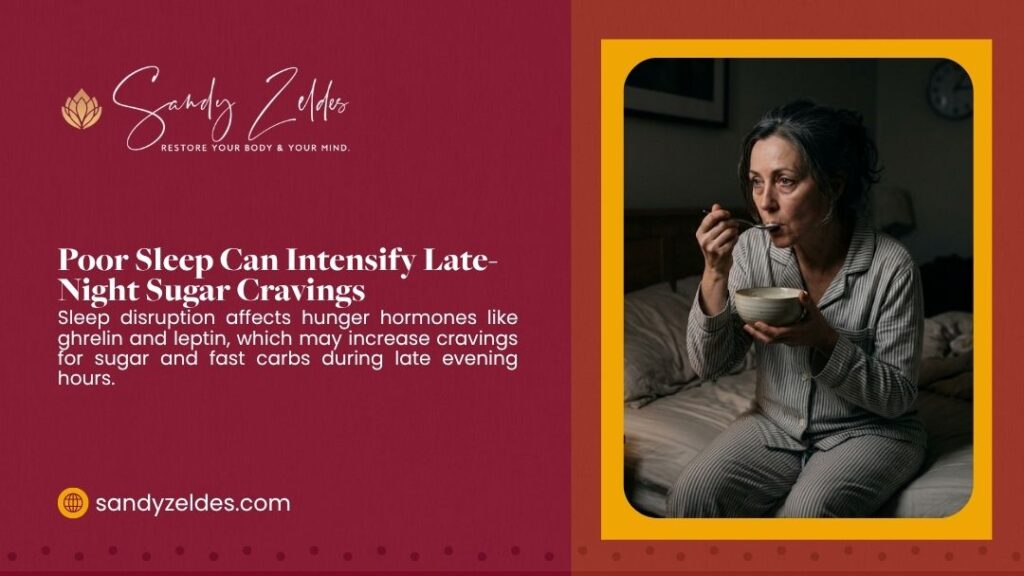
Not every form of eating at night means the same thing. Some people eat a planned snack before bed and feel fine. Others binge while fully awake and feel ashamed afterward. Some wake up repeatedly to eat and believe they cannot sleep unless they are full. Others may eat while partly asleep and barely remember it.
Before we separate late-night snacking, binge eating, night eating syndrome, and sleep eating, it may help to notice what night eating actually feels like in the moment. The feeling behind the pattern often gives the first clue.
| If your night binge feels like… | It may point to… |
| I was good all day, now I can’t stop. | Restriction rebound |
| I’m not hungry, but I need something. | Emotional soothing |
| I wake up and need food to sleep. | Possible night eating syndrome |
| I barely remember eating. | Possible sleep-related eating disorder |
This is not meant to diagnose you. It simply helps you pause and ask a better question: is this physical hunger, emotional hunger, a learned routine, a sleep-related issue, or something deeper that needs support? The difference matters because the wrong solution can keep you stuck.
| Pattern | What It Can Look Like | Key Difference |
| Late-night snacking | You eat after dinner while awake and aware. It may be planned or casual. | It may not be a problem if it is not distressing, secretive, or out of control. |
| Binge eating at night | You eat a large amount of food and feel unable to stop, even when uncomfortably full. | The defining feature is often loss of control, shame, secrecy, or distress. |
| Night eating syndrome | You eat much of your daily food after dinner or wake up at night to eat. | Cleveland Clinic says NES may involve repeated night wakeups, cravings for sweets or carbs, low morning appetite, and poor daytime function. |
| Sleep-related eating disorder / SRED | You eat while partly asleep, often with little memory of what happened. | This is closer to a sleep disorder and needs medical evaluation, especially if safety is a concern. |
NIH’s NCBI Bookshelf describes night eating syndrome as excessive evening or nighttime food intake and notes that it can involve at least 25% of daily calories after dinner plus frequent nocturnal awakenings to eat.
If you are waking up in the middle of the night hungry, eating in the middle of the night, or feeling like you cannot fall back asleep unless you eat, it may be worth discussing night eating syndrome treatment with a qualified professional. If you suspect sleep eating, especially if you find wrappers, cook while not fully awake, or do not remember eating, speak with a healthcare provider.
Is Eating at Night Bad, or Is the Binge the Real Problem?
Eating at night is not automatically bad. A planned snack before bed may be reasonable for some people. A late dinner after a long workday is not a moral failure. A bowl of yogurt, toast with nut butter, or a balanced snack can help some people avoid waking up hungry.
The clock is not always the problem. The pattern is. If eating at night feels calm, conscious, satisfying, and flexible, it may not be an issue. If it feels compulsive, secretive, frantic, or followed by shame, then something deeper may need attention.
If you often eat until uncomfortably full, feel unable to stop, hide food, wake up to eat, or start the next day with punishment, the pattern deserves care.
| Normal Night Hunger | Concerning Night Eating Pattern |
| You feel physically hungry and choose a snack with awareness. | You feel driven by urgency, panic, numbness, or loss of control. |
| You can stop when satisfied. | You keep eating past comfort and feel unable to stop. |
| You feel neutral afterward. | You feel guilt, shame, fear, or disgust afterward. |
| It happens now and then. | It repeats often and affects your sleep, mood, health, or daily life. |
| You eat because your body needs fuel. | You eat to soothe, numb, punish, rebel, or escape. |
This distinction can take pressure off. The goal is not to stop eating at night by force. The goal is to understand whether your nighttime eating is physical hunger, emotional hunger, habit, restriction rebound, night eating syndrome, sleep-related eating disorder, or a mix.
How to Stop Binge Eating at Night Without Starting Another Diet
Eat Enough Before the Night Cravings Hit
If you want to know how to stop binge eating at night, start earlier than nighttime. That may sound too simple, but it matters. A steady breakfast, a real lunch, enough protein, enough fiber, and satisfying meals can reduce the desperate feeling that often shows up after dinner.
Your body needs to trust that food is not scarce. This does not mean eating perfectly. It means eating consistently enough that your body does not have to shout at night.
For some women, this step feels scary. They worry that eating more during the day will make them gain weight. But when daytime restriction is part of the binge cycle, eating enough earlier can help reduce late-night binge eating. It is not a failure of control. It is a repair of trust.
Plan a Real Evening Snack Instead of White-Knuckling It
Trying not to eat at night can work for a few days. Then it often snaps back. A planned evening snack can be a bridge, especially if you often feel hungry before bed or wake up hungry in the middle of the night. The snack should feel satisfying, not like punishment.
Think of something with protein, fiber, or fat rather than a tiny diet food that leaves you hunting through the kitchen ten minutes later. The point is not to create a new rule. The point is to take away the drama. A planned snack says, Food is allowed. My body is safe. I do not need to panic. That one shift can reduce the charge around eating at night.
Change the First 15 Minutes After Dinner
The first 15 minutes after dinner can set the tone for the night. If your usual pattern is dinner, dishes, couch, phone, snack, binge, then the brain already knows the route. You do not have to change the whole night at once. Change the first turn.
You might step outside, make tea, take a shower, brush your teeth, fold laundry in another room, call someone, journal, or do a short EFT tapping round. The action matters less than the interruption.
You are teaching your brain that dinner does not have to lead straight into grazing. This can help you stop binge eating at night because it weakens the automatic link between evening calm and food.
Ask What the Urge Is Trying to Do for You
This is where most diet advice falls short. The urge to binge may be trying to comfort you. It may be trying to protect you from feelings you do not want to feel. It may be trying to help you rebel against a day of control. It may be giving you the only private pleasure you feel allowed to have. It may be numbing old pain.
Sandy briefly describes self-sabotage as a protective mechanism that is trying to keep the person safe. That is a very different way to see the problem. Instead of hating the part of you that binges, you start asking why that part thinks it needs to take over.
This does not excuse the pain of the pattern. It simply makes change more possible. Shame says, “I am broken.” Curiosity says, “Something in me needs care.”
Try EFT Before, During, or After the Urge
EFT, often called tapping, is one of Sandy’s core tools for emotional eating, cravings, and self-sabotage. It involves tapping on specific points while naming the feeling, belief, or urge that is active. It is not a magic trick, and it is not a replacement for medical or eating disorder care. But for many people, it can help slow the nervous system enough to create a pause.
That pause matters. Before a binge, EFT may help you notice whether you are hungry, tired, lonely, angry, or overwhelmed. During an urge, it may help reduce the intensity. After a binge, it may help interrupt the shame spiral so you do not punish yourself the next morning.
What to Do Tonight If You Feel a Binge Coming
If the urge hits tonight, do not start with a lecture. Start with a pause. Put both feet on the floor. Take one slow breath. Ask yourself, “Am I physically hungry, emotionally flooded, tired, or feeling deprived?”
You do not need the perfect answer. You only need enough space to stop the automatic slide. If you are physically hungry, eat something real. Not a punishment snack. Not a tiny bite that keeps you circling the pantry. Choose something that gives your body a clear signal of nourishment.
If you are not physically hungry, ask what food is promising. Relief? Company? A reward? A break from being responsible? The answer may sting a little, but it can also point you toward what you actually need.
If you still binge, the night is not ruined. That moment matters. The next moment matters too. You can stop in the middle. You can put food away without turning it into a courtroom. You can choose not to punish yourself tomorrow.
| If the Urge Says… | Try Asking… | A Kinder Next Step |
| “I need something sweet.” | “Did I eat enough today, or am I exhausted?” | Eat a balanced snack or try EFT for the craving first. |
| “I already messed up.” | “Can I stop now without making this worse?” | Put away the food and move to a different room. |
| “I deserve this.” | “What kind of care do I actually deserve tonight?” | Choose comfort that does not leave you feeling punished. |
| “I can’t stop.” | “Do I need support beyond another diet rule?” | Consider professional help or coaching that addresses the root pattern. |
The goal is not to win a fight with your body. The goal is to stop turning nighttime into a battlefield.
What to Do the Morning After a Night Binge
The morning after matters more than most people think. This is when the old cycle tries to restart. You may want to skip breakfast, drink coffee instead of eating, exercise as punishment, weigh yourself, or promise to be perfect today. That may feel like control, but it often sets up the next night binge.
Eat breakfast if you can. Drink water. Get back to steady meals. Wear clothes that do not make you obsess over your body. Do not spend the day trying to erase what happened. Your body does not need punishment. It needs rhythm.
If you feel bloated or ashamed, remind yourself that discomfort is not danger. One binge does not define your body, your health, or your future. What keeps the pattern alive is not the single episode. It is the shame-restriction-repeat cycle that follows.
Sandy’s holistic approach to weight loss helps you because it does not treat the body as a project to punish. It treats weight, cravings, stress, and self-trust as connected.
When Night Binge Eating May Need Professional Support
There is no shame in needing help. Getting help sooner can prevent the pattern from becoming more painful. Consider professional support if binge eating at night happens often, feels out of control, causes distress, disrupts sleep, leads to secrecy, or affects your health.
It is also important to seek help if you purge, misuse laxatives, fast to compensate, feel depressed, or suspect bulimia nervosa, binge eating disorder, night eating syndrome, or sleep-related eating disorder.
A qualified therapist, physician, registered dietitian, or eating disorder specialist can help assess what is happening. Sandy’s private coaching may also support women who are a good fit for root-cause emotional eating and self-sabotage work.
She currently focuses on one-on-one coaching, especially for women over 40 and 45 who want alternatives to chronic dieting and surface-level weight loss methods. For women who want that kind of support, the next step is to work with Sandy privately.
FAQs About Night Binge Eating
Why do I binge eat at night after eating well all day?
You may binge eat at night after eating well all day because your body or nervous system is reacting to restriction, stress, emotional overload, poor sleep, hormone changes, or rigid food rules. Sometimes eating well still means eating too little or denying satisfaction. By night, the body wants fuel, and the mind wants relief. If the pattern feels frequent, distressing, or out of control, professional support can help.
Why am I hungry at night even after eating?
You may feel hungry at night even after eating if your meals were too light, low in protein, low in fiber, or not satisfying. Stress, poor sleep, blood sugar changes, alcohol, intense exercise, and irregular eating patterns can also play a role. Sometimes the feeling is physical hunger. Other times, it is an emotional urge that feels like hunger.
What is night eating syndrome?
Night eating syndrome, or NES, is a pattern where a person eats a large amount of food after dinner or wakes at night to eat. Cleveland Clinic says NES can include repeated night wakeups, cravings for sweets or carbohydrates, low morning appetite, and trouble with daytime function.
Is sleep eating a real thing?
Yes, sleep eating is real. Sleep-related eating disorder, sometimes called SRED, is different from conscious binge eating at night. A person may eat while partly asleep and may have little or no memory of it. This can be risky, especially if someone uses appliances, eats unsafe foods, or takes medications that affect sleep. If you think you eat in your sleep, speak with a healthcare provider.
Why do I wake up hungry in the middle of the night?
You may wake up hungry in the middle of the night because you did not eat enough during the day, ate an early or unbalanced dinner, drank alcohol, slept poorly, or had blood sugar changes. It may also relate to night eating syndrome if it happens often and you feel unable to sleep unless you eat. If this pattern continues, check in with a qualified healthcare provider.

When should I get help for binge eating at night?
Get help if you cannot stop binge eating, feel ashamed or secretive, eat until uncomfortably full, wake up to eat often, purge, restrict food to compensate, or feel depressed or anxious about food and your body. You should also seek professional care if you suspect binge eating disorder, bulimia nervosa, night eating disorder, or sleep eating disorder.
A Kinder Way to Break the Cycle
If you came here asking, why do I binge eat at night after eating well all day, the answer is not that you are lazy, broken, or hopeless. More likely, your body and mind are caught in a pattern that once made sense. Restriction may have felt safe. Food may have offered comfort. Self-sabotage may have tried to protect you. Night eating may have become the place where stress, hunger, and old beliefs finally show up.
But the pattern can change. It usually does not change through shame. It changes through enough nourishment, fewer punishing rules, better support, honest emotional work, and a deeper look at the root cause. If another diet has not worked, that may be a sign that the next step is not more control. It may be more true.
Sandy Zeldes helps women address the emotional and subconscious patterns behind cravings, overeating, and self-sabotage so they can build lasting peace with food and their bodies. If this pattern has followed you for years, you can contact Sandy and explore whether her root-cause approach is the right fit.