

You eat breakfast and lunch, walk past the cookies in the break room, and get on with your day. Then 8 p.m. arrives. You reach for the bag, and half of it is gone before you look up. The next morning, you wonder why you could not just be more disciplined.
But an evening like this can have more than one explanation. You may be stressed, hungry after eating less than you needed, seeking comfort, or dealing with several of those things at once. None of them makes you a failure.
If you are weighing intuitive eating against EFT for emotional eating, the short answer is that they offer different kinds of support. Intuitive eating helps you notice hunger, satisfaction, food rules, and emotional needs. EFT tapping is an optional exercise some people use to pause with distress or a craving.
Research does not establish that one works better than the other for emotional eating, and you can explore both.
What Intuitive Eating Offers for Emotional Eating
Intuitive eating is not a plan. No points, no macros, no food lists. Developed by dietitians Evelyn Tribole and Elyse Resch, its 10 guiding principles include rejecting the diet mentality, making peace with food, noticing hunger and fullness, and coping with emotions with kindness.
The idea is to build trust in your body and make room for satisfaction without turning food into a test of character. Hunger may grow gradually, and stress may bring a sudden urge, but those patterns are clues rather than rules. You can be hungry and upset at the same time. Craving one particular food does not prove that your need is only emotional.
Intuitive eating also asks what might help when you feel lonely, tense, or exhausted. Rest, connection, and other forms of comfort are possibilities. Sometimes you will still choose food, and you do not need to earn permission to eat by proving you are physically hungry.
What EFT Tapping May Offer When a Craving Hits
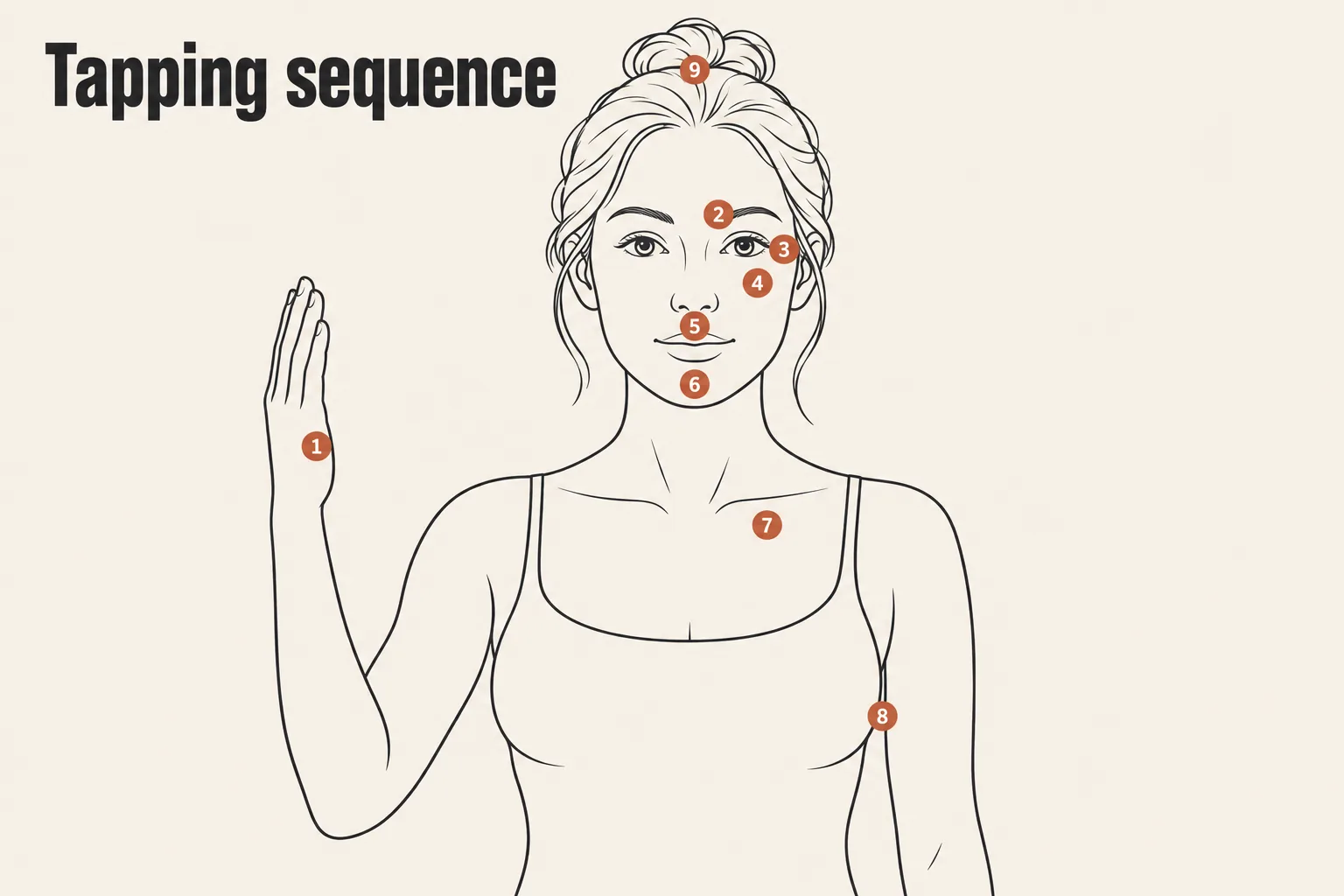
Emotional Freedom Techniques (EFT), often called tapping, involves gently tapping a short sequence of points while acknowledging a feeling or concern. You do not need to memorize the sequence to understand the comparison; Sandy’s EFT tapping points chart shows the steps.
Some people try tapping during a strong craving to pause, name what they are feeling, and see whether the intensity changes. A recurring urge may connect with stress or an old belief, but it can also involve hunger, poor sleep, or other factors. Responses to tapping vary. If you want to try the method, this guide to EFT for emotional eating explains it in more detail.
In more than two decades working with women on food struggles, I have seen how stress and food rules can interact. My background in functional medicine nutrition and advanced EFT practice shapes the questions I ask. It does not mean that every craving has the same cause.
Intuitive Eating vs EFT for Emotional Eating: Benefits, Limits, and Evidence
Related readingEFT for Binge Eating: When Food Isn’t the Real ProblemRead the guide →| Question | Intuitive eating | EFT tapping |
|---|---|---|
| What is its focus? | A broader relationship with food, body cues, satisfaction, and emotional needs. | An exercise that focuses attention on a feeling or concern while tapping. |
| What might you do at 8 p.m.? | Check whether you need food, comfort, rest, or more than one of these. | Try a tapping round, notice whether the urge changes, and decide what you need next. |
| What can be difficult? | Long-held food rules may make body cues hard to trust at first. | It may feel unfamiliar, and a craving may not change after tapping. |
| Does it guarantee weight loss? | No; weight loss is not the framework’s primary goal. | No; changes in cravings do not guarantee weight changes. |
Neither approach has to become a new rule about when you are allowed to eat. They may also be used alongside appropriate medical or mental-health care.
What the Research Does, and Doesn’t, Tell Us
A systematic review of intuitive-eating interventions found improvements in intuitive-eating measures and reported some positive changes in related outcomes. It did not compare intuitive eating with EFT. In a trial of 83 adults with food cravings, both EFT and cognitive behavioural therapy groups improved on craving measures, but neither showed a reduction in BMI. Cognitive behavioural therapy differs from intuitive eating.
In another trial involving people after bariatric surgery, adding an online EFT program to a nutrition and portion plan did not produce significant between-group differences in cravings or BMI; the study also had substantial dropout and adherence limits. These studies cannot establish which of the two approaches in this article works better for you, or that tapping must come first.
When Intuitive Eating Can Be Harder to Practice
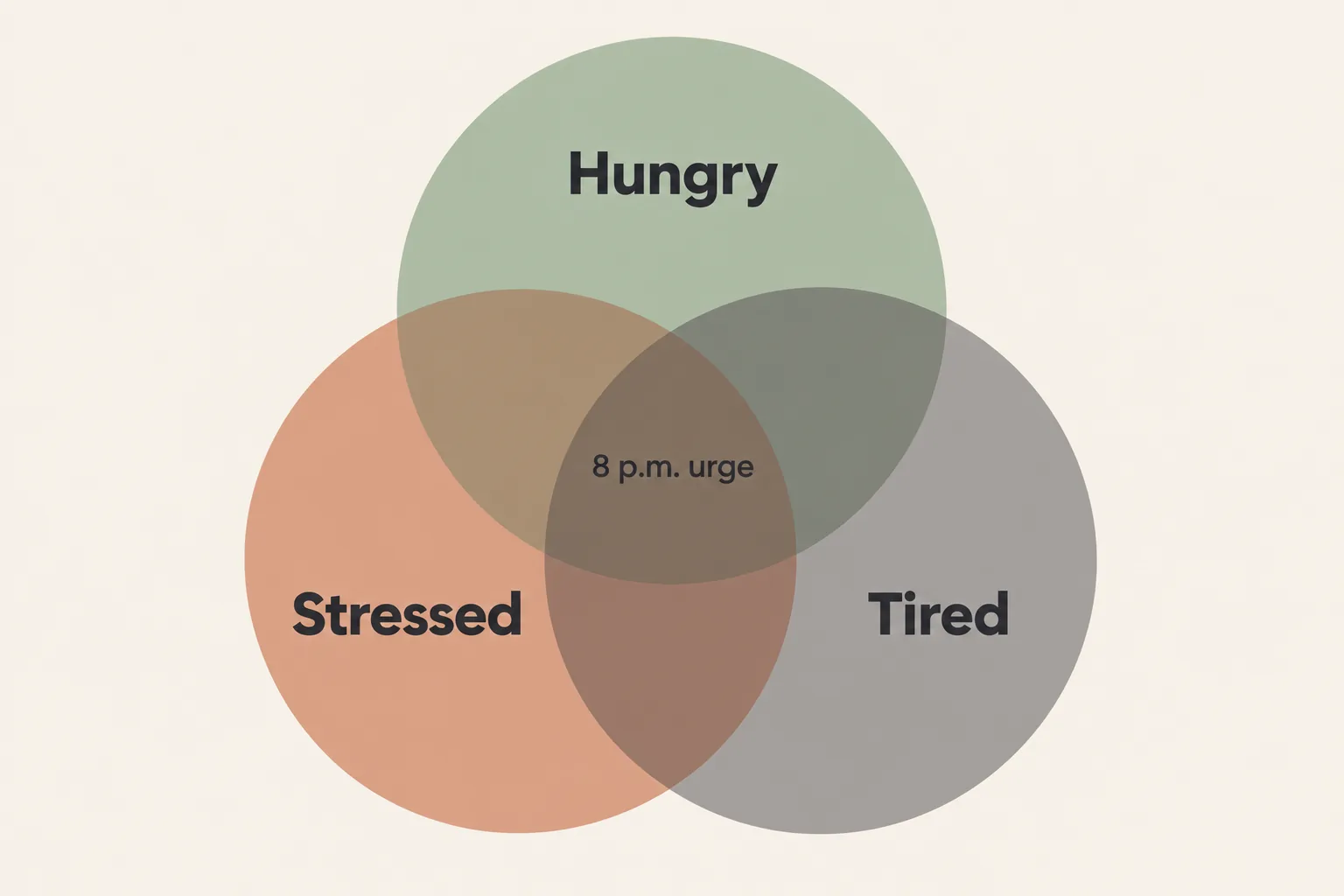
If you have spent years following food rules, noticing hunger and fullness without judging yourself may take practice. An evening urge may also reflect a lunch that did not satisfy you, a hard day, or both. Starting with a curious check-in is more useful than deciding in advance that every craving is either physical or emotional.
The emotional-coping principle gives you options, though you may prefer a more structured exercise for an intense moment. You can experiment with tapping without treating it as a requirement for intuitive eating. If changes in sleep, health, or perimenopause symptoms are affecting how you feel, discuss those concerns with an appropriate healthcare professional.
A Real-Life Example: Hunger, Stress, or Both
It is 4 p.m., and you want cookies. Instead of asking whether you have been “good,” you notice that lunch was small and your last meeting left you tense. You might eat a satisfying snack, take a few minutes to decompress, or do both. If you try tapping, you can still eat the cookies afterward. The point is to give yourself more ways to respond, not another reason to ignore hunger.
How to Choose or Combine Intuitive Eating and EFT
If food rules, guilt, and mistrust of hunger cues dominate your day, intuitive eating gives you a framework to explore those patterns. If a stressful moment sends you straight to the cupboard, try EFT as one exercise while you figure out what else you need. If both descriptions fit, you can draw on both approaches. There is no established best order.
My coaching focuses on the stress and beliefs that may sit alongside a woman’s food struggles. If you want to hear more about that perspective, listen to my conversation about unconscious patterns around food and the body. Your own situation may include other influences too.
What About Weight Loss After 45?
It is reasonable to have questions about weight as well as food peace. Intuitive eating is not designed as a weight-loss program, and EFT research on cravings does not promise weight loss. Weight changes can involve sleep, medicines, health conditions, stress, and other factors. Neither approach can guarantee a particular weight or correct a hormone imbalance. If those concerns persist, ask a qualified healthcare professional for an assessment.
When Eating Struggles Need Clinical Support
If you regularly feel unable to stop eating, eat in secret, experience intense distress afterward, or compensate by purging or severe restriction, speak with a qualified healthcare or eating-disorder professional. The National Institute of Mental Health’s eating-disorders guide explains signs and treatment options. Sandy offers coaching and mentoring; as her scope-of-practice disclaimer explains, this work does not diagnose or treat a medical or psychological disorder or replace professional care.
If you recognize your experience in this article and would like to explore coaching, start a conversation about working with me. Share what has been happening through the form, and my team will follow up about next steps.