


Physical hunger reflects your body’s need for food. Emotional hunger describes an urge to eat for comfort or in response to feelings, and the two can happen together. A 60-second check can help you notice clues, but it cannot diagnose the cause or decide whether you are allowed to eat.
It’s 9 pm. The meetings are done, the kids are mostly settled, and you’re standing in front of the open pantry. You ate dinner. So why does it feel like you’re starving?
The Short Answer: Hunger and Emotions Can Overlap
Physical hunger is your body asking for fuel. Emotional eating means turning to food to manage feelings such as stress, boredom, or loneliness. Neither tells you anything about your character, and a craving can occur while your body also needs nourishment.
If you’re a professional woman over 45 running a team, a household, or both, a busy day may leave little time to notice hunger cues. By evening, you may need food, a break, or both.
I have spent more than 20 years working with women on their relationship with food. My background includes professional cooking, nutrition, and EFT. In my one-to-one coaching, we explore feelings, beliefs, and habits that may affect your relationship with food. You can use these questions to notice what tends to happen around your own eating urges.
A 60-Second Body Check
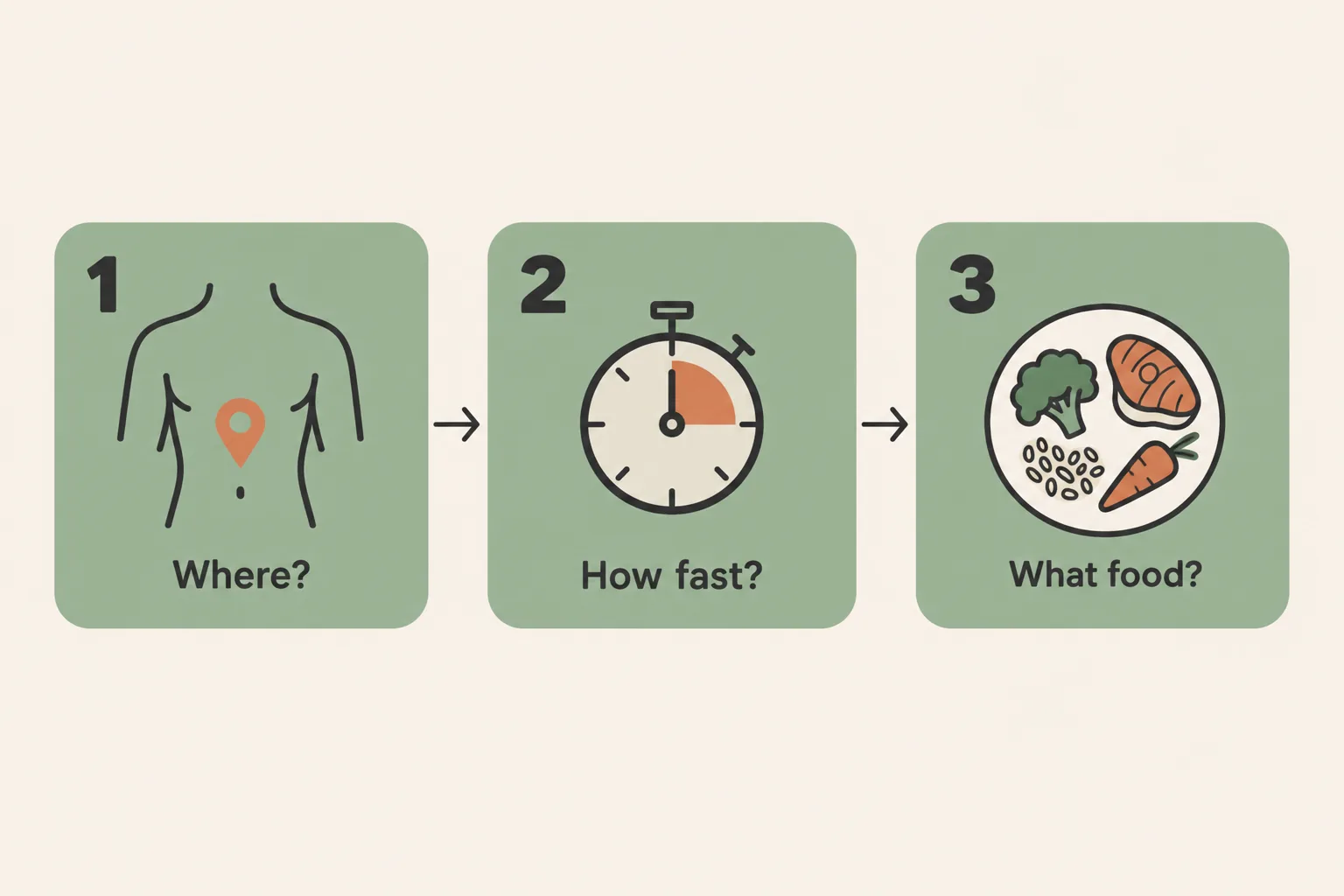
If it feels useful, take one slow breath and notice what is happening in your body. Then ask three questions:
-
Where do I feel it?
-
How fast did it come on?
-
What food would satisfy it?
Use the answers as clues, rather than a pass-or-fail test. If you already know you need food, you can eat without completing the check.
Question 1: Where Do You Feel It?
Physical hunger may show up as an empty or growling stomach, lower energy, irritability, or trouble concentrating. Your stomach makes the hunger hormone ghrelin, which helps signal the brain that it is time to eat.
An emotional urge may come with a particular taste in mind, a repeated thought about food, or tension after a difficult moment. But stress also feels physical, and hunger is not always obvious in your stomach. Brain hunger vs stomach hunger is a shorthand, not a reliable way to separate the two.
Stress can blunt or mimic stomach signals, so location is a clue, not a verdict. That’s why there are three questions.
Question 2: How Fast Did It Come On?
Physical hunger often builds gradually, while an emotional urge may follow a trigger: a tense email, a teenager’s meltdown, or the house finally going quiet. Think about when you last ate and whether you had enough, as well as what just happened.
Sudden urgency does not prove the hunger is emotional. You may have missed earlier hunger cues during a busy day or gone too long without eating. Being able to wait 20 minutes is not a reliable test, and there is no need to delay food to prove your hunger is physical.
Question 3: What Food Would Satisfy It?
Ask whether a satisfying meal or snack sounds appealing. Being open to several foods can be a clue to physical hunger. Wanting one particular food can be a clue to a craving, but it does not rule out physical hunger.
You do not have to want plain food to deserve a meal. After eating, notice whether hunger eases and whether you feel comfortable. Guilt can occur after any kind of eating, so it cannot tell you which type of hunger you had.
Emotional Hunger vs Physical Hunger at a Glance
Screenshot this so you have it in the moment. These are common patterns, not rules, and they can overlap.
| Clue | Physical hunger may involve | Emotional hunger may involve |
| Onset | A gradual build, or sudden awareness after missed cues | An urge linked to a feeling or situation |
| Where you feel it | Stomach sensations, low energy, or difficulty focusing | Food thoughts or tension; physical sensations can occur too |
| Food it wants | Several foods may appeal; preferences still matter | A particular taste, texture, or comfort food |
| Can it wait? | Urgency varies; waiting is not a test | The urge may feel urgent, but urgency alone proves little |
| How it ends | Hunger may ease after enough food | The feeling may remain even after eating |
| Afterward | Satisfaction varies; guilt is still possible | Comfort, satisfaction, guilt or no clear change |
If stress is a common trigger for you, read more about eating when stressed.
Use a Hunger Scale to Rate It (1 to 10)
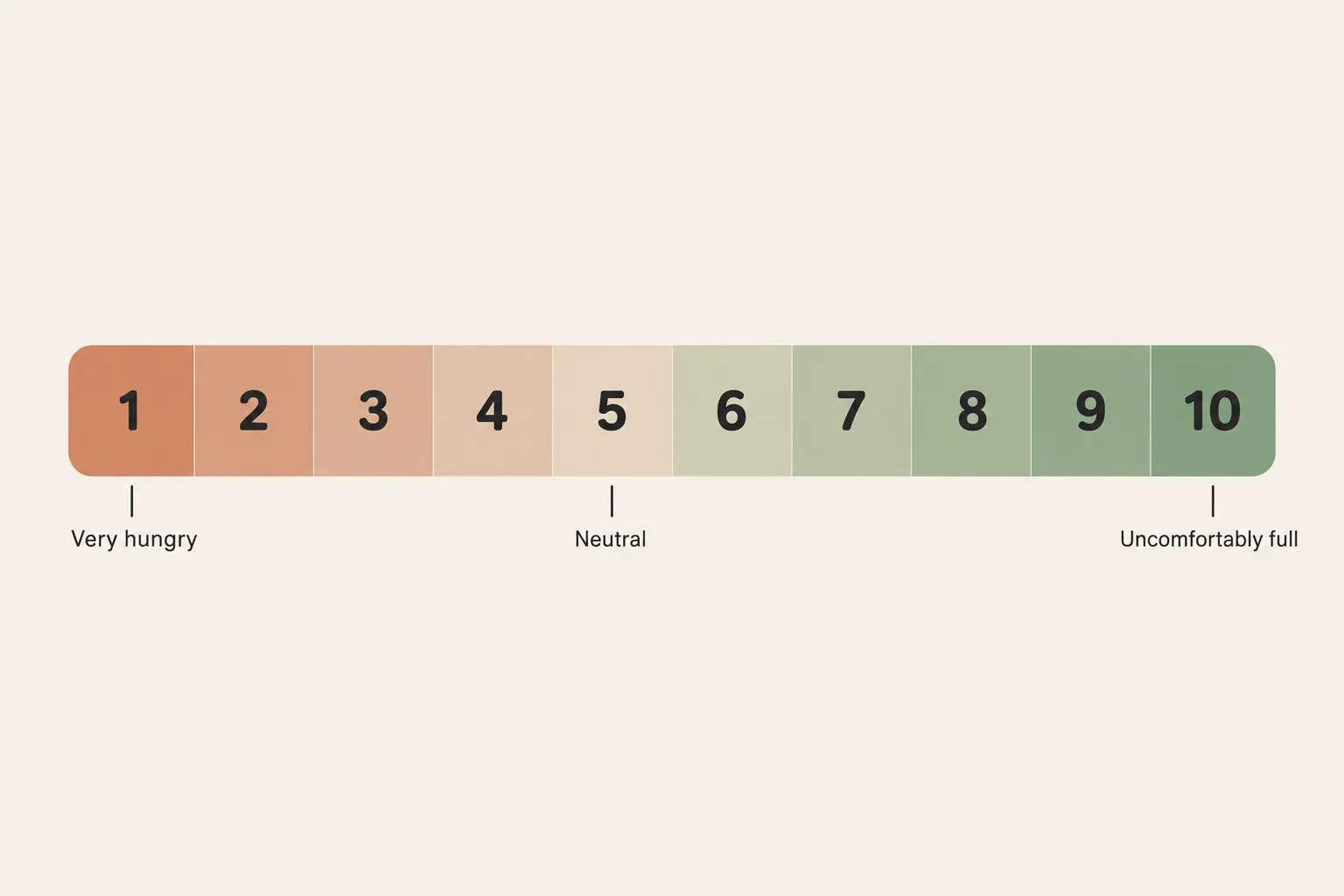
A hunger scale puts a number on your check:
-
1-2: Very hungry, with low energy or irritability
-
3-4: Clearly hungry and ready to eat
-
5-6: Neutral to comfortably satisfied
-
7-8: Full
-
9-10: Uncomfortably full
Treat this hunger and fullness scale as a rough description, not a set of eating rules. Hunger and fullness signals vary between people and from day to day. A number of 5 or above does not prove that the urge to eat is emotional.
There is also practical hunger: eating before a long meeting or journey because you may not have another chance for a while. You do not need to wait for strong stomach signals before planning a meal.
If it feels helpful, jot down a number and one word for your mood for a few days. You may notice a link with a busy afternoon, a difficult conversation, or missed meals. Skip tracking if it makes you more anxious or rigid around food.
Why Am I Physically Hungry but Not Mentally?
Your body may need nourishment even when you have little appetite, meaning little interest in eating. Stress can reduce appetite in some situations, while illness, medicines, and disrupted eating patterns can also affect hunger cues. The absence of a strong desire to eat does not prove that you have had enough food.
If low appetite persists, affects how much you can eat, or comes with unexplained weight changes, speak with a healthcare professional. Follow any eating plan you have been given for a medical condition or eating-disorder recovery rather than replacing it with a hunger test.
True Hunger, False Hunger and the 7 Types of Hunger
Some mindful eating frameworks associated with Jan Chozen Bays describe seven types of hunger: eye, nose, mouth, stomach, cellular, mind, and heart hunger. Versions of this framework vary. These labels are reflection tools, not seven medical diagnoses or a test of whether your hunger is real.
Eye, nose, and mouth hunger draw attention to sensory cues. Mind hunger describes thoughts or rules about eating. Heart hunger describes the desire for comfort or connection. Stomach and cellular hunger are terms used within the framework; they do not diagnose your nutritional needs.
Calling an urge false hunger can encourage you to dismiss it. A more useful question is what you need now: food, enjoyment, company, rest, or a combination. If you often see food as a treat after a hard day, explore using food as a reward.
What to Do When It’s Emotional Hunger
-
Pause briefly if you want to. Check that you are not postponing a meal or snack your body needs. You do not have to wait 5 to 10 minutes before eating.
-
Name the feeling in one word. Tired. Anxious. Lonely. Bored. Resentful.
-
Ask what you actually need. Rest? A boundary? Connection? A real break?
-
Try a non-food reset if it would help. A short walk, a stretch, or a call to a friend may give you another way to respond to the feeling. Tapping (EFT) means gently tapping on points on your face and body while naming what you feel. If you’re curious, read what a tapping session involves.
-
If you still eat, skip the guilt. Sit down, eat slowly, and notice it. Then get curious instead of critical.
Why Do People Stress Eat? More Than Willpower
Stress can affect appetite in different ways. A review of stress and appetite describes how acute stress may suppress eating, while longer-lasting stress may increase appetite and preference for certain foods. Cortisol is involved in the stress response, but one hormone does not explain every craving.
Food can also become a familiar coping habit because it offers comfort, pleasure, or a break. What you call self-sabotage may be one part of that pattern, rather than proof that something is wrong with you. Stress, food restriction, sleep, habits, and health concerns may all deserve attention.
If the pattern feels difficult to manage, read more about feeling out of control around food. Recurring loss of control, severe restriction, purging, or significant distress calls for assessment by a qualified healthcare professional. Coaching does not replace eating-disorder care.
When You Still Can’t Tell the Difference
If you’ve tried the check and still can’t feel the difference, that’s information, not failure. You may find it more helpful to look at regular eating, stress, and the pattern across several days than to label every urge correctly.
For example, arriving home tense after skipping lunch can involve both physical hunger and a need to unwind. Eating and taking a break can both be appropriate. You do not have to choose one explanation.
FAQs
How do I quickly tell physical from emotional hunger?
Ask where you feel the urge, how it started, and what would satisfy it. Also consider when and how much you last ate. Use the answers together: no single sensation, food preference, or time limit can reliably identify the cause.
Can emotional and physical hunger happen at the same time?
Yes. You can need food and comfort at the same time. Have a satisfying meal or snack, then notice how you feel. If you are still hungry, you may need more food; any remaining urge is not automatically emotional.
Is there an emotional hunger vs physical hunger checklist I can save?
Save the comparison table and hunger scale above. Together, they work as a quick checklist for your phone or fridge. Keep the qualification with them: the clues can overlap, and you do not need to pass a test before eating.
Does tapping help with emotional eating?
Some people use EFT tapping to explore feelings around eating. NCCIH’s review of EFT notes some evidence for reducing anxiety, while calling for more research. That does not establish that EFT reliably stops emotional eating, causes weight loss, or replaces clinical care.
A Calmer Next Step With Food
Understanding emotional hunger vs physical hunger starts with noticing your needs without judging them. Feed yourself when you need nourishment, make room for comfort, and seek support when a pattern feels hard to manage. You do not need a perfect score or a January restart.
If you would like help exploring the feelings, beliefs and habits around your eating, explore one-to-one coaching with Sandy and see whether the approach fits your needs. The aim is a calmer relationship with food and your body, with support that respects your circumstances.


