

If you’ve ever asked yourself, ” Why do I reward myself with food?” after a long day, a hard conversation, a stressful deadline, or even a small win, you’re not alone. Food is one of the quickest ways to feel soothed, comforted, distracted, or celebrated. It is easy to reach for, socially normal, and often tied to memories of love, safety, and pleasure.
The problem starts when food becomes the main reward your brain trusts. A cookie after a hard meeting. Ice cream after a lonely evening. Chips after everyone finally leaves you alone. At first, it feels harmless. Over time, it can become an emotional eating cycle that leaves you asking why you keep doing something that no longer feels good afterward.
Here is what many diet plans miss: rewarding yourself with food is rarely just about food. It can be about stress, exhaustion, old conditioning, unmet emotional needs, and the quiet belief that pleasure has to be earned.
Why Do I Reward Myself With Food?
You may reward yourself with food because food works quickly. It can soften stress, mark the end of effort, give you pleasure, and create a short break from feelings you don’t want to deal with yet. That does not mean you are weak. It means your brain has learned that food is a fast path to relief.
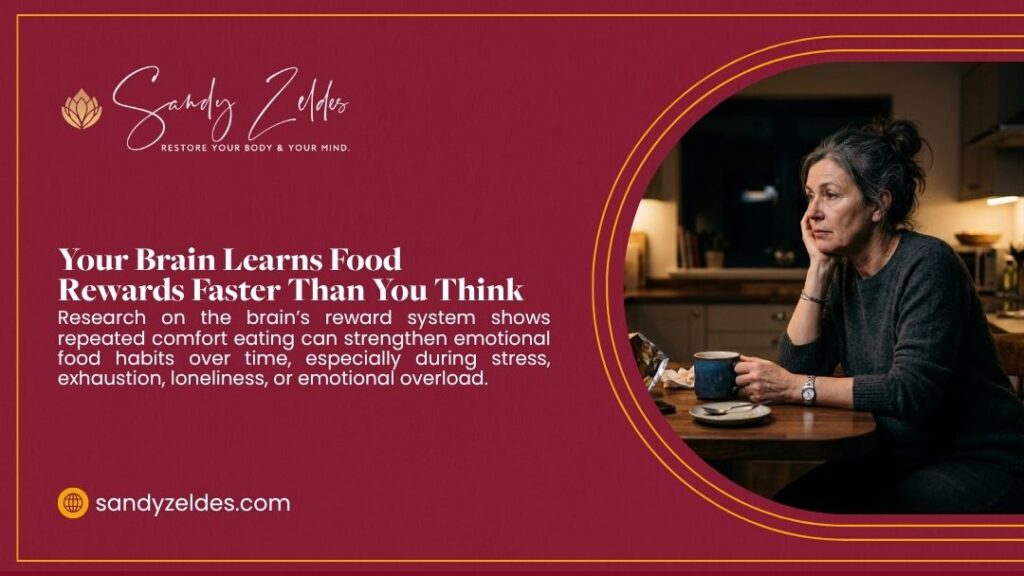
Food also activates the brain’s reward system. Harvard Health explains that parts of the brain are rewarded by high-fat or high-sugar foods, and behaviors that are rewarded are more likely to repeat. That helps explain why food can feel less like a simple snack and more like a prize, especially when you are tired, lonely, sad, angry, or under pressure.
This is why Sandy Zeldes’ work blends EFT, holistic nutrition, functional medicine-informed insight, and subconscious pattern work. Her approach looks beneath cravings and self-sabotage instead of treating food as the whole problem.
Here’s the thing: reward eating is not always emotional eating. Sometimes, cake at a birthday party is just cake. Sometimes dinner out after a promotion is a normal celebration. The pattern becomes painful when food turns into your main way to feel better, calm down, prove you deserve pleasure, or escape the pressure of being “good” all day.
For many women over 40, this question can feel even heavier. Years of dieting, hormone shifts, stress, caregiving, work pressure, and body changes can make food feel like one of the few reliable comforts left. Sandy Zeldes’ work speaks directly to women in this stage of life through a root-cause approach to cravings, self-sabotage, and stubborn weight, especially when another diet is not the answer, including insights on why stress makes you eat even when you’re not hungry.
Food as a Reward Is Often Emotional Eating in Disguise
Food as a reward can look innocent from the outside. You finish a stressful project and tell yourself, I deserve this. You get through a family visit and head straight for something sweet. You survive a difficult week and order takeout because cooking feels like one more demand. That is not a moral failure. It is often emotional eating in a costume.
Emotional eating means using food to meet an emotional need rather than a physical one. HelpGuide describes emotional eating as eating for comfort, stress relief, or reward, and notes that people often reach for foods such as sweets, pizza, fast food, or ice cream when they feel sad, bored, lonely, or stressed.
Houston Methodist dietitian Kasey Kilpatrick puts the shame piece into perspective: “In terms of trying to deal with emotions, there’s actually a lot worse ways to cope than eating.” She also explains that this does not make emotional eating productive, which is why the real issue still needs attention.
That distinction matters. Food may help for a few minutes. But if the original need was rest, comfort, connection, grief, anger, or relief, the food usually cannot finish the job.
The key question is not, was the food good or bad? The better question is, what did I need in that moment? Maybe you needed rest. Maybe you needed comfort. Maybe you needed someone to notice how hard you are trying. Maybe you needed to stop feeling like life is all work, discipline, and responsibility.
Food can offer a quick emotional shortcut. But it rarely gives the deeper need a place to land.
| Type of Urge | What It Feels Like | What It Usually Needs |
| Physical hunger | It builds gradually, and many foods sound acceptable. | A satisfying meal or snack with enough nourishment. |
| Emotional hunger | It arrives fast and feels urgent, often after stress, sadness, anger, or boredom. | Comfort, emotional support, calm, or a way to process the feeling. |
| Reward hunger | It sounds like, “I earned this,” “I deserve this,” or “I need something for me.” | Recognition, rest, pleasure, relief, celebration, or closure. |
Reward hunger is the missing piece in many emotional eating conversations. It is not always about sadness. Sometimes it is about wanting proof that your effort mattered. This is why simply telling yourself how not to eat rarely works for long. The food is not the whole story. The urge is often carrying a message.
The Childhood Link: When Treats Became Proof You Were Good
Many people learn early that food means approval. Finish your homework, and you get dessert. Behave at the store, and you get candy. Win the game, and everyone goes for pizza. Feel sad, and someone hands you cookies. Clean your plate, and you are praised.
That kind of conditioning runs deep because it starts before you have the language to question it. As a child, food may have meant, I’m safe. It may have meant I did well. It may have meant, Someone sees me. Years later, as an adult, the brain may still reach for food when you want proof that you matter.
Research backs this up. A population-based cohort study published through the National Library of Medicine found that parents’ use of food as a reward was associated with later emotional eating-related behaviors in children. The authors also noted a possible cycle in which children who show more food-seeking behaviors may be rewarded with food, which may then contribute to less healthy eating habits over time.
This matters because many women blame themselves for a pattern that began as emotional learning. They say, I have no discipline, when the real issue may be an old reward pathway that has never been updated.
That is one reason Sandy’s approach does not begin with another rule-based food plan. Her work focuses on the deeper emotional and subconscious patterns behind cravings and weight struggles.
Why Food Rewards Feel So Hard to Stop
The food reward cycle is stubborn because it gives you something immediately. Relief now. Sweetness now. Quiet now. Pleasure now. No waiting. No emotional labor. No one is asking you to explain yourself. But here’s the problem. The relief fades, and the original need is often still there.
Mayo Clinic explains that strong food cravings may hit when someone is emotionally vulnerable, stressed, bored, or facing a difficult problem. It also notes that emotional eating can interfere with weight-loss efforts when food becomes a way to manage feelings. The cycle often moves like this:
| Stage of the Cycle | What Happens Internally | What It Can Sound Like |
| Trigger | Stress, loneliness, fatigue, boredom, anger, success, or pressure appear. | I can’t deal with one more thing. |
| Permission thought | The brain frames food as deserved relief. | I earned this. |
| Food reward | You eat for comfort, pleasure, or escape. | This is the only thing I get for myself. |
| Temporary calm | The nervous system gets a short break. | Okay, I feel better for a minute. |
| After-effect | Guilt, shame, frustration, or numbness may appear. | Why did I do that again? |
| Reset promise | You decide to be stricter tomorrow. | I’ll start over on Monday. |
That final stage is where many women get trapped. They try to fix emotional eating with restriction. But restriction can make the reward urge stronger. If food becomes forbidden, it becomes more powerful. If every treat feels like failure, the brain may want it even more.
This is why diets often fail people who are caught in a food-as-reward loop. Diets speak to food choices. Emotional eating speaks to emotional needs. Those are not the same conversation.
The “I Deserve This” Pattern
The phrase “I deserve this” is not the enemy. In many cases, it is a clue. If you say it often around food, you may not be giving yourself enough pleasure, rest, care, or recognition in daily life. Food becomes the prize because there are not enough other prizes. It becomes the reward because your nervous system does not believe relief is allowed any other way.
This pattern is common in high-achieving women. The woman who runs the household. The woman who leads a team. The woman who remembers everyone else’s appointments. The woman who can handle pressure at work but feels out of control around food at night.
On paper, she looks disciplined. Inside, she may be starved for ease. That is why asking why do I reward myself with food? can open a deeper question: Where am I under-rewarded in my actual life?
If the only time you let yourself enjoy something is when you eat, food will carry too much emotional weight. Not because you love food too much, but because you have too few other places to receive comfort.
The Diet-Rebellion Pattern
There is another reason food rewards become so intense: chronic dieting. When you spend years trying to be good, food starts to split into two worlds. There is the controlled world of salads, rules, tracking, and promises. Then there is the reward world of sweets, chips, bread, takeout, or whatever food feels like freedom.
The stricter the rule, the sweeter the rebellion can feel. This does not mean nutrition does not matter. It does. But when food choices become tied to shame, punishment, and self-worth, the body may fight back. The mind may say, stay in control, while another part says, I want my life back.
That inner fight can show up as comfort eating, emotional overeating, mindless eating, or late-night reward eating. And no, it does not mean you are broken. It may mean your system is tired of being managed instead of understood.
Signs You’re Using Food as a Coping Mechanism
Food as comfort is human. Food as your only comfort can become painful. You may be using food as a coping mechanism if you notice a pattern that repeats even when you promise yourself it will not. The signs are often subtle at first, then louder over time.
| Sign | What It May Mean |
| You eat after a hard day, even when you are not hungry. | Food may be acting as stress relief or a transition ritual. |
| You crave specific foods such as ice cream, chocolate, chips, or takeout. | Your brain may be seeking fast comfort, pleasure, or reward. |
| You often say, I deserve this. | Food may be tied to achievement, exhaustion, or feeling unseen. |
| You feel guilty after eating. | The food may not have met the real emotional need. |
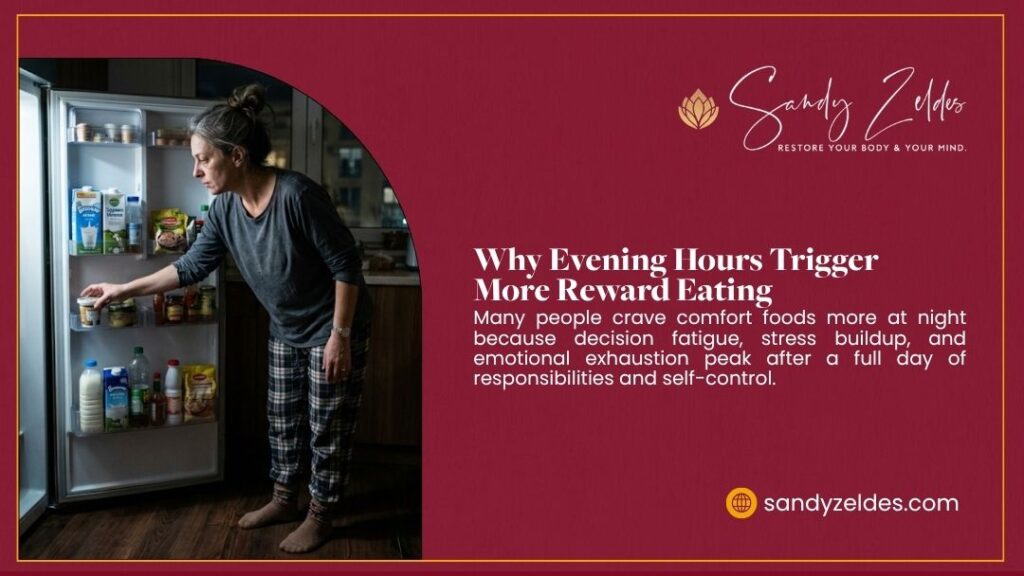
| You cannot relax at night without a snack. | Food may have become your shutdown signal. |
| You eat more when sad, angry, anxious, or bored. | Emotional cravings may be part of the pattern. |
| You eat when alone because silence feels uncomfortable. | Food may fill loneliness, emptiness, or restlessness. |
This is where stop emotional eating advice often misses the point. The real question is not only how to resist the urge to eat. The better question is why the urge feels so necessary in the first place.
Why This Can Feel Worse for Women Over 40
For women over 40, reward eating can become more intense because life often becomes more demanding at the same time the body becomes less forgiving of stress. Sleep may change. Hormones may shift. Menopause or perimenopause may affect mood, hunger, body composition, and energy. Responsibilities may increase. Aging parents, teenagers, work pressure, marriage stress, divorce, grief, or career fatigue can pile up quietly.
And then there is the history. Many women over 40 have spent decades trying to shrink, fix, discipline, or improve their bodies. By midlife, the phrase “I’ll start over Monday” can feel exhausting because it has been said too many times.
So when the question “why do I reward myself with food?” shows up in midlife, it may not be about food alone. It may be about decades of pressure. Decades of self-denial. Decades of being praised for holding everything together.
How to Stop Using Food as a Reward Without Feeling Deprived
The goal is not to remove pleasure from your life. That would only make the pattern worse. The goal is to stop making food carry all the pleasure.
If food is your reward, do not begin by ripping it away. Begin by getting curious. Ask what the food is doing for you. Is it helping you come down from stress? Is it giving you a moment of control? Is it the only enjoyable part of your day? Is it a way to avoid sadness, anger, loneliness, or resentment? Once you know what the reward is trying to give you, you can choose a better match.
| If You Want Food Because You Feel… | The Real Need May Be… | A Non-Food Reward That May Help |
| Exhausted | Rest and quiet | A warm shower, early bedtime, a slower evening, or ten minutes with no one needing you. |
| Lonely | Connection | A call, voice note, walk with a friend, or honest message to someone safe. |
| Proud | Recognition | A small gift, a written win, a celebration ritual, or telling someone what you achieved. |
| Angry | Release | EFT tapping, movement, journaling, or a private place to say what you could not say earlier. |
| Bored | Novelty | Music, a new book, a hobby, a class, a change of room, or a short outing. |
| Anxious | Safety | Breathwork, grounding, prayer, calming touch, or support from someone steady. |
| Deprived | Pleasure | A planned treat eaten slowly, a beautiful meal, flowers, music, rest, or time alone. |
This is also where EFT can be useful. EFT tapping may help create a pause between the urge and the action.
Ask, “What Am I Really Rewarding?”
Before you eat the reward food, pause long enough to ask one honest question: “What am I rewarding?” The answer may surprise you.
Maybe you are rewarding yourself for not yelling. For staying composed. For getting through another day in a body that feels unfamiliar. For caring for everyone else. For not falling apart. For being lonely and still functioning. For being disappointed and pretending you are fine.
When you see the real effort, the craving often makes more sense. That does not mean you must never eat the food. Sometimes you may still choose it. But the choice becomes different when it is conscious. You can say, I want this, and I’m going to enjoy it, instead of I need this because I have nothing else. That shift is small, but it changes the tone of the whole relationship with food.
Replace the Reward, Not the Need
A common mistake is trying to stop comfort eating without replacing it. That rarely works. If food has been your main way to soothe, celebrate, or cope, removing it without support can feel like punishment. Instead, replace the reward while honoring the need.
If the need is rest, rest has to become allowed. If the need is fun, fun has to return to your life. If the need is comfort, comfort has to come from more places than the pantry. If the need is self-worth, no snack can do that job for long.
This is where many standard emotional eating tips fall short. They tell people to drink water, take a walk, or distract themselves. Those ideas can help in the moment, but they do not always reach the reason food became so powerful in the first place. Sandy’s work on tapping for weight loss offers a more body-based path for women who are tired of trying to think their way out of the problem.
What to Do Instead of Emotional Eating
When the urge hits, the first step is not perfection. It is an interruption. A ten-second pause can be enough to make the pattern visible. Put a hand on your chest. Take a breath. Ask, Am I hungry, or am I needing something? If you are hungry, eat. If you are not hungry, ask what kind of care would fit the moment.
Harvard Health suggests approaches such as meditation, exercise, and social support as ways to reduce stress without overeating. It also notes that mindfulness may help people notice the impulse to reach for comfort food and interrupt it.
The best alternative depends on the emotion. Anxiety may need grounding. Sadness may need gentleness. Anger may need release. Boredom may need stimulation. Exhaustion may need sleep, not another promise to do better tomorrow.
A practical replacement is a closing ritual. Many people reward themselves with food because the day has no clear ending. Work bleeds into home. Caregiving bleeds into bedtime. Stress follows them into the kitchen. A closing ritual tells the body, “The hard part is over.”
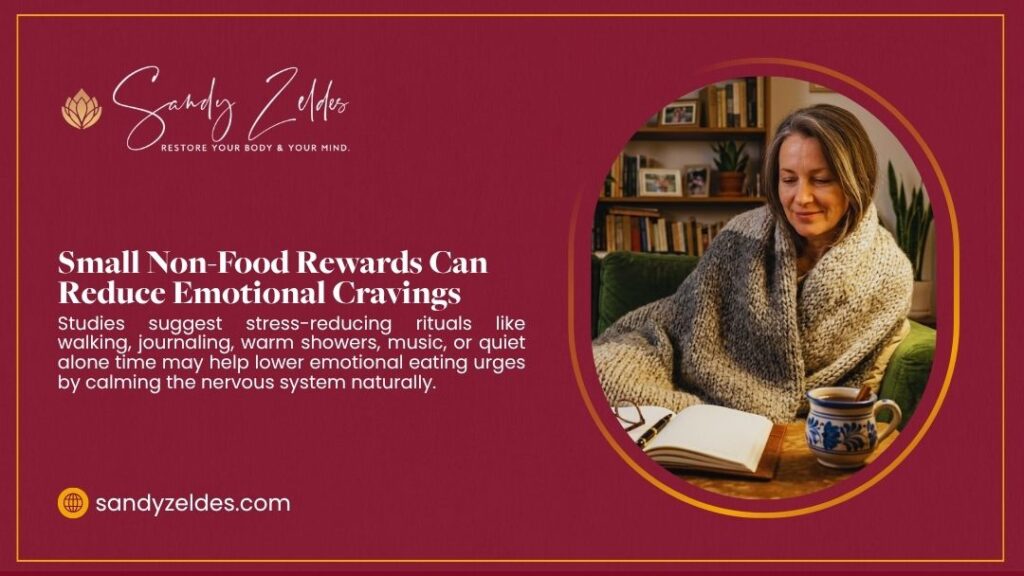
That ritual could be changing clothes after work, washing your face, making tea, stepping outside, tapping for five minutes, stretching, or sitting in silence before anyone asks for anything. It does not have to be impressive. It has to be repeatable.
Can EFT Help With Food Cravings and Reward Eating?
EFT, often called tapping, is a self-help and coaching tool that uses gentle tapping on specific points while focusing on an emotion, belief, memory, or body sensation. It is not about forcing yourself to stop wanting food. It is about helping the nervous system soften the emotional charge behind the craving.
This fits reward eating because the urge is often not only physical. It may carry stress, anger, grief, resentment, loneliness, or a belief such as “I never get anything for myself.” When that emotional charge drops, the food can lose some of its pull.
For Sandy Zeldes, this is central. Her work focuses on women who have tried diets and still feel stuck because the real issue is not a lack of knowledge. It is often chronic stress, past trauma, subconscious beliefs, and protective self-sabotage.
That is why her coaching speaks to women who want peace with food and their bodies, not another set of food rules. Her perspective on working with an EFT practitioner for weight loss highlights why addressing root causes can matter when cravings feel stronger than willpower.
When Food Rewards Are a Sign You Need Deeper Support
There is no shame in needing help with emotional eating. In fact, needing support may mean you are finally being honest about how heavy the pattern has become.
National Eating Disorders Association notes that emotional eating itself is not necessarily an eating disorder, but it can be part of disordered eating patterns, especially when guilt, shame, restriction, obsessive food thoughts, or frequent dieting are involved. It also states that people do not need a diagnosis to seek help with their relationship with food.
Support may be especially important if food feels compulsive, if you feel powerless around certain foods, if you eat to numb trauma or loneliness, if you often overeat in secret, or if your life has become smaller because of shame about eating or weight.
For some women, emotional eating therapy, EFT, coaching, nutrition support, or trauma-informed help can provide what self-control never could: a safe place to understand the pattern instead of attacking it. If this feels familiar, you can work privately with Sandy to explore the deeper causes behind cravings, self-sabotage, and food-as-reward habits.
FAQs
How Do I Stop Eating My Feelings?
To stop eating your feelings, you first have to know which feelings are being eaten. That may sound simple, but many people only notice the craving, not the sadness, anger, fear, or exhaustion underneath it. A food-and-feelings journal, EFT tapping, emotional eating worksheets, or support from a practitioner can help you see the pattern with less judgment.
Why Do I Feel Like I Need to Eat When I Am Alone?
Eating alone can become a way to fill silence, loneliness, boredom, or emotional emptiness. Food gives stimulation and comfort without requiring vulnerability. If this pattern repeats, it may help to create a new evening routine that includes connection, sensory comfort, or a grounding practice before the urge becomes too strong.
Can EFT Help Me Stop Using Food as a Reward?
EFT may help some people create a pause between the craving and the automatic response. It can be especially useful when the urge to eat is tied to stress, old beliefs, resentment, loneliness, or the feeling that food is the only reward available.
What If I Have Tried Everything and Still Can’t Stop?
If you have tried diets, tracking, meal plans, motivation tricks, and willpower but still feel stuck, the issue may be deeper than food choice. It may involve stress, subconscious protection, old emotional patterns, or nervous system overwhelm. Sandy’s work is designed for women who are ready to look beneath the symptom and address the root.
What Are Good Alternatives to Emotional Eating?
Good alternatives to emotional eating are those that meet the same need that food was trying to meet. If you need calm, try breathing, tapping, prayer, or quiet. If you need pleasure, try music, beauty, rest, or a planned treat eaten with presence. If you need connection, reach out to someone safe. If you need release, move, write, cry, or speak the truth somewhere private.
A Kinder Way to Break the Food Reward Cycle
If you’ve been asking, why do I reward myself with food? The answer is not that you are lazy, broken, or hopeless. More often, food became a reward because it was available, familiar, pleasurable, and emotionally reliable at a time when other forms of comfort were missing.
That pattern can change. Not through shame. Not through another harsh diet. Not through pretending you do not want comfort. It changes when you understand what the craving is trying to do for you and give that part of you a better way to feel safe, seen, soothed, and satisfied.
For women over 40 who are tired of chronic dieting, emotional cravings, and starting over, Sandy Zeldes offers a root-cause approach that looks beneath the food struggle.
If food feels stronger than willpower, this might be the moment to stop fighting the symptom and start listening to what it has been trying to say. Learn more about Sandy’s holistic weight loss work or reach out when you are ready for support that goes deeper than another diet.