


You ate well all day. Real breakfast. A lunch you actually planned. A dinner you’d be happy to photograph. Then it’s 9 pm, you slept five and a half hours the night before, and you’re standing at the pantry eating chocolate chips straight from the bag, wondering what on earth is wrong with you.
A short night can make food more appealing the next day. It can also leave you too tired to sort out whether you’re hungry, stressed, or simply looking for a few minutes of comfort. You deserve an explanation and a workable next step, not a lecture about discipline.
The Short Answer: Poor Sleep Can Increase Sugar Cravings
Does lack of sleep cause sugar cravings? It can. Studies suggest that sleeping less may increase hunger, food cravings, and interest in sweet or energy-dense foods. That does not mean everyone will crave sugar after every bad night, or that sleep explains every craving.
The clearest practical answer is to look at both the night and the following day: how much you slept, whether you ate enough, and what was happening when the urge showed up. If cravings persist even after adequate sleep, stress and established eating patterns may be part of the picture too.
What Poor Sleep Can Do to Hunger Signals
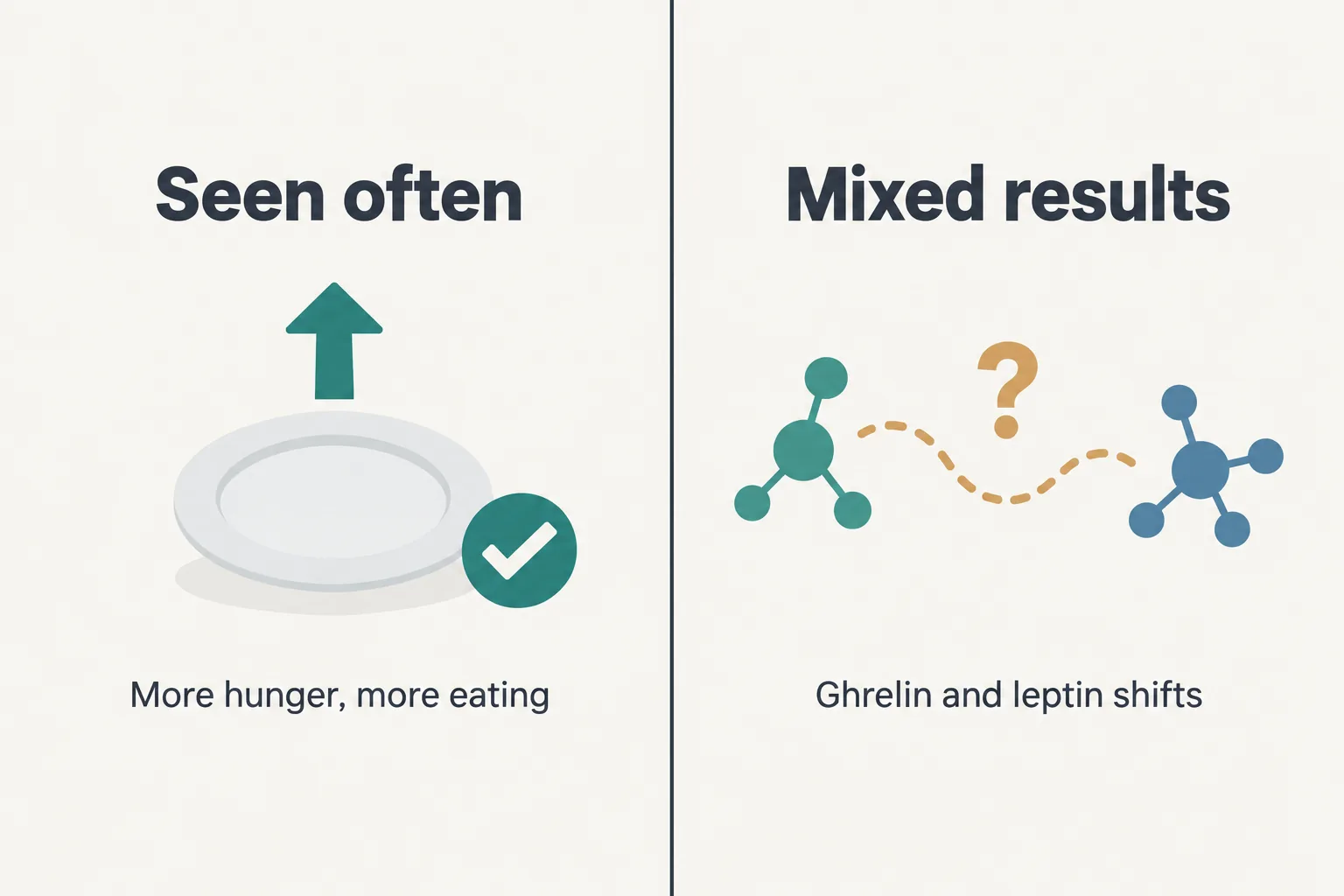
Ghrelin and leptin help regulate hunger and fullness. You may have read that a short night automatically raises one and lowers the other. Some studies have found those changes, but they are not consistent across trials. A review of randomized sleep-restriction studies found increased reported hunger and food intake without strong evidence of a consistent average change in either hormone.
There is also evidence that speaks directly to cravings. In a small crossover study, 24 women reported more hunger and food cravings and ate more chocolate after a curtailed night than after a normal night. They were 18 to 55 years old, so this finding cannot tell us exactly what happens for every woman in midlife. It does show why a sudden interest in the snack drawer after poor sleep is worth taking seriously.
If breakfast seems less satisfying than usual or you want something sweet by afternoon, notice it without deciding that your hormones must be doing one particular thing. Sleep is one possible contributor; the amount you ate and the kind of day you’re having matter as well.
Why Sweet Foods May Seem More Appealing When You’re Tired
Appetite is only part of the story. In a small brain-imaging study of healthy young adults, sleep deprivation changed activity in regions involved in evaluating food and was linked to greater interest in high-calorie choices. That doesn’t mean the cookies at work will be irresistible. It means a tired brain may respond differently to a tempting food than a rested one.
Think back to the last time you arrived home short on sleep. Did dinner sound good, or did you want the quickest thing in the cupboard? That question can tell you more about your own pattern than a rule about which foods you’re allowed to eat.
How Short Sleep May Affect Insulin Sensitivity
Insulin helps your body use glucose from food. A review of randomized trials found that sleep restriction can reduce measures of insulin sensitivity. This is a real reason to take sleep seriously, but it does not prove that your usual sandwich will cause a blood sugar crash or a second sugar craving at 4 pm.
If you repeatedly feel shaky, sweaty, or unwell around meals, avoid guessing at the cause from an article. Tell a clinician what happens and when.
If You Wake Hungry or Shaky at Night
Waking and wanting something sweet does not, by itself, reveal your blood glucose level. You may be hungry because you ate too little earlier, or you may be awake for another reason and notice food once you’re up. Night sweats, stress, and disrupted sleep can also complicate the picture.
If you take insulin or another medicine that can cause low blood glucose and wake up shaky, sweaty, or confused, check your glucose as directed and follow your care plan promptly. NIDDK explains that confirmed low blood glucose requires fast-acting carbohydrate; nuts are not a substitute for that first treatment.
If low blood glucose is not the issue and you’re genuinely hungry, you can eat. Consider whether you’re regularly going to bed hungry or waking often, and discuss persistent symptoms with your clinician rather than relying on a fixed bedtime-snack rule.
Can Evening Eating Affect Sleep?
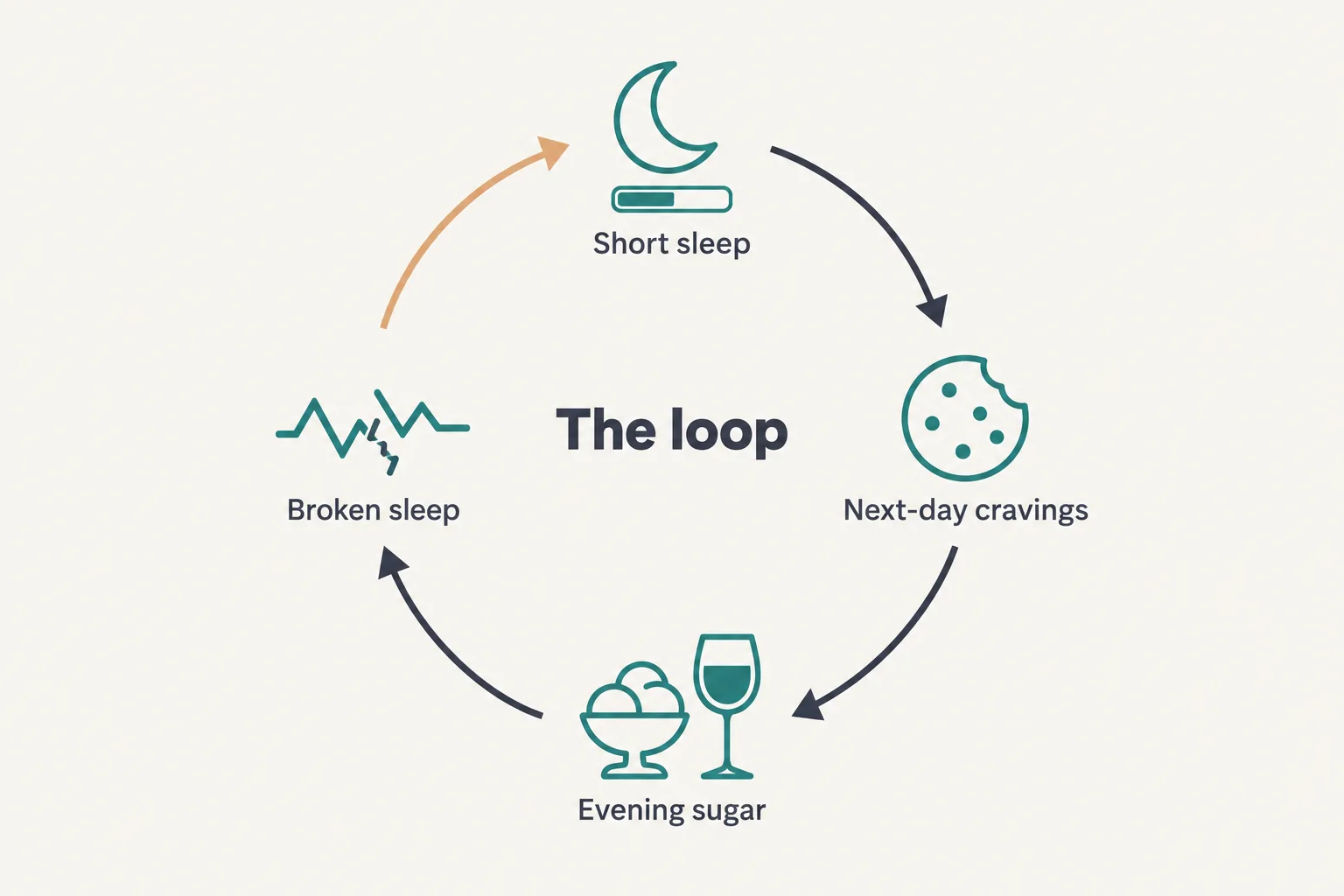
Here’s the part that makes this feel unfixable. It runs in both directions.
A sugar-heavy evening, especially paired with alcohol, tends to leave people with lighter, more broken sleep and more night waking. That broken sleep produces tomorrow’s cravings. Tomorrow’s cravings produce tomorrow night’s sugar. Round and round.
Will you sleep better if you cut out sugar? Many women do, and I’ve watched it happen plenty of times. But I’d rather tell you the truth than sell you a switch. The improvement usually comes from steadier blood sugar through the night and fewer wake-ups, not from an overnight transformation, and it rarely shows up after one clean day. Give it a couple of weeks before you judge it. Notice, too, that going white-knuckle strict often backfires, because restriction feeds the same loop from the other end.
Take this from the section:
A self-reinforcing physical pattern is not a personal failing.
It feels like failure because it repeats, and things that repeat feel like they’re about you. They’re not. And because it’s a loop, you don’t break it at the cookie. You break it somewhere else entirely.
Can Evening Eating Affect Sleep?
Sleep and eating can influence each other, but an evening dessert does not automatically ruin a night’s rest. A review of diet-and-sleep studies found an association between diets higher in processed or free-sugar-rich foods and poorer sleep. Much of that evidence cannot tell us whether sugar caused the sleep problem, whether poor sleep changed eating, or whether other factors contributed.
If you suspect a connection in your own life, notice when you eat, whether alcohol is involved, and how you sleep afterward. You don’t need to turn dessert into another food rule to learn something useful.
Why Sleep Can Change in Midlife
If you’re over 45 and sleep feels different from a few years ago, you’re not imagining that shift. Hot flashes and night sweats can interrupt sleep during the menopause transition. Sleep-apnea risk also rises during and after menopause, and women may have symptoms such as insomnia, fatigue, or repeated waking even without obvious snoring.
That does not mean every midlife craving comes from hormones. It means the reason you’re tired is worth understanding. My guide to perimenopause weight gain and related changes explores the wider context; if sleep problems persist, ask a clinician about the symptoms themselves.
When Stress and Sleep May Both Be Part of the Pattern
Here is a question I ask women I work with: does the craving show up only after poor sleep, or does it also appear on nights when you’ve rested and eaten enough? The answer can help you notice whether stress, habit, or a need for comfort may also be involved. It is not a diagnosis.
In my work, a late-night urge sometimes opens a conversation about what the day has asked of you and what food briefly provides. If that sounds familiar, I’ve written more about why sugar cravings can feel hard to interrupt. Poor sleep still deserves attention in its own right; addressing stress does not replace care for insomnia, sleep apnea, or another medical cause of disrupted sleep.
You may discover that you were hungry, that you needed rest, or that you wanted relief after a difficult day. You can respond to any of those observations without blaming yourself.
When Cravings or Night Waking Need a Medical Check
A sugar craving cannot tell you that you have a particular nutrient deficiency or diabetes. Persistent night waking, frequent urination, unusual thirst, recurrent night sweats, or episodes of shakiness deserve a conversation with a clinician, especially if you take medication that affects blood glucose.
Mention loud snoring, witnessed pauses in breathing, or waking unrefreshed as well. If you’re struggling to sleep despite allowing enough time for it, ask about the cause rather than continuing to add new bedtime rules. If you suspect a deficiency, discuss whether testing is appropriate instead of buying supplements based on a craving.
How to Stop Sugar Cravings When You’re Running on Empty
Try these ideas for a week as observations, not a pass-or-fail plan. None requires you to ban sugar or ignore hunger.
Step 1: Make room for sleep. CDC advises at least seven hours of sleep for adults aged 18 to 60 and describes age-specific guidance for older adults. A steady wake time and a wind-down routine can help. If you have enough time available but still cannot sleep, bring that up with a clinician.
Step 2: Eat enough during the day. Notice whether your ‘good’ daytime eating is actually leaving you hungry by evening. Choose satisfying meals that fit your appetite and preferences. As a former chef, I care about whether food tastes good, too; satisfaction belongs in the conversation.
Step 3: Support a consistent rhythm. Try getting outside in daylight and waking at roughly the same time most days. Notice what helps you feel alert after a poor night without expecting one perfect morning routine to erase sleep loss.
Step 4: Look at the whole evening. If you regularly wake after a late meal or alcohol, track the pattern and discuss persistent disruption with your clinician. You can experiment with timing without making dessert forbidden or assuming sugar alone caused a bad night.
Step 5: Make space between a feeling and a choice. If the craving arrives when you’re stressed, you might try a pause, a few slow breaths, or EFT tapping. My EFT tapping-points guide explains the practice. NCCIH notes some evidence for EFT in reducing anxiety, while calling for more research. That is different from proving that tapping treats sleep loss or ends sugar cravings.
When the Craving Hits at Night Anyway
First, check what you need. Are you hungry? Did you eat enough today? If so, having food is a reasonable response. If you’re looking for relief, name the feeling and consider what else might help, whether that’s rest, support, or a few quiet minutes. You can also eat without turning the moment into a verdict on your character.
If you often spend the day trying to be ‘good’ around food and then feel out of control at night, see my article on why night eating can follow a day of restriction. That pattern deserves attention on its own, rather than another promise to try harder tomorrow.
FAQs
Related readingWhy Is Losing Weight So Hard After 40? What Actually WorksRead the guide →Frequently asked questions
Does poor sleep make everyone crave sugar?
Why might I want sweets after a nap?
Does a nighttime sugar craving mean my blood glucose is low?
Can EFT replace more sleep?
How quickly will better sleep change my cravings?
What to Try Next if Sleep and Cravings Keep Repeating
Poor sleep can make sweet foods more appealing; the craving is information, not proof that you lack discipline. Start with the basics you can observe: sleep, enough food, and what happens on the difficult evenings. Seek medical guidance when the waking or physical symptoms keep returning.
If stress-linked cravings remain even when you’re sleeping and eating enough, that is a conversation I have with women in my one-to-one work. You can learn about working with me and apply to start a conversation to see whether the approach fits.