


Some evenings, eating feels like relief after a long day. Other times, you may feel unable to stop and wonder whether what is happening is a habit or something that needs more support.
Emotional eating describes eating influenced by feelings. Binge eating disorder (BED) is a diagnosable condition with specific criteria, including recurring episodes with loss of control and marked distress. The two can overlap. This guide will help you understand when to ask for an assessment, without asking you to diagnose yourself.
Emotional Eating vs Binge Eating Disorder: The Short Answer
The right support depends on the pattern, how it affects your life, and whether an eating disorder may be present.
Self-blame is not a treatment plan. Emotional eating may call for support with stress and coping. If BED is a possibility, an eating-disorder specialist can assess it and discuss treatments that have been shown to help.
Feelings may play a role in both. For BED, clinicians also look at the amount eaten within a discrete period, loss of control, other associated signs, frequency, and distress. No single late-night snack or difficult week settles the question.
Whichever one you recognize in yourself, it is not proof that you are broken or undisciplined.
You deserve a clear answer and support that fits what you are experiencing.
What Emotional Eating Actually Is
Emotional eating describes eating influenced by feelings; physical hunger can be present at the same time. Sometimes the feeling is stress, boredom, loneliness, or the exhaustion of having been useful to everyone all day long. Sometimes it is harder to name.
You may notice yourself reaching for something sweet, salty, or familiar after a hard day. What you want to eat, how quickly the urge arrives, and whether you were hungry are clues to explore, not a way to diagnose an eating disorder.
Emotional eating is not itself a diagnosis. It can happen on its own or alongside an eating disorder. For a practical introduction to the technique I use with food-related distress, see my guide to using EFT for emotional eating.
Clues That Feelings May Be Influencing Your Eating
- Certain feelings, places, or times of day seem to make eating more appealing.
- You sometimes reach for food for comfort or distraction, whether or not you are also hungry.
- You may keep eating beyond comfortable fullness and wonder what was happening before you started.
- Self-criticism follows, even though you would rather understand the pattern than fight yourself over it.
These experiences can overlap with other eating patterns. If eating feels out of control or causes significant distress, an assessment will tell you more than this list can.
What Binge Eating Disorder Is, in Plain Language
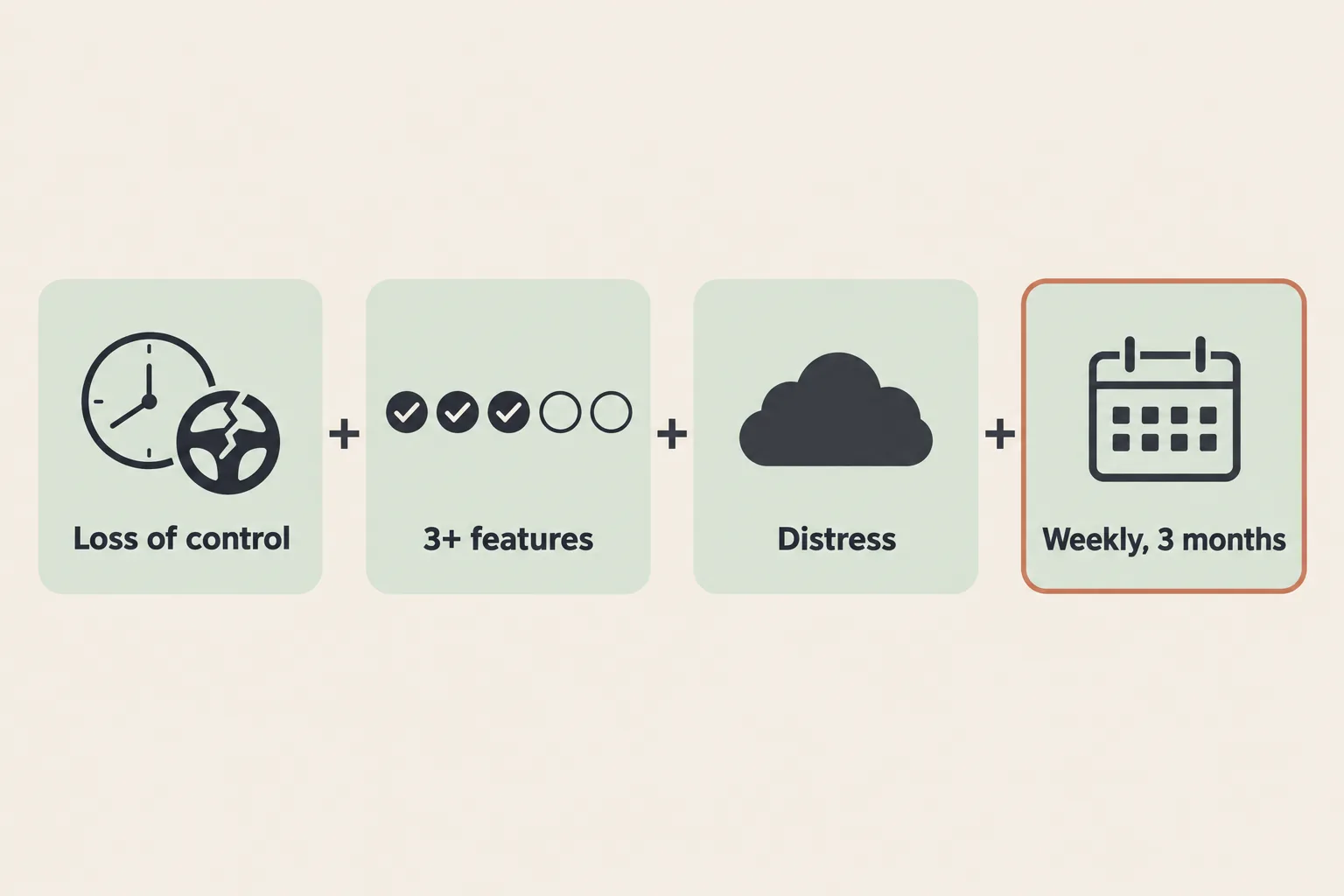
Binge eating disorder is a recognized eating disorder. It is not a personality flaw and not a discipline problem.
Clinicians assess episodes in which someone eats an amount unusually large for the circumstances within a discrete period, often described as about two hours, and feels unable to control the eating. A BED diagnosis also requires marked distress, at least three associated features, and episodes averaging at least once a week for three months. The DSM-5-TR criteria summary gives the full definition.
Related readingEFT Tapping for Weight Loss: Break Free from Emotional EatingRead the guide →Associated features include eating much faster than usual, eating to uncomfortable fullness, eating a large amount without physical hunger, eating alone out of embarrassment, and feeling disgusted, depressed, or very guilty afterward. Recurrent purging or other compensatory behaviors call for assessment for a different eating disorder. Symptoms that fall short of BED’s frequency or duration criteria can still deserve care.
Read that and notice what you notice, but hold it loosely. Diagnosis belongs to a qualified clinician who can actually assess you. The purpose here is recognition, not a verdict you hand yourself at midnight.
Emotional Eating and BED: What Overlaps and What Clinicians Assess
| Question | Emotional eating | Binge eating disorder |
|---|---|---|
| What is it? | Eating influenced by feelings; not a diagnosis on its own. | A diagnosable eating disorder with specific criteria. |
| Does the amount settle it? | No. Any amount may be involved, and amount alone cannot tell you what support you need. | A qualifying episode involves an unusually large amount within a discrete period and loss of control. |
| Can emotions and distress be involved? | Yes; experiences vary, and emotional eating can coexist with other concerns. | Yes. Marked distress and at least three associated features form part of a clinical assessment. |
| Does frequency matter? | No single frequency defines emotional eating. | The diagnostic pattern averages at least once a week for three months; less frequent symptoms can still merit help. |
| What is the next step? | Seek support if the pattern troubles you. | Ask a clinician experienced with eating disorders for an assessment. |
This table describes patterns; it cannot tell you which diagnosis, if any, applies to you. If the feeling of losing control is familiar, my article on feeling out of control around food explores that experience. Bring recurring or distressing episodes to a qualified professional as well.
An Example: When the Label Is Unclear
Imagine a woman who skips lunch, has a stressful day, and eats more than she intended that evening. Hunger and stress may both matter. One evening does not establish BED. If she repeatedly feels unable to stop and is distressed by the episodes, an eating-disorder specialist can explore what is happening. This is an illustration, not a client story or a diagnosis.
When to Seek an Eating-Disorder Assessment
You do not need to check off several signs before asking for help. Consider speaking to a healthcare professional or eating-disorder specialist if any of these patterns worry you:
- You repeatedly feel unable to stop eating or control how much you eat.
- You eat alone out of embarrassment, hide evidence, or arrange your day around eating episodes.
- The episodes cause distress or physical discomfort, or lead you to avoid people or activities.
- You vomit, misuse laxatives, fast, or exercise to compensate for eating. Tell the clinician about this even if you are unsure what it means.
An assessment can also help when episodes happen less often than once a week. You do not have to work out the label before making an appointment.
Can Emotional Eating and BED Overlap?
Yes. Emotions can precede binge episodes for some people with BED, and emotional eating can also occur without BED. A 2023 review of 32 studies found that research has not established a predictable progression from emotional eating to BED.
For some people, skipping meals or restrictive dieting may contribute to binge eating. The NIDDK overview of BED’s possible causes also describes biological, psychological, social, and environmental factors. No single explanation fits everyone.
In my work with women over 45, years of dieting often come up in conversations about food. Some are also navigating midlife changes and disrupted sleep. Those experiences matter when deciding what support feels useful, but they cannot tell us whether BED is present.
What Helps, and Where EFT Coaching Fits
Care if BED May Be Present
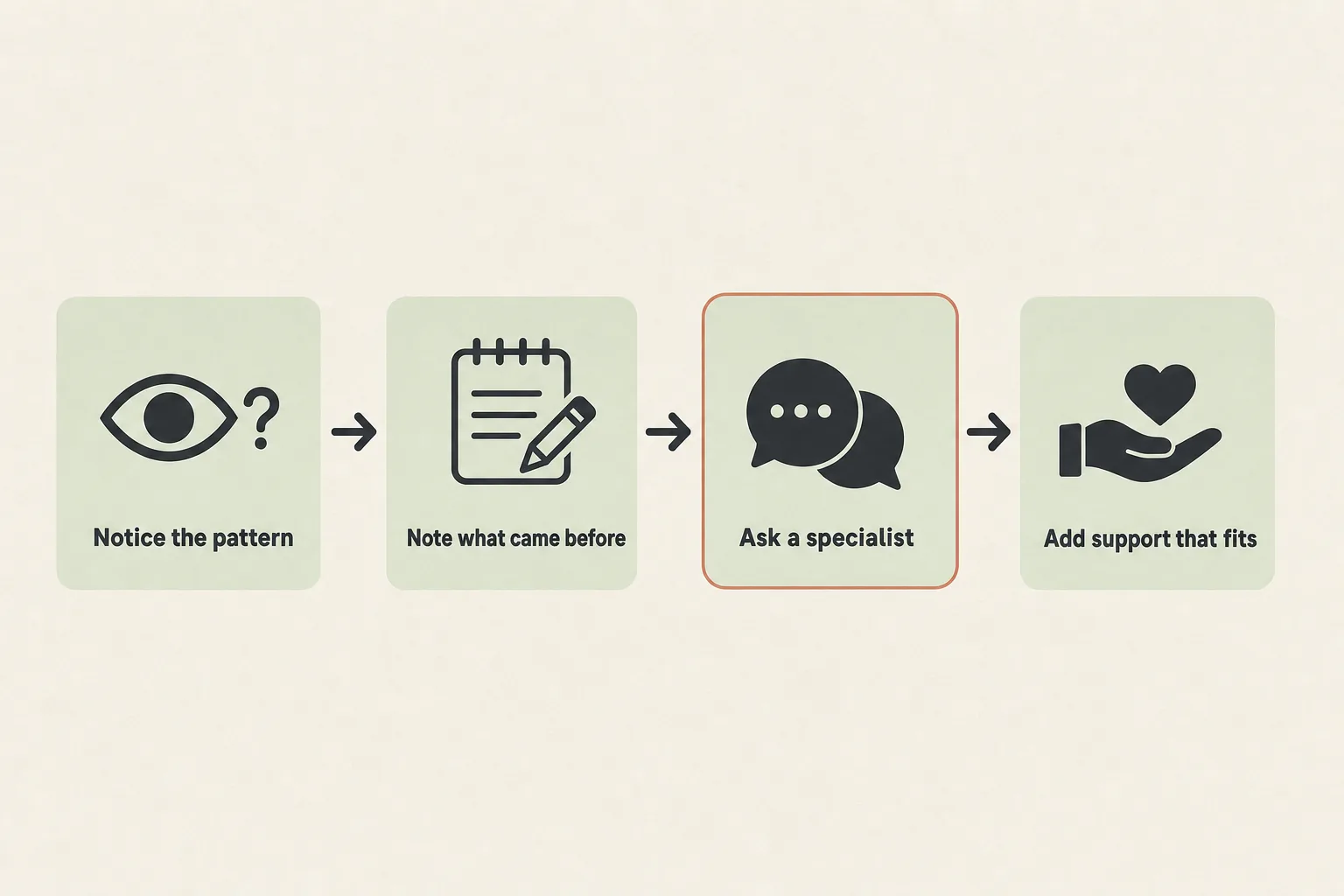
Start with a professional assessment if you suspect BED. According to the NIDDK guide to BED diagnosis and treatment, care may include cognitive behavioral therapy, interpersonal psychotherapy, or dialectical behavior therapy. A healthcare professional may also consider medication, and a dietitian experienced with eating disorders can advise on eating patterns. Treatment should fit the person, not a rule from a blog post.
Where My Coaching May Fit
I work with women who want to understand the feelings and beliefs that can make food seem like a familiar coping tool. I am a Functional Medicine Nutritionist and Advanced EFT Practitioner with more than two decades of experience; you can read more about my background. EFT involves tapping on a sequence of points while noticing a feeling or thought. I use it in coaching for food-related distress and cravings.
EFT coaching is not an established treatment for BED or a replacement for an eating-disorder assessment. If an eating disorder may be involved, clinical care comes first; you and your care team can decide whether additional coaching is appropriate.
What to Do Next Without Self-Diagnosing
1. If eating repeatedly feels out of control or distressing, ask a clinician experienced with eating disorders for an assessment. 2. Mention any purging, fasting, laxative use, or exercise to compensate for eating, even if it feels hard to bring up. 3. If it feels helpful, briefly note what was happening before an episode so you can describe it to a professional. You do not need a seven-day log before seeking care. 4. Once you know what care you need, consider whether support with stress, cravings, and your relationship with food would also help.
FAQs About Emotional Eating and BED
Can emotional eating happen when I am physically hungry?
What if episodes happen less than once a week?
Can someone have BED at any body size?
Is one evening of overeating the same as BED?
Explore Support That Fits Your Situation
If this article helped you name what you are experiencing, let that clarity guide your next step. If BED or compensatory behaviors may be involved, seek an eating-disorder assessment.
I work one-on-one with women seeking support with emotional eating and cravings. If coaching seems appropriate alongside any clinical care you need, explore working with me.