


For a few months, it was quiet. You ate lunch and went back to your desk without thinking about dinner. No 4 pm negotiation with yourself. No mental inventory of the pantry at 9 pm. For a woman who has had a running commentary about food in her head since her twenties, that silence felt like someone finally switched off a radio she never knew how to unplug.
If your food noise came back after stopping Ozempic, you are not alone. As semaglutide’s effects fade, appetite and thoughts about food may return. How soon and how strongly varies.
Maybe you are worried that the medication was the only thing that ever worked and that the return of food thoughts means you failed. It does not. You deserve an explanation of what may be happening and support that fits your health and your life.
Food Noise After Stopping Ozempic: What We Know
Food thoughts can return after stopping semaglutide, but research has not established how often food noise returns after Ozempic or exactly when it will happen for any one person.
In a follow-up study of adults who stopped semaglutide 2.4 mg and structured lifestyle support, participants regained an average of about two-thirds of their prior weight loss over the following year. That study measured weight, not food noise, and it did not study Ozempic doses specifically.
A small interview study of 31 adults taking obesity medications recorded different experiences of appetite and food thoughts, including reports of food noise returning after a pause in medication. Interviews help describe what some people experience; they cannot tell us how common that experience is.
This is no knock on anyone who used it. Medication can reduce appetite and food-related thoughts while you take it. Returning thoughts may also be shaped by meals, sleep, stress, and your history with food.
Related readingWhy Am I Disciplined in Life but Not Around Food?Read the guide →Why Appetite and Food Thoughts Can Return
Ozempic (semaglutide) acts on GLP-1 receptors and affects blood glucose and appetite. It can also delay the early phase of stomach emptying, according to the FDA prescribing information for Ozempic. Those effects help explain why eating may feel different while you are taking it.
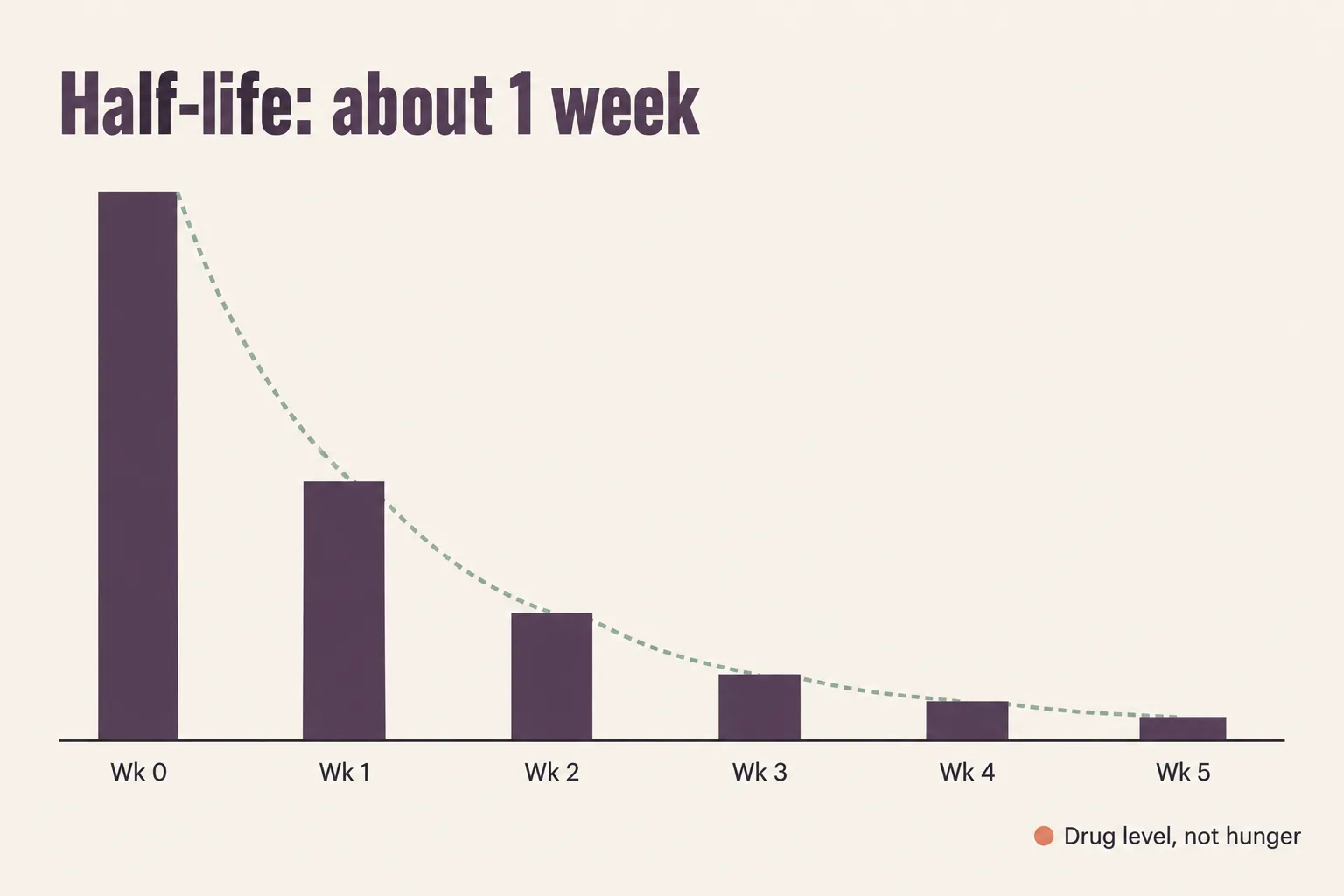
The same prescribing information puts semaglutide’s elimination half-life at approximately one week and says it may remain in circulation for about five weeks after the last dose. That is a measure of how the medication leaves the body, not a timetable for when your hunger, food thoughts, or digestion will feel a certain way.
Can Hunger and Food Noise Happen Together?
Yes. Hunger can return as medication effects fade, and persistent thoughts about food may appear at the same time. One does not rule out the other.
Physical hunger might show up as an empty-stomach feeling or a growing interest in a meal. Food noise can feel like recurring, unwanted thoughts about what to eat next, even when you are trying to focus on something else. Stress, food cues, poor sleep, and not eating enough may also affect how loud those thoughts feel.
Rather than deciding a craving is “all emotional,” ask when you last ate, whether food sounds satisfying, and what else was happening when the thoughts picked up. If the thoughts are persistent or distressing, bring that experience to a qualified clinician.
Where Stress and Eating Patterns May Fit
For some women over 45, stress or long-standing beliefs about food add to the distress of returning appetite. For others, the change may feel mostly physical.
You do not need to decide which it is from one difficult evening.
Research has linked stress with changes in eating behavior, including disinhibited eating and greater intake of highly palatable foods. It does not show that stress is the cause of every woman’s food noise after Ozempic.
If reaching for food has been a familiar way to unwind, soothe yourself, or get through pressure, that pattern is worth exploring without shame. Sometimes a habit that looks like self-sabotage began as an attempt to feel better. Noticing it can help you choose what kind of support you need.
Your prescriber can help with the medication and any health conditions it treats. Support for stress-related eating can help you explore the emotional side if it is part of your experience.
Has anyone stopped Ozempic and kept the weight off?
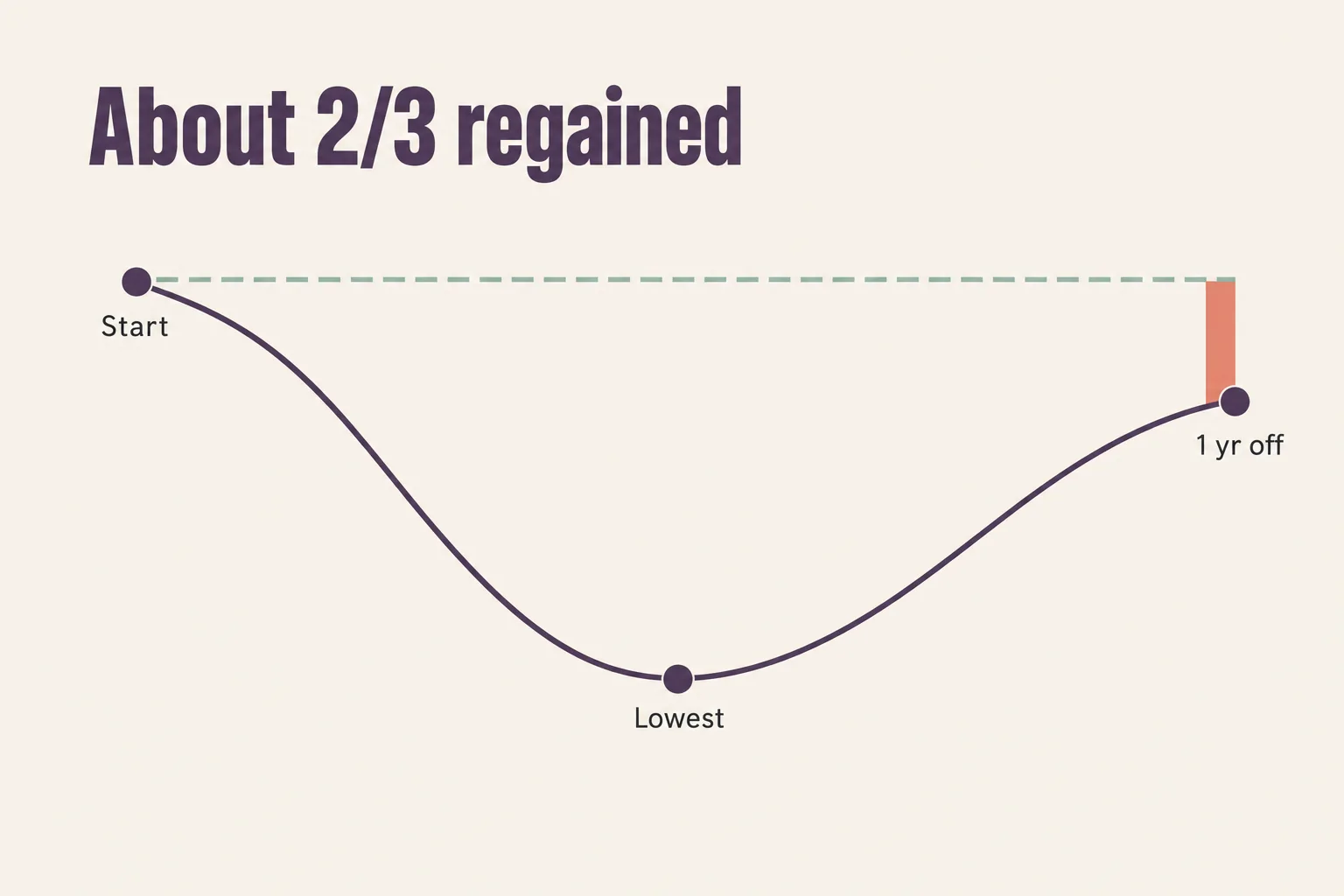
Yes, some people retain some of the weight loss they achieved. In the follow-up study above, participants on average remained below their starting weight a year after treatment stopped, despite regaining some of what they had lost. Outcomes varied, and the study did not test whether emotional work explained why one person maintained more weight loss than another.
If keeping weight off is on your mind, ask your prescriber what ongoing care makes sense for you. You can also consider whether hunger, your eating routine, stress, or all three have changed since you stopped.
What to Do When Food Noise Returns After Stopping Ozempic
Start with your reason for taking Ozempic and the plan for stopping it. Then look at what you are experiencing day to day, without turning it into another test of discipline.
1. Speak with your prescriber. Tell them when you stopped, why, and what has changed in your appetite or eating. Ask how to manage the condition the medication was prescribed for and what follow-up you need. 2. Make room for regular, satisfying meals. If you have been skipping meals or eating very little, hunger may be part of the picture. A clinician or registered dietitian can help you plan around your individual health needs. 3. Notice the pattern without judging it. For a few days, jot down when the thoughts arrive, whether you are hungry, and whether sleep or stress seems to play a part. You are looking for useful information, not another set of food rules. 4. Explore stress support if it fits. EFT tapping is one technique Sandy uses with stress-related cravings. Her guide to EFT for food noise explains the approach and its evidence limits. EFT has not been shown to prevent food noise after stopping Ozempic, and it is not a replacement for medical care.
If Ozempic was prescribed for type 2 diabetes
Check in with your prescribing clinician about your blood glucose plan after stopping. Ozempic may have done more than change your appetite, and your clinician can tell you whether you need monitoring or a change in treatment.
For additional meal and lifestyle ideas, Sandy’s natural GLP-1 and food-noise guide covers ways to support appetite without adding another restrictive diet. Those ideas do not reproduce Ozempic’s effects or replace treatment prescribed for a medical condition.
Will the Food Noise Settle Down?
There is no single timetable. Some people find food thoughts become easier to manage with an ongoing care plan; others need more support. The return of the thoughts alone cannot tell you whether they will last or which approach will help you most.
If the noise feels tied to stress, shame, or a long history of dieting, that is a part you can explore. As a functional medicine nutritionist and advanced EFT practitioner, I work with women on the emotional and physiological patterns around food. That work can sit alongside the medical care you need.
When Coaching for Stress-Related Eating May Help
If you recognize a stress-related pattern in your eating, my 3-month one-on-one program offers a place to explore it. You can learn about working with me and see whether it is the right fit. If you have stopped a prescribed medication, speak with your prescriber about your treatment plan too.